 SG
SG  VN
VN 

Active vs Passive Revision: Why Reading Your Textbook Isn’t Enough
Most students in Singapore share a common evening ritual. They sit at their desks with a stack of assessment books and a pack of highlighters, ready for a long night of reading. It feels productive. By the time they finish the chapter, the pages are glowing with neon ink and the information feels familiar. But when the mid-year exams or the PSLE rolls around, that same information often vanishes. This is the danger of active vs passive revision habits.
The truth is that simply reading your notes is one of the least effective ways to study. Educators call this the "fluency illusion." Because the text is right in front of you, your brain recognizes the words and convinces you that you have mastered the concept. In reality, you haven't actually learned it; you have just become familiar with looking at it.
The Scientific Flaw in Passive Learning
Passive revision occurs when information is taken in without any mental effort. Examples include re-reading a textbook, listening to a recorded lecture or looking over old worksheets. While these activities are better than doing nothing, they yield incredibly low retention rates. The brain is a biological muscle that prioritises information it has to work to retrieve.
When you read a page, the data sits in your short-term memory. If the brain isn't forced to use that data, it assumes the information is irrelevant and discards it to save energy. This is why a student can feel like they "know" the Science chapter on Human Systems at 9:00 pm but struggle to answer a basic open-ended question the next morning. To move information into long-term memory, you have to move from active vs passive revision methods and start making your brain work.
The Power of Active Recall and Retrieval
Active recall is the process of pulling information out of your brain rather than trying to put it in. It is mentally taxing and can be quite frustrating, but that friction is exactly what makes the knowledge stick. Instead of looking at a diagram of a plant cell, a student practicing active recall would close the book and try to draw and label the cell from scratch.
Every time you struggle to remember a fact, you strengthen the neural pathways associated with that knowledge. It is the academic equivalent of weightlifting. You don't get stronger by watching someone else lift weights, and you don't get smarter by watching information pass in front of your eyes. This is why top-performing students in Singapore often spend less time "studying" and more time testing themselves. They understand that the "active" part of active vs passive revision is where the marks are truly earned.
The Geniebook Model: Assess, Learn, Practise
At Geniebook, we have designed our entire platform to act as an automated active recall machine. We don't want students to sit and stare at screens; we want them to engage, fail, correct and master. Our "Assess, Learn, Practise" framework is built to move students away from the fluency illusion and toward genuine mastery.
1. Assess: Finding the Gaps First
Most revisions are inefficient because students spend 80% of their time on things they already know. Our GenieSmart AI begins by assessing the student's current level. It identifies exactly where the gaps are. By starting with a quiz or a set of questions, we force the student’s brain into an active state immediately. This assessment identifies the "weak bricks" in their foundation so they don't waste time re-reading what they have already mastered.
2. Learn: Interactive Participation
Once the gaps are identified, the student enters GenieClass. Unlike a traditional school lecture where a student might drift off, our live classes are designed for participation. Tutors use real-time polls, quizzes and chat functions to ensure the student is constantly retrieving information throughout the lesson. It is instruction that requires a response, making it a key part of the active vs passive revision shift.
3. Practise: Precision Retrieval
This is where long-term memory is built. Our AI Personalised Worksheets generate questions specifically targeted at the student's areas for improvement.
- AI Hints: If a student gets stuck, we don't just give the answer. We provide a strategic hint that encourages them to keep thinking.
- AI Marking: Instant feedback is crucial. Correcting a mistake the moment it happens is far more effective than seeing a red cross on a paper a week later.
How to Make the Switch at Home
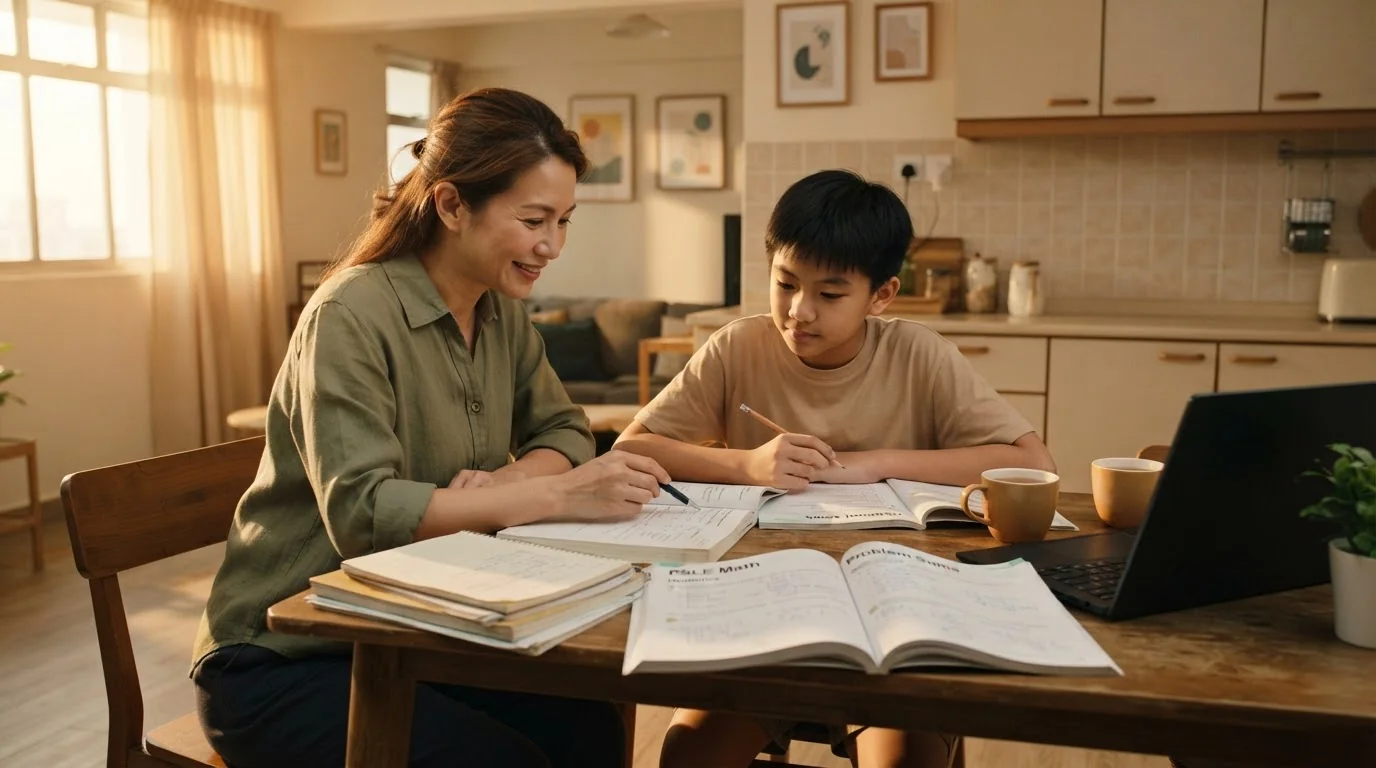
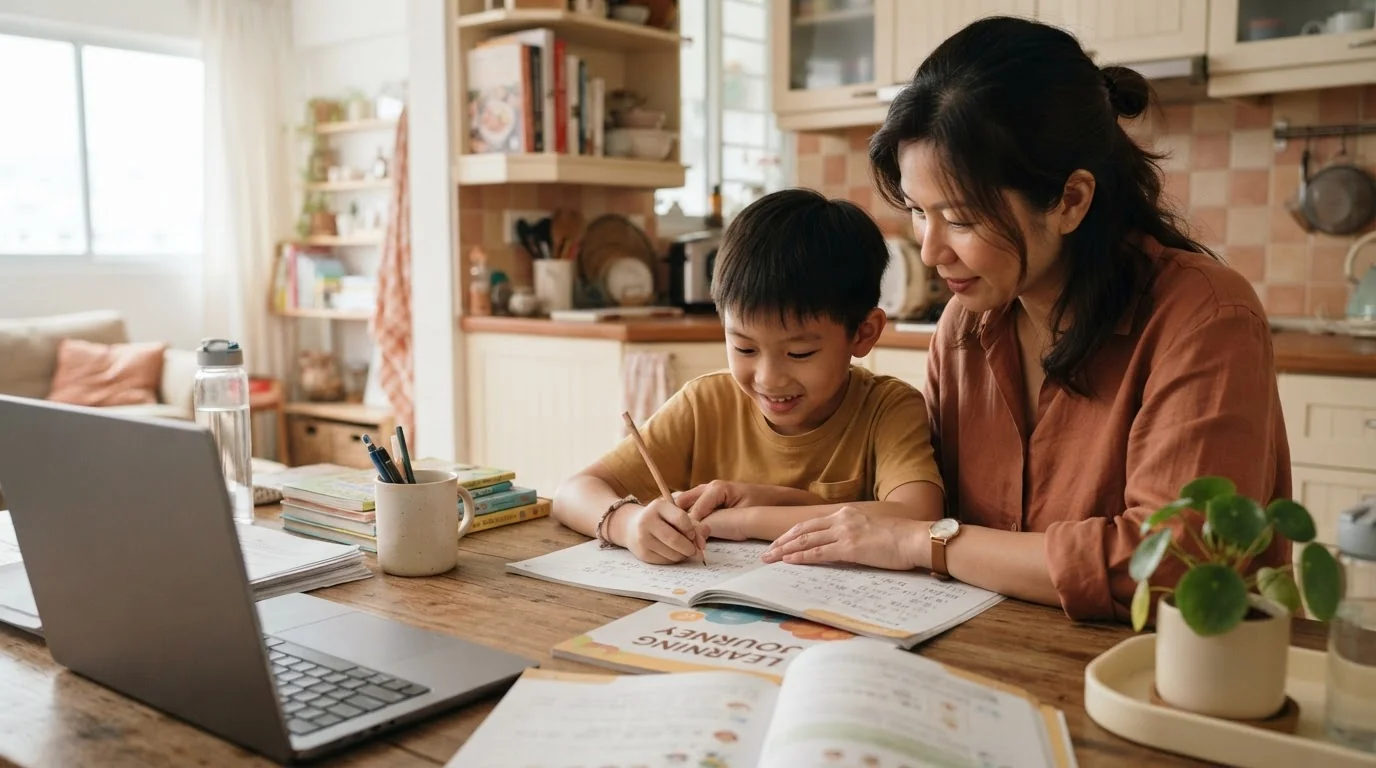
Changing your child’s study habits doesn't require more hours; it requires a change in strategy. You can start applying the principles of active vs passive revision tonight with a few simple changes to their routine.
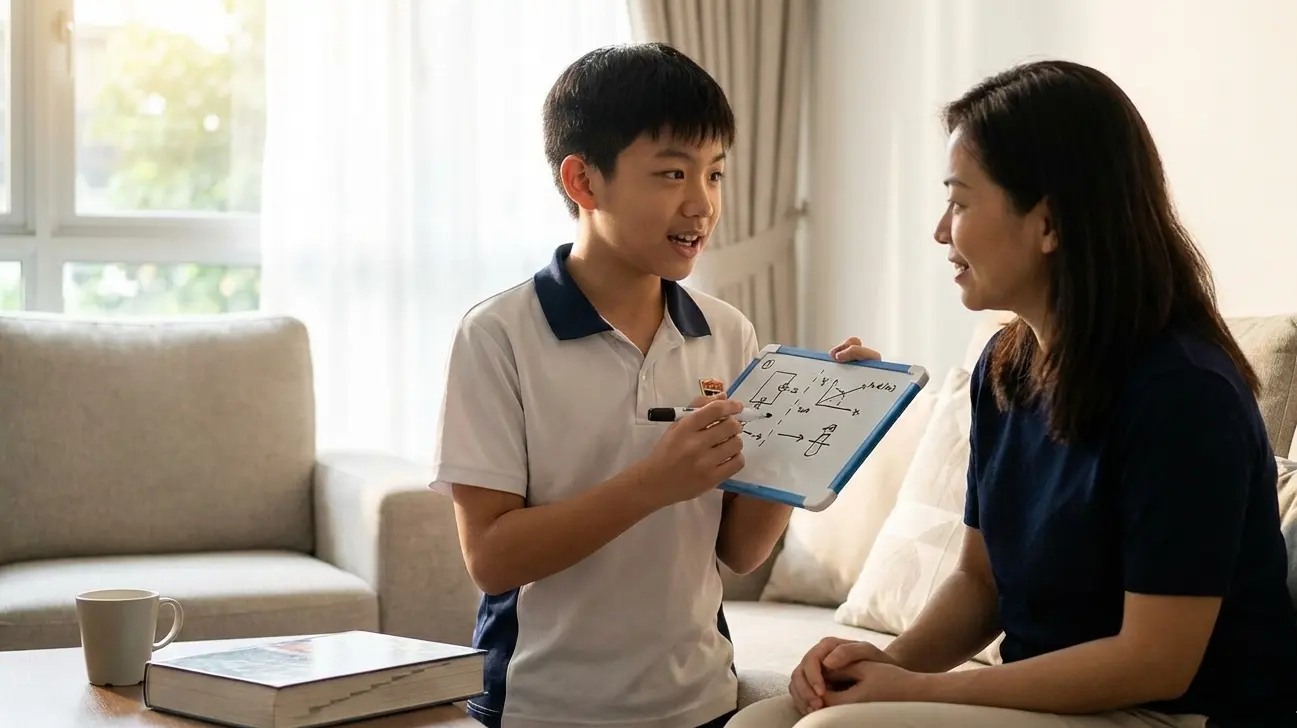
Instead of asking your child to "read Chapter 4," ask them to read one page and then explain it to you in their own words without looking back at the book. This is known as the Feynman Technique. If they cannot explain it simply, they haven't understood it. Another great tool is the "Blank Sheet Method." After a study session, give them a blank piece of paper and five minutes to write down every single thing they remember. This forced retrieval is a powerful way to cement the day's learning.
Focusing on Strategic Success
In the competitive landscape of the Ministry of Education (MOE) syllabus, efficiency is everything. Students are overwhelmed with homework, CCAs and supplementary classes. They simply do not have the time to waste on ineffective study methods. By moving away from passive reading and embracing the "Assess, Learn, Practise" model, they can achieve better results in less time.
Our data shows that students who engage in regular, short bursts of active practice perform significantly better than those who rely on long, passive revision sessions. It is about building the habit of retrieval. When the brain knows it will be asked to produce information, it pays better attention during the learning phase. This cycle of active engagement is what builds the confidence needed to tackle the most difficult papers.
Conclusion: A Partnership for Better Grades
The transition from passive to active learning can be difficult at first because it feels "harder." As a parent, you might see your child struggling to answer questions and feel the urge to step in and provide the answer. Resist that urge. That struggle is the sound of their brain actually learning.
By using tools like the Geniebook Parents App and our AI-driven worksheets, you can provide the structure they need to stay active. You can track their mastery in real-time and see exactly which topics need more retrieval practice. Together, we can move away from the highlighters and textbooks and move toward a smarter, more effective way of mastering the curriculum.
Book a Complimentary Strengths Analysis today to see where your child sits on the mastery scale and start their journey toward active revision success.