 SG
SG  VN
VN 

After School Care Routine: The Singapore Parent's Guide to Balancing Homework & Play

The Evening Homework Struggle Is Real. Here's How to Fix It.
For many Singaporean parents, the school bell signals the start of a second shift. The hours between 3 PM and bedtime can feel like a race against the clock, often ending in a power struggle over unfinished homework. The right after-school care routine is the key to ending this cycle. It's not about a rigid, minute-by-minute schedule but a predictable rhythm that allows your child to recover from school, complete their work and still have time for play and family.
A good routine prevents burnout and teaches responsibility. It protects precious family time from being consumed by academic stress. Whether your child is at home or in a student care centre, establishing this balance is one of the most important things you can do for their well-being and academic progress.
Homework or Play First? What Works for Your Child
I've seen parents debate this for decades. Some swear by getting homework done the moment their child walks through the door to instil discipline. Others find this backfires, as a mentally drained child simply can't focus. They prefer letting their child decompress first with a snack and some playtime.
The most useful approach is to stop asking which method is universally 'best'. The real question is: what sequence helps your child recover from their school day, meet their responsibilities and protect the evening? Observe them. Do they need to run around to burn off energy before they can sit still? Or do they work better when school is still fresh in their minds? Test different flows for a week at a time. Flexibility based on your child's signals is far more effective than forcing a routine that works for someone else's family.
A 5-Step Framework for a Balanced After-School Routine
A predictable structure helps children feel secure. Here’s a simple, effective framework you can adapt.
- Step 1: Land and recharge. The moment they get home, the first priority is a snack and some water. This isn’t a meal, just enough to refuel their bodies and brains after a long school day. Give them 15 to 30 minutes of unstructured downtime. No screens, no questions about school. Just let them be.
- Step 2: Move the body. Physical activity is crucial for concentration. A trip to the playground, kicking a ball around or even just some simple stretches can help them shed restless energy. Research consistently shows that this balance of study and physical play improves problem-solving skills.
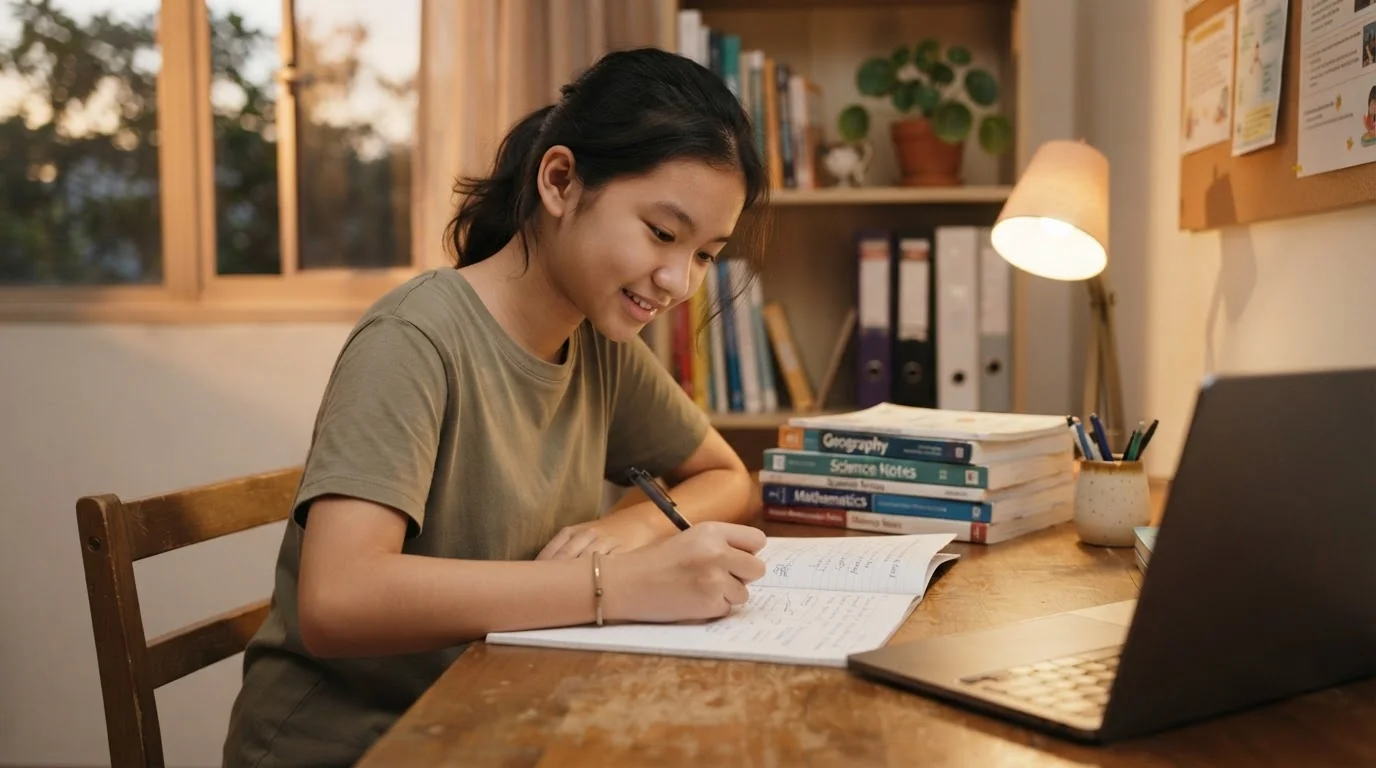
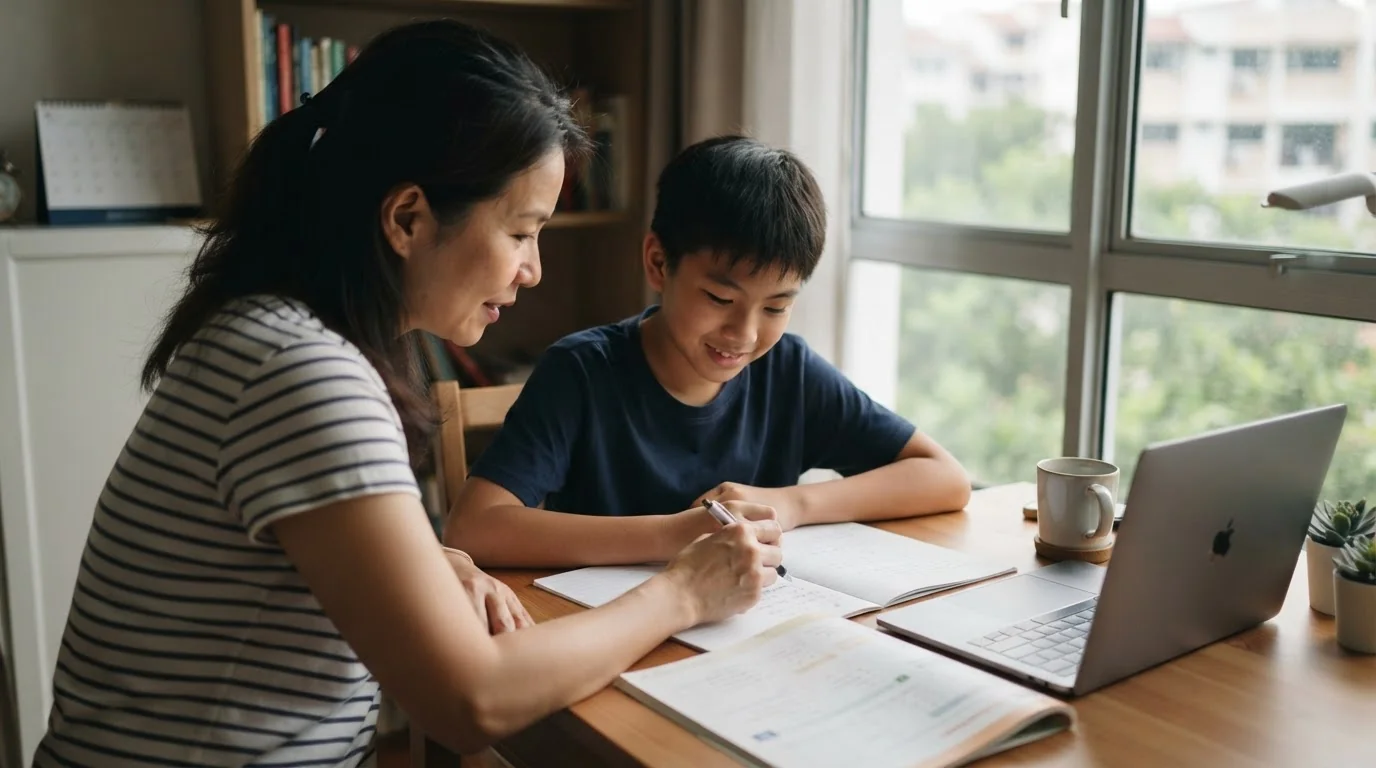
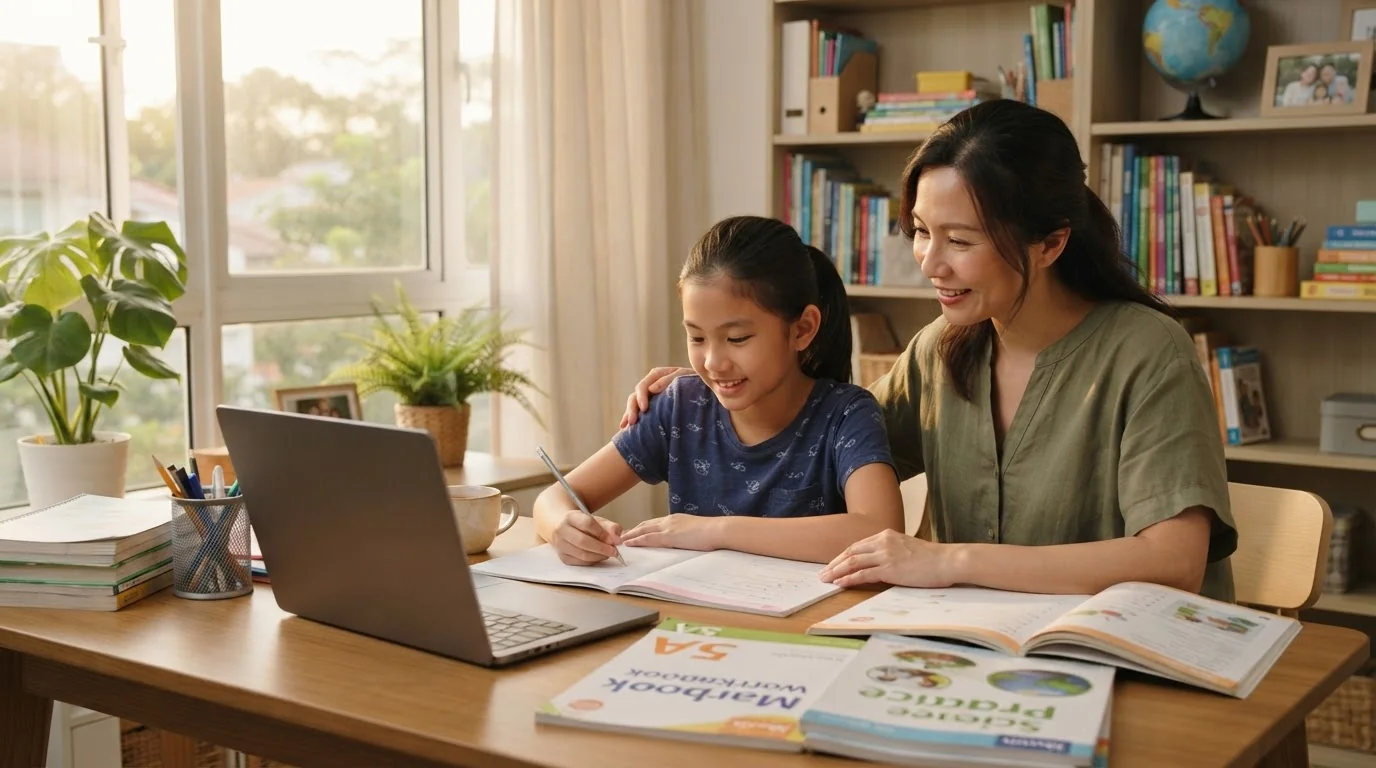
- Step 3: Focus on homework. Designate a quiet, clutter-free homework spot. Your role here is active supervision, not just ensuring it gets 'done'. Check for understanding and spot-check for errors. If a task meant to take 30 minutes is stretching into an hour and causing distress, it's time to stop. Drop the teacher a note. Allowing the entire evening to be hijacked by one assignment helps no one.
- Step 4: Connect as a family. This time is non-negotiable. It doesn’t have to be a grand activity. It can be reading a book together, playing a quick card game or even just tidying up the living room side-by-side. Just a few minutes of focused, one-on-one time can make a world of difference to your child.
- Step 5: Begin the wind-down. An hour before bedtime, start transitioning to a calmer state. This means dimming the lights and putting away screens and high-energy toys. A calm bedtime routine, a bath, a story and talking about the day signals to the body and mind that it's time for rest.
How Singapore's Student Care Centres Are Changing
For working parents, a student care centre is an essential partner in this routine. The landscape here has changed dramatically. I remember a time in the 70s and 80s when formal student care was almost non-existent. Today, it's a core part of our education ecosystem, and its mission has evolved beyond simple homework supervision.
Take school-based centres established by Singapore's self-help groups, for example. They now serve over 5,600 students across the country. As Prime Minister Lawrence Wong noted, their focus has shifted to holistic development. They are even piloting new initiatives like PlayQuest in 2025 and a mentorship programme for social-emotional skills in 2026. This reflects a nationwide trend. Modern centres, whether it's a Life Student Care in Yishun or a Student Care Centre in Sengkang, are expected to provide environments for creative expression and problem-solving, not just academic completion.
The Ministry of Education (MOE) also plays a vital role. When an operator suddenly ceased services in 2023, affecting 1,800 pupils, MOE stepped in swiftly, appointing new operators and ensuring care was not disrupted. This shows a commitment to quality and stability in the after-school sector.
Choosing the Right Centre: Key Questions to Ask
When you're evaluating options, from a Centre in Bukit Batok to finding a Good Student Care in Tampines, look beyond the price and location. Here’s what you should ask:
- What is your homework policy? Do you provide active guidance and check for errors, or just supervise completion?
- How do you balance study with play? Ask to see their daily schedule. Is there dedicated time for physical and unstructured play?
- What enrichment programmes do you offer? Do they align with holistic development goals like creativity, critical thinking or character building?
- How do you communicate with parents? Is there a formal channel for updates on homework progress and your child's well-being?
The Geniebook Edge: What Is GenieHouse?
For parents seeking a premium after-school experience that fully integrates these principles, there's GenieHouse. We designed it based on decades of experience in the Singapore education system. GenieHouse isn't just a place to do homework. It's an extension of the learning journey.
Here, students benefit from a structured routine that expertly balances rigorous, AI-personalised learning on Geniebook's platform with guided homework support from experienced tutors. We prioritise active error correction and concept mastery, not just task completion. Our environment is purpose-built for focus and holistic growth, incorporating time for rest, play and peer interaction. It’s the ideal after-school solution for parents who want to ensure their child’s time is used effectively to build both academic strength and essential life skills, freeing up evenings entirely for family connection.
Frequently Asked Questions
Should My Child Do Homework or Play First After School?
The best approach is to observe your child to determine what works for them, rather than following a universal rule of homework or play first. Some children need physical activity to burn off energy before they can focus, while others work better when school lessons are still fresh in their minds. You can test different flows for a week at a time to see what sequence best helps your child recover from their school day and meet their responsibilities.
What Is a Good After-School Routine for a Primary School Student?
A good after-school routine for a primary school student follows a predictable five-step framework: landing and recharging with a snack, moving the body with physical activity, focusing on homework in a quiet space, connecting as a family and then beginning a wind-down for bedtime. This structure helps children feel secure, prevents burnout and teaches them responsibility while protecting family time.
What Should I Look for in a Good Student Care Centre in Sengkang or Tampines?
When searching for a good student care centre in Sengkang, Tampines or other areas, parents should look beyond price and location to ask about specific policies and programmes. Key questions include their approach to homework guidance, how they balance study with unstructured play, what enrichment programmes they offer for holistic development and how they communicate with parents about a child's progress.
What Is the Difference Between a Normal Student Care Centre and GenieHouse?
GenieHouse is a premium after-school care solution that integrates AI-personalised learning on the Geniebook platform with guided homework support from experienced tutors. Unlike centres that may only supervise homework completion, GenieHouse focuses on active error correction and concept mastery, using a child's after-school hours to build both academic strength and essential life skills, which frees up evenings for family connection.
What Should I Do if My Child Is Taking Too Long on Their Homework?
If your child is taking an excessive amount of time on a homework task and becoming distressed, it is best to stop the work for the evening and inform their teacher. The article suggests that allowing a single assignment to disrupt the entire evening routine is counterproductive for both the child and the family. Your role is to provide active supervision, which includes recognising when to pause and communicate with the school.