 SG
SG  VN
VN 

PSLE Mental Maths: 5 Secrets to Speed and Accuracy
Why Does Mental Maths Matter So Much for the PSLE?
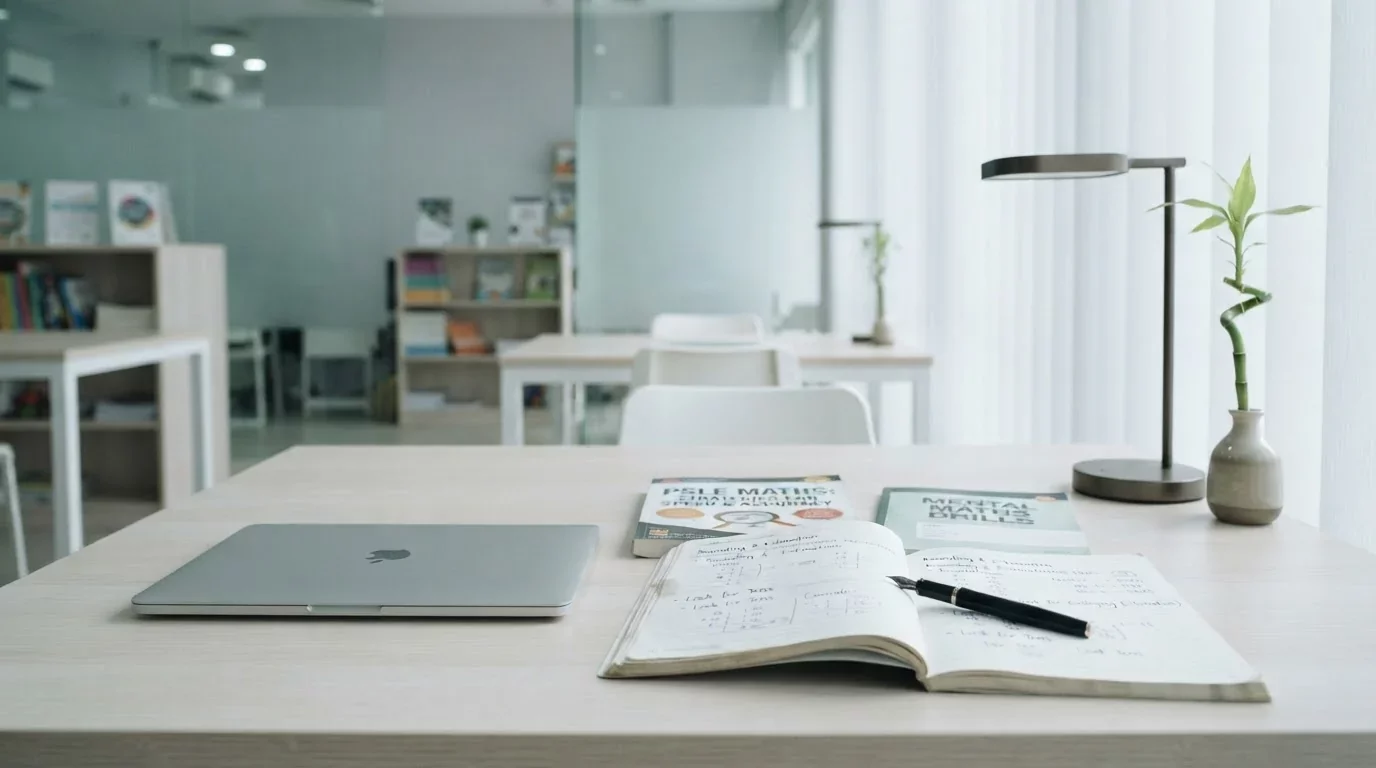
I’ve seen it countless times in my decades of teaching: a bright student understands a complex problem-sum but loses marks on a simple calculation. The PSLE Mathematics Paper 1 is a no-calculator zone where speed and accuracy are not just advantages they are critical for survival. A student who struggles with mental calculations burns precious time and cognitive energy on Booklet A, leaving them drained and rushed for the more demanding questions in Booklet B and Paper 2.
Mastering mental maths builds a reliable “mental calculator”. It frees up focus for understanding the question, choosing the right heuristic and checking the final answer. This isn’t about being a human calculator. It’s about building the fluency to handle foundational calculations automatically, which is a key objective in many Primary Maths tuition programmes.
Secret 1: The 5-Minute Daily Drill
Building mental maths stamina doesn't require hours of gruelling practice. The key is consistency. A focused five to ten-minute drill each day is far more effective than a two-hour session once a week. This daily habit sharpens numerical fluency and makes calculations feel almost effortless.
This can be as simple as verbal quizzes on the way to school or using a revision app with timed challenges. The goal is to make basic operations like addition, subtraction, multiplication and division second nature. This consistency is especially vital for students in Primary 5 Maths tuition as the syllabus complexity starts to ramp up.
Secret 2: Master Calculation Shortcuts, Not Just Speed
Working faster is useless if the answers are wrong. True speed comes from working smarter. Instead of brute-force calculation, teach your child to see the patterns and relationships between numbers. Here are a few powerful techniques we use in the classroom.
Break Down Numbers
This strategy simplifies multiplication and division. Instead of tackling a difficult number head-on, break it into friendlier parts.
Example: To calculate 18 × 5, don't multiply directly. Instead, think of it as (18 × 10) ÷ 2. This becomes a much simpler 180 ÷ 2 = 90.
Doubling and Halving
For multiplication involving an even number, you can often simplify the problem by doubling one number and halving the other.
Example: Calculating 16 × 25 looks daunting. But if you halve 16 and double 25 repeatedly, you get 8 × 50, which is a simple 400.
Convert Between Forms Instantly
The PSLE demands fluidity between fractions, decimals and percentages. A student who can instantly recognise that 12.5% is ⅛ or that 0.375 is ⅜ saves critical seconds and mental steps in Paper 1 questions involving ratios and percentages.
Secret 3: Build Deep Number Sense Not Just Rote Memory
Number sense is the intuitive understanding of how numbers work. It’s the difference between a child who has memorised their times tables and a child who understands why 8 × 7 is the same as (8 × 5) + (8 × 2). This deeper conceptual grasp is what the MOE curriculum aims to build from Primary 4 through Primary 6.
When a child is stuck, avoid just giving them the answer. Instead, try scaffolding the problem as experts like Dr. Yeap Ban Har suggest. Ask guiding questions like, “What is the question asking for?” or “What information do you already have?”. This fosters true understanding rather than reliance on memory, which is crucial for tackling unfamiliar problems under exam pressure. This is a hallmark of any good Primary Maths tuition.
Secret 4: Practise Like It's the Real Exam
It’s one thing to solve a problem correctly at a quiet desk with no time limit. It’s another thing entirely to do it in an exam hall with the clock ticking. Simulating exam conditions is non-negotiable for PSLE preparation.
Incorporate regular timed practice into your child's revision. This could involve breaking down a past-year Paper 1 into mini timed assignments of 10-15 minutes. This trains them to manage their time effectively and builds resilience against the stress of the exam. For students in P6 Maths tuition this becomes a weekly ritual in the months leading up to the PSLE.
Secret 5: Choose the Right Support for Effective PSLE Maths Tuition
A structured home routine is the foundation of PSLE success. However, sometimes external support can provide the necessary focus and expertise. The landscape of educational support is evolving rapidly. While many parents still rely on traditional tuition centres many are also exploring digital tools.
Engaging mental maths apps can make daily drills fun. Furthermore, the rise of AI tutors like Tutorly in Singapore offers another layer of affordable, on-demand practice. When considering online tuition or a physical centre, look beyond advertisements. As MOE and the Advertising Standards Authority of Singapore (ASAS) work to curb anxiety-driven marketing, trust word-of-mouth and focus on programmes that teach strategies not just answers. The right support builds confidence and independence transforming how your child approaches mathematics.
Frequently Asked Questions
-
Why Is Mental Maths So Important for the PSLE?
Mental maths is critical for the PSLE because Paper 1 is a no-calculator paper where speed and accuracy are essential for success. Students who master mental calculations can solve foundational problems quickly, saving precious time and mental energy for the more complex questions in Booklet B and Paper 2. This fluency prevents them from getting bogged down by simple arithmetic.
-
How Much Daily Practice Is Needed for My Child to Improve Their Mental Maths?
A focused five to ten-minute drill each day is highly effective for improving mental maths skills for the PSLE. This consistent, short practice is more beneficial than a long session once a week because it builds numerical fluency and makes calculations feel second nature. This is especially helpful for students in P5 Maths tuition as the syllabus becomes more complex.
-
What Are Some Simple Shortcuts to Speed Up Mental Calculations?
Simple shortcuts to speed up mental calculations include breaking down large numbers, using the doubling and halving technique and instantly converting between fractions, decimals and percentages. For example, to calculate 16 × 25, you can halve 16 and double 25 to get 8 × 50, which is an easier calculation resulting in 400. Mastering these is a key goal in many Primary Maths tuition programmes.
-
Is Just Memorising Times Tables Enough for PSLE Maths?
No, simply memorising times tables is not enough. Building a deep number sense is far more crucial for tackling PSLE Maths problems. Number sense is the intuitive understanding of how numbers work, such as knowing why 8 × 7 is the same as (8 × 5) + (8 × 2). This conceptual grasp, which is a hallmark of any good Primary Maths tuition, allows students to solve unfamiliar problems under exam pressure rather than just relying on rote memory.
-
How Can I Find a Good PSLE Maths Tuition Centre for My Child?
You can find a good Primary Maths tuition programme by focusing on those that teach problem-solving strategies rather than just providing answers. Whether considering online tuition or a physical PSLE Maths tuition centre, it is wise to trust word-of-mouth recommendations and look for programmes that build confidence and independent thinking. Effective P6 Maths tuition will also incorporate regular timed practice to simulate real exam conditions.