 SG
SG  VN
VN 

Mastering Experimental Questions: Your Guide to the New PSLE Science Syllabus

Mastering Experimental Questions: Your Guide to the New PSLE Science Syllabus
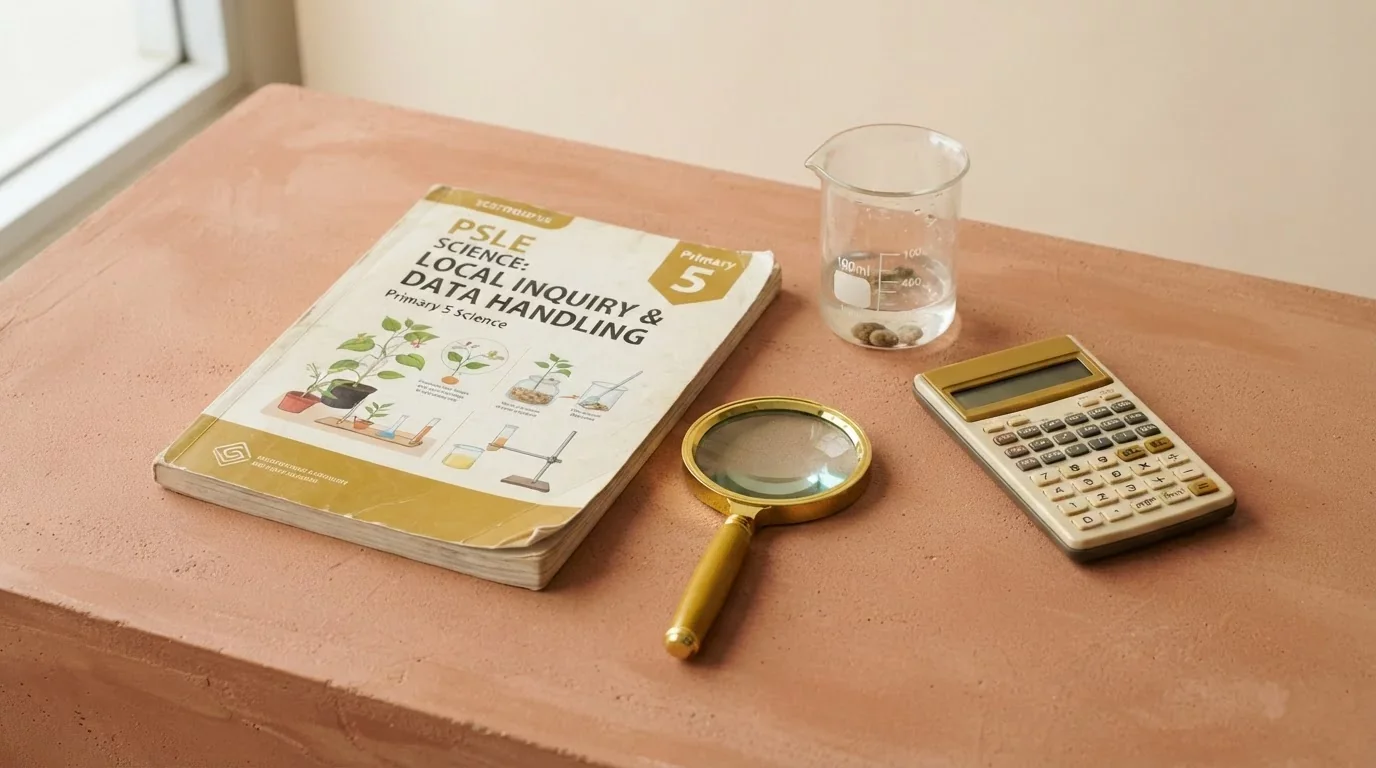
The 2026 Primary School Leaving Examination (PSLE) for Science will look different from what many parents remember. The focus has shifted decisively away from rote memorisation towards scientific inquiry and real-world application, a change that requires a new approach to learning and revision. For parents considering psle science tuition, understanding this new landscape is the first step to effectively supporting your child through this critical academic milestone.
Understanding the Big Shift: What the New Science Syllabus Means for Your Child
Implemented for Primary 3 students in 2023, the refreshed syllabus culminates in the first PSLE assessment for this cohort in 2026. This isn't just a minor content update, it's a fundamental change in pedagogy rooted in inquiry-based learning. The Ministry of Education (MOE) now structures science education around three integral dimensions: Knowledge Application, Skills and Processes, Ethics and Attitudes.
Of these, the emphasis on 'Skills and Processes' is the most significant for exam performance. Students are now explicitly taught and tested on their ability to:
- Observe, compare and classify
- Analyse and evaluate data
- Infer and predict outcomes
- Communicate findings using scientific language
The goal is to nurture students who can think and act like scientists, not just recall facts. They need to understand the 'how' and 'why' behind phenomena, not just the 'what'.
Why Experimental Questions Are Tricky (And How P6 Science Tuition Can Help)
Under the new syllabus, both Booklet A (MCQ) and Booklet B (Open-Ended) will feature more questions centred on experimental setups and data interpretation. As a veteran educator, I’ve seen students with strong content knowledge falter on these questions. The common pitfalls are not about forgetting facts but about process.
Many students lack a structured method to break down a complex experimental scenario. They might miss a crucial detail in the diagram, misinterpret a graph’s axes or fail to identify the control setup. These questions demand higher-order thinking: evaluating an experimental design, drawing logical conclusions from data and justifying their answers with scientific reasoning. This is precisely the skill gap that specialised p6 science tuition aims to bridge, focusing on the application of knowledge rather than just its acquisition.
A 4-Step Framework to Decode Any Experimental Question
To give students a reliable method for these questions, I recommend using the 'I-D-E-A' framework. It’s a simple, systematic approach to ensure all bases are covered. A skilled psle science tutor can guide a student through this process until it becomes second nature.
1. Identify the Core Concept and Aim
First, ask: What scientific topic is this experiment about (e.g., Photosynthesis, Heat Transfer)? What is the experimenter trying to find out? The answer is usually hidden in the first few sentences of the question.
2. Deconstruct the Setup
Next, analyse the experimental design. Pinpoint the key variables:
- Changed Variable: The one thing that is intentionally changed to see its effect.
- Measured Variable: The outcome that is observed or measured.
- Constant Variables: All other factors that are kept the same to ensure a fair test.
Don't forget to look for the control setup, which serves as a baseline for comparison.
3. Evaluate the Data
This is where scientific skills meet numeracy. Students must interpret tables, charts and graphs to spot patterns, trends or relationships. This analytical skill is not unlike what they might learn in psle maths, as it involves making sense of quantitative information. The key is to describe what the data shows before explaining why it shows it.
4. Answer with Precision
Finally, construct the answer. This step requires clarity and the correct use of scientific keywords. It's about communicating the conclusion and the underlying scientific principles effectively. This skill in articulation has parallels with what is taught in psle english, a brilliant analysis is only useful if it can be clearly explained.
Beyond Assessment Books: Building a Scientist's Mindset at Home
Success under the new syllabus isn’t just built in the classroom or at a psle tuition centre. Parents can play a huge role in fostering the right mindset. Encourage curiosity by turning everyday activities into learning opportunities.
A walk in Bishan-Ang Mo Kio Park can be a lesson in ecosystems. Simple home experiments, like making a baking soda volcano or observing how a plant leans towards sunlight on the windowsill, reinforce the principles of scientific inquiry. Ask your child 'why do you think that happened?' and discuss their predictions. This habit of questioning, predicting and observing builds the foundational skills needed for the PSLE and beyond.
The new PSLE Science syllabus is a positive move towards developing deeper, more applicable knowledge. It challenges students to go beyond memorisation and truly engage with the scientific process. While this transition can be demanding, it ultimately equips them with critical thinking skills for a complex future. If your child is struggling to adapt, seeking targeted guidance that aligns with this new inquiry-based approach can provide the structure and confidence they need to excel.