


GCE O-Level 2026 Exam Tips

The Ultimate GCE O-Level Guide: Preparation, Strategy and Success Tips
For many Singaporean households, the GCE O level year is a crucial rite of passage. It brings late-night revision, stacks of Ten Year Series (TYS) books and inevitable "exam fever".
Parents often balance the demanding roles of cheerleader, nutritionist and logistics manager.
The O-Level certificate serves as the primary gateway to your child's next educational chapter. It paves the way to a Junior College (JC), Polytechnic or the Institute of Technical Education (ITE).
Understanding this national examination replaces anxiety with action.
The right strategy transforms the journey from Secondary 4 to the final paper into a structured progression, eliminating any frantic scramble.

What Are GCE O-Level Exams in Singapore
The Ministry of Education (MOE), the Singapore Examinations and Assessment Board (SEAB) and the University of Cambridge 603 Local Examinations Syndicate (UCLES) jointly conduct the Singapore-Cambridge GCE O-Level national examination.
Students typically sit for these papers at the end of their secondary 4 Express or secondary 5 Normal (Academic) tracks. This crucial assessment measures a student's academic readiness for post-secondary education.
Singapore uses a unique grading system ranging from A1 (the highest) to F9. Under this framework, a lower numerical score indicates a better grade.
Students aiming for Junior College target the L1R5 aggregate (English + 5 relevant subjects). Meanwhile, Polytechnic applicants prioritise the ELR2B2 aggregate (English + 2 relevant + 2 best subjects).
In 2025, approximately 86.9% of candidates passed five or more subjects. This strong pass rate highlights both the consistency of our education system and the competitive nature of the cohort.
Students can also secure valuable "bonus points" beyond their core subjects. For instance, achieving an 'Excellent' grade in Co-Curricular Activities (CCA) or passing Higher Mother Tongue deducts up to 4 points from the aggregate score.
This strategic deduction can ultimately move a student from a good school into their dream institution.
How To Prepare For GCE O-Level Exams
Scoring well in the O level exam requires a steady marathon, not a last-minute sprint. Guide your child with a clear, phased roadmap. We recommend breaking preparation into four distinct stages:
-
Foundation Phase (January – May): Focus on topical mastery. Help your child close any knowledge gaps in the Sec 3 syllabus. Simultaneously, ensure they keep pace with new Sec 4 content.
-
Consolidation Phase (June Holidays): Treat the June holidays as the critical make-or-break period. Encourage your child to create comprehensive summary notes. Begin tackling topical TYS (Ten-Year Series) papers now.
-
The "TYS" Grind (July – August): Shift focus from topical practice to yearly past papers. Target at least five to ten years of past papers. This builds vital familiarity with the rigorous Cambridge style of questioning.
-
The Final Lap (September – October): Local schools set difficult Preliminary exams to stress-test students. After Prelims, focus entirely on polishing exam techniques. Have your child resolve recurring errors documented in a Mistake Logbook.
Boost revision effectiveness by championing Active Recall over passive reading.
Instead of simply highlighting textbooks, ask your child to close the book and map out everything they remember about a topic on a blank sheet of paper.
This proven method strengthens neural pathways. It ensures your child can reliably retrieve key information under the intense pressure of the national exam hall.
Tips To Score Well In O-Level Exams
Scoring an A1 demands more than just content knowledge, it requires strong exam execution. An essential O level preparation guide strategy we recommend is the "Error Log" method.
Top students do more than simply check their answers. They actively categorise their mistakes into three distinct buckets: "Careless," "Conceptual," and "Misread Question".
Identifying these patterns gives students a clear advantage. For instance, if a student consistently forgets to convert units in Physics, the log highlights this exact trend. Students can then consciously avoid these specific traps during the actual paper.
Subject-Specific O-Level Exam Tips
Every subject in the O level curriculum requires a tailored approach for success.
O Level English
For O level English, students should choose reliable genres for Paper 1 (Writing). Expository or Argumentative essays consistently score better than narratives.
In Paper 2 (Comprehension), students frequently lose marks through "direct lifting". They must actively paraphrase the text while preserving the core meaning to achieve full marks.
O Level Mathematics
For Mathematics (both E-Math and A-Math), precision is essential. E-Math requires students to eliminate careless errors completely, while A-Math rigorously tests pattern recognition skills.
Students commonly lose marks simply by misreading instructions. They must follow standard MOE rubrics closely, such as providing answers to exactly "3 significant figures".
O Level Science
In Science (Physics, Chemistry and Biology), keywords rule. Singapore marking schemes demand high specificity.
Using precise terms like "denaturation" instead of "the protein broke down" or "resultant force" rather than "total push", often determines whether a student scores a B3 or an A1. Students must actively connect their answers to the provided experimental setup instead of merely reciting textbook theory.
O-Level Exam Strategy And Time Management
The O-Level exam hall creates a high-pressure environment for Singaporean students where time quickly slips away. A robust O level exam strategy applies the "1-Minute-per-Mark" rule for Maths and Science papers.
This rule maintains a steady pace. It also reserves roughly 15 to 20 minutes at the end of the paper to complete the most critical task: checking for "silly" mistakes.
During the first two minutes of any paper, students must "scan the battlefield". They should rapidly flip through the pages to identify "easy wins" - questions they can answer instantly.
Answering these initial questions builds student confidence and secures marks early.
The "Triage" method proves vital for difficult questions. If a student works on a 5-mark question for over 7 minutes without progress, they must circle it and move on.
Leaving a challenging question half-finished remains a better strategy than running out of time for three easier questions at the end.
What To Do Before And On O-Level Exam Day
As the O level exam approaches, shift your child's focus from last-minute cramming to logistics and mental readiness. Help them prepare their essential "Battle Checklist":
-
Physical Entry Proof: Print this directly from the Candidates Portal.
-
Identification: Bring a valid NRIC or Student Smart Card (EZ-Link).
-
Approved Stationery: Pack 2B pencils for OAS sheets, blue or black pens and a transparent pencil case.
-
Calculators: Verify the "Approved" sticker remains intact and clear the memory if required for A-Math.
On exam morning, ensure your child arrives at least 45 minutes early. This buffer prevents stress from unexpected MRT or bus delays and gives them time to settle into the exam environment. Serve a light, high-protein breakfast to sustain their concentration and avoid heavy or greasy meals that cause lethargy or stomach discomfort.
Always verify the specific Science Practical reporting times. Schools often send these practical venues and timings via email or separate notices, rather than listing them on the main entry proof. Double-check these details at least a week in advance, as missing a reporting time results in being barred from the lab.
Managing Stress During O-Level Exams
Students naturally feel the weight of the O-Levels. Stress frequently manifests as irritability, loss of appetite or "blanking out" during revision.
Combat this by teaching your child the "Box Breathing" technique: inhale, hold and exhale for four seconds each. This exercise physically resets the nervous system during the tense waiting period before the invigilator says "Start".
Establish a strict "Post-Mortem Ban". Actively discourage your child from discussing answers with friends or checking social media for "suggested answers" immediately after a paper.
Post-exam reviews often trigger "spiral anxiety". Worrying about a past mistake negatively impacts performance in the upcoming exam.
Integrate "Structured Breaks" into your child's revision schedule. Apply the Pomodoro technique (50 minutes of study followed by a 10-minute rest) to prevent burnout.
During breaks, require students to step away from screens. Light stretching or a quick walk effectively refreshes their minds.

How Parents Can Support O-Level Preparation
As a parent, you act as the "Sanctuary Manager." You create the ideal environment for your child to excel.
Focus on the learning process rather than the final outcome. Ask "What did you learn from the mistakes in this paper?" instead of "Did you get an A for this practice?".
Praise effort and consistency to build resilience. Obsessing over grades fuels "performance anxiety" and causes careless errors.
Parents also manage crucial logistics. Track the exam timetable to navigate confusing durations and split venues. This enables your student to focus entirely on their studies.
Maintain a quiet, well-lit study space. Serve "brain-healthy" meals rich in complex carbohydrates to boost their stamina.
Most importantly, act as an emotional buffer.
Research from local forums like KiasuParents shows that "excessive nagging" remains the top stressor for Sec 4 students.
Avoid lecturing about JC entry requirements. Simply tell them, "I'm proud of how hard you're working," to motivate them far more effectively.
Common Mistakes To Avoid In O-Level Exams
Even well-prepared students make avoidable errors. Watch out for these common mark-killers:
-
OAS Shading Errors: Always shade the correct row on the Optical Answer Sheet. Double-check that your question number exactly matches the OAS row.
-
Instruction Neglect: Read Humanities paper instructions carefully. Answering more questions than required wastes valuable time.
-
Unit Omissions: Always include units like Joules, m/s or cm³ in Math and Science. SEAB markers strictly deduct marks for missing units.
-
Definition Accuracy: Provide verbatim, MOE-approved definitions for scientific terms. Markers reject vague ideas.
-
Rote Memorisation: Do not spot questions or memorise essays. GCE O-Level papers heavily test application, requiring students to think critically.
Anticipating these pitfalls helps students adopt a defensive mindset and secure their hard-earned marks.
The GCE O-Level marks a crucial milestone for your child to build discipline, critical thinking and resilience. The Singapore curriculum sets clear expectations, highly rewarding students who prepare consistently.
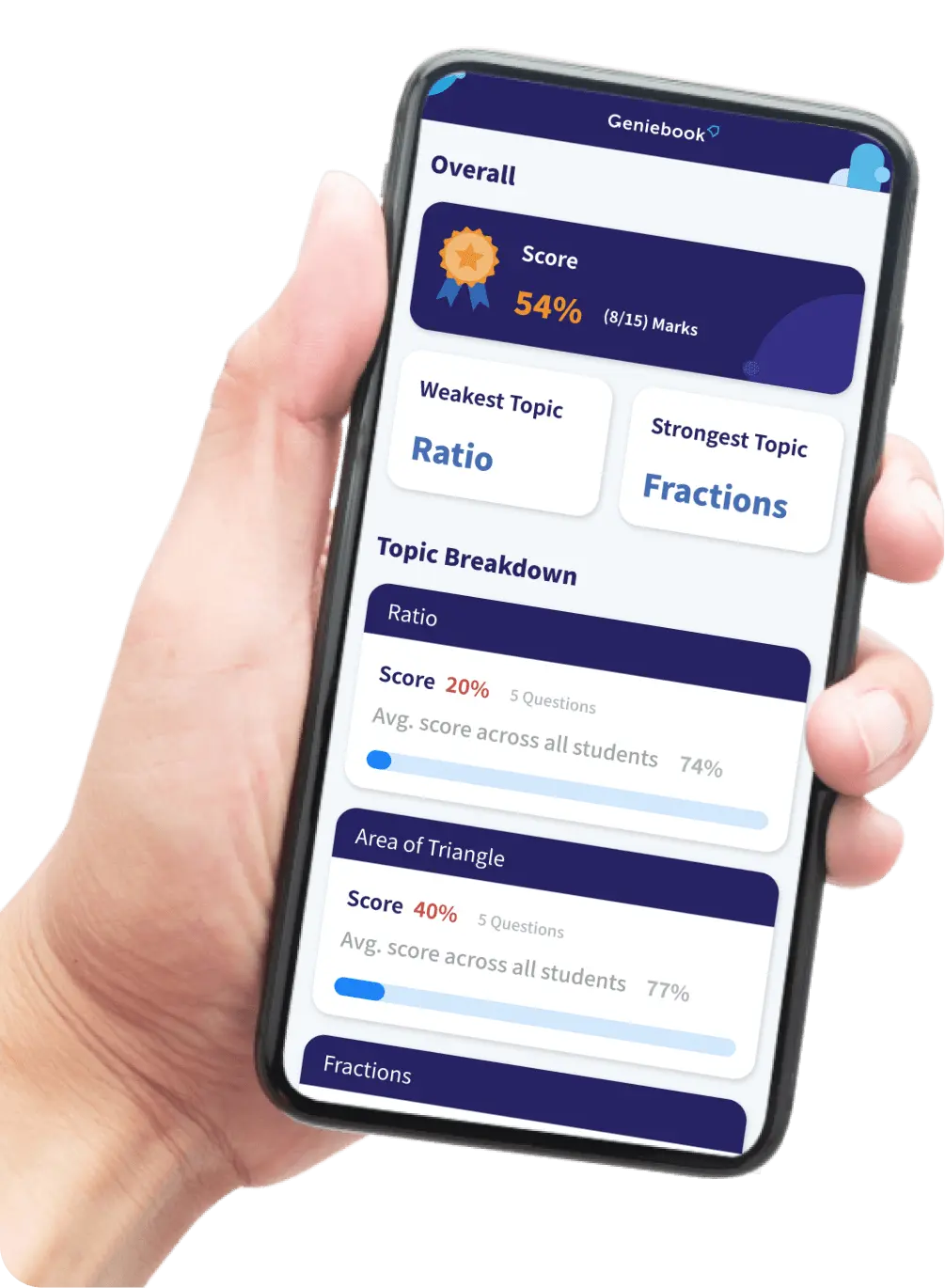
At Geniebook, we believe every student can excel with the right tools. Our AI-personalised worksheets pinpoint your child’s exact strengths and weaknesses. We help students focus their revision where it matters most, saving time and boosting exam confidence.
FAQ
How early should I start preparing for O-Level exams?
Ideally, preparation should be a consistent effort starting from secondary 3. However, the intensive revision phase should begin no later than the June holidays of secondary 4. This allows enough time for topical mastery before transitioning to full-paper practice using the Ten Year Series (TYS) in July and August.
What is the best way to revise for O-Level exams?
Active Recall and Spaced Repetition are the most scientifically proven methods. Instead of re-reading notes, students should test themselves using past-year papers under timed conditions. Maintaining a "Mistake Logbook" to track and review errors is also essential for ensuring the same mistakes aren't repeated in the final exam.
How can I reduce stress before the O-Level exam day?
Stick to a familiar routine. Ensure you get at least 8 hours of sleep and avoid trying to learn new, complex topics the night before. Use relaxation techniques like deep breathing and avoid discussing the exam with anxious peers. Remember, the goal is to enter the hall with a calm, focused mind.
What should I bring for my O-Level exam?
Your essential kit must include your NRIC/Student Smart Card, the printed SEAB Entry Proof, 2B pencils, pens, a ruler, an eraser and an approved calculator. For certain subjects, you may need a mathematical set or a transparent bottle of water. Always check the specific requirements for your subject code.
How can parents support students during O-Level preparation?
Parents should focus on providing a supportive environment and managing logistics. This includes ensuring a quiet study space, preparing nutritious meals and helping to track the exam schedule. Crucially, offer emotional support by validating their effort and avoiding unnecessary pressure or comparisons with other students.