 SG
SG  VN
VN 

Screen Time Secret: Why Co-Viewing Matters More Than Rules
A New Perspective on Screen Time in Singapore
The core finding of the research, which tracked 2,449 children in Singapore, is clear: for preschool and early primary school children, active parental involvement during screen time is a more significant factor in developing pro-social skills than just regulating duration or setting rules. These skills, such as cooperation, sharing, empathy and positive peer interaction, are the bedrock of healthy social development.
This insight is crucial because a significant portion of screen use is happening in isolation. The study, conducted by A*STAR's Institute for Human Development and Potential (IHDP), found that over one-third of preschoolers used screens without any parental engagement. For children aged seven to nine, that number climbs to 42%. Each instance represents a missed opportunity for connection and learning.
From Passive Viewing to Active Parental Engagement
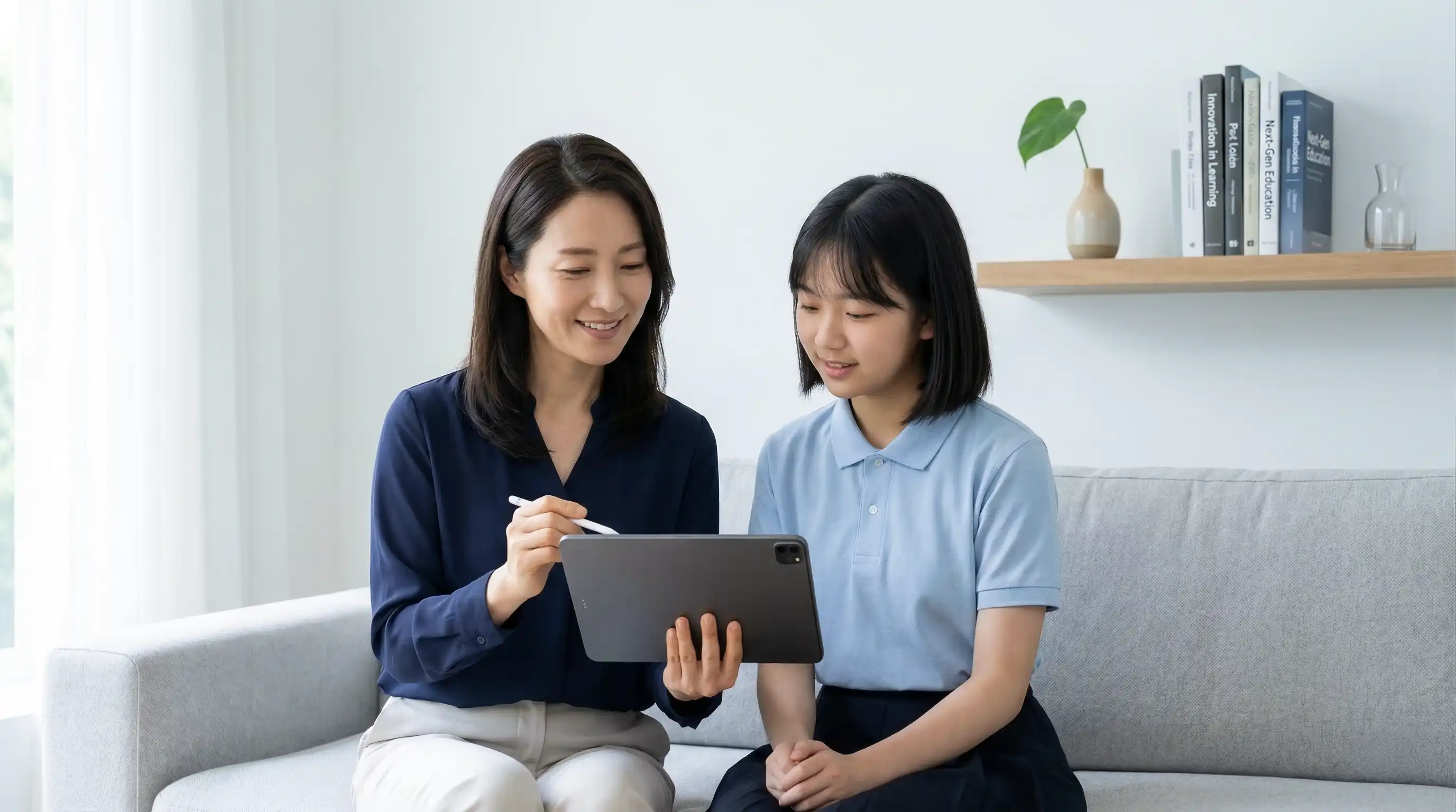
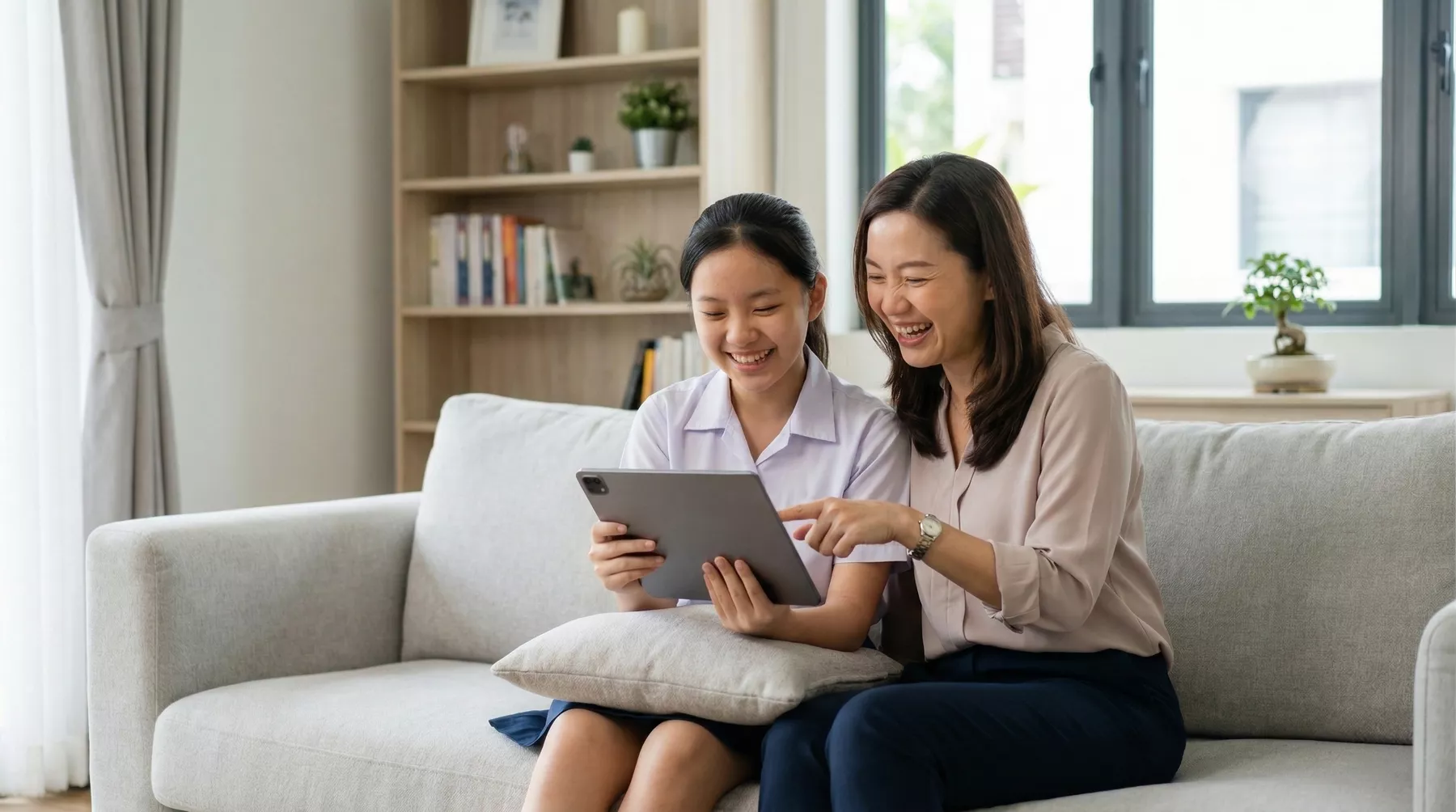
Shifting from a screen time 'monitor' to a 'mentor' is about transforming a passive activity into an interactive one. The Ministry of Education (MOE) champions this approach, advising parents on “co-viewing” and “active mediation.” This is less about policing and more about participating.
Effective joint media engagement includes practical, simple actions:
- Watch Together: Sit with your child, even for just 10-15 minutes. Your presence alone changes the dynamic.
- Talk About the Content: Ask open-ended questions. Instead of “What happened?” try “Why do you think the character made that choice?” or “How do you think that made her feel?”
- Connect to Real Life: Bridge the gap between the screen and their world. If you watch a show about animals, you could say, “That looks like the bird we saw at Jurong Bird Park. What do you remember about it?”
- Play Along: If it is an interactive game, join in. This models cooperation and good sportsmanship, turning screen time into a shared activity.
Not All Screens Are Equal: Choosing Quality for Child Development in Singapore
While engagement is key, the content itself still matters for healthy child development in Singapore. Good educational screen time can introduce foundational concepts like letters, counting and vocabulary in an engaging way. However, parents should be mindful of the content's pacing.
A 2011 study by researchers at the University of Virginia found that just nine minutes of a fast-paced cartoon could temporarily lower a four-year-old’s executive function: the mental skills tied to self-control and focus. Constant high stimulation can make slower-paced activities like reading or imaginative play seem less appealing. Look for content that moves at a considered pace, tells a coherent story and gives your child space to think and absorb.
Finding the Balance: Screens, Play and Pro-Social Skills
One of the biggest concerns for parents is that screen time displaces physical play. A study supported by Suncare SG revealed that over half of surveyed parents consider screen time part of their child's playtime. This is concerning when we know the World Health Organisation (WHO) recommends at least 180 minutes of physical activity daily for children aged three to six.
Real-world play is where children test social theories, learn to negotiate, manage disappointment and build friendships. The goal isn't to eliminate screens but to ensure they do not dominate a child's day. A 2023 report noted that Singaporean children aged 2-11 spent an average of 4.5 hours daily on media in 2022. Balancing this with sufficient 'unplugged' time for CCAs, creative pursuits and unstructured play is essential for nurturing well-rounded pro-social skills.
Conclusion
The battle over screen time doesn't have to be about winning or losing. Quality screen time is the key. This A*STAR research gives parents a new strategy: focus on connection, not just control. Instead of only asking, “How long have you been on the tablet?”, try asking, “Can I join you?” That simple question can transform a moment of distraction into an opportunity for growth, turning screen time from a source of conflict into a tool for building the social skills your child needs for life.