 SG
SG  VN
VN 

Context-Driven Vocabulary Mastery for PSLE English: A 6-Week Local Text-Based Plan for Singaporean Primary 5-6 Students

Why Rote Memorisation Fails the New PSLE English Exam
As an educator who has spent decades navigating the Singapore school system, I've seen countless parents arm their children with thick stacks of vocabulary flashcards. While well-intentioned, this method is becoming less effective. The PSLE English syllabus, updated from 2025, no longer rewards students who simply collect words. It rewards those who can use them with precision and understand them in context.
A powerful vocabulary isn't just for the composition paper. It is critical across the board:
- Paper 1 (Writing): Allows for more vivid descriptions and nuanced arguments in both situational and continuous writing.
- Paper 2 (Language Use & Comprehension): Directly tests vocabulary in context and the ability to infer meaning from surrounding clues. This paper is a hefty 1 hour and 50 minutes long, a true test of linguistic stamina.
- Paper 3 (Listening Comprehension): While this part primarily tests auditory skills, a strong vocabulary is a massive advantage. It allows the student to rapidly process spoken information, understand nuanced phrasing, and quickly analyse the options.
- Paper 4 (Oral Communication): A wider vocabulary gives your child the confidence and flexibility to discuss picture stimuli and respond to the examiner's questions thoughtfully.
The Ministry of Education's goal is clear: to develop critical thinking and contextual language use. This requires a shift from passive memorisation to active application: a core principle of effective PSLE English tuition.
A Parent's Quick Diagnostic: Is your child a 'word collector' or a 'word user'?
Before you begin, it’s helpful to know where your child stands. Here’s a quick diagnostic test you can do this weekend. Pick a recent comprehension passage your child has worked on. Select 10 to 12 challenging words from it.
Now, ask your child three things for each word:
- What does this word mean?
- Can you give me a synonym for it?
- Can you use it correctly in a new sentence?
Their answers will reveal their proficiency. A child who can only give a dictionary definition is a 'word collector'. The goal is to become a 'word user' who can confidently infer meaning and apply the word flexibly, demonstrating the highest level of mastery. The focus should always be on lifting the core, usable vocabulary rather than just chasing 'bombastic' words.
The 6-Week PSLE English Vocabulary Plan: From Local Texts to Exam Confidence
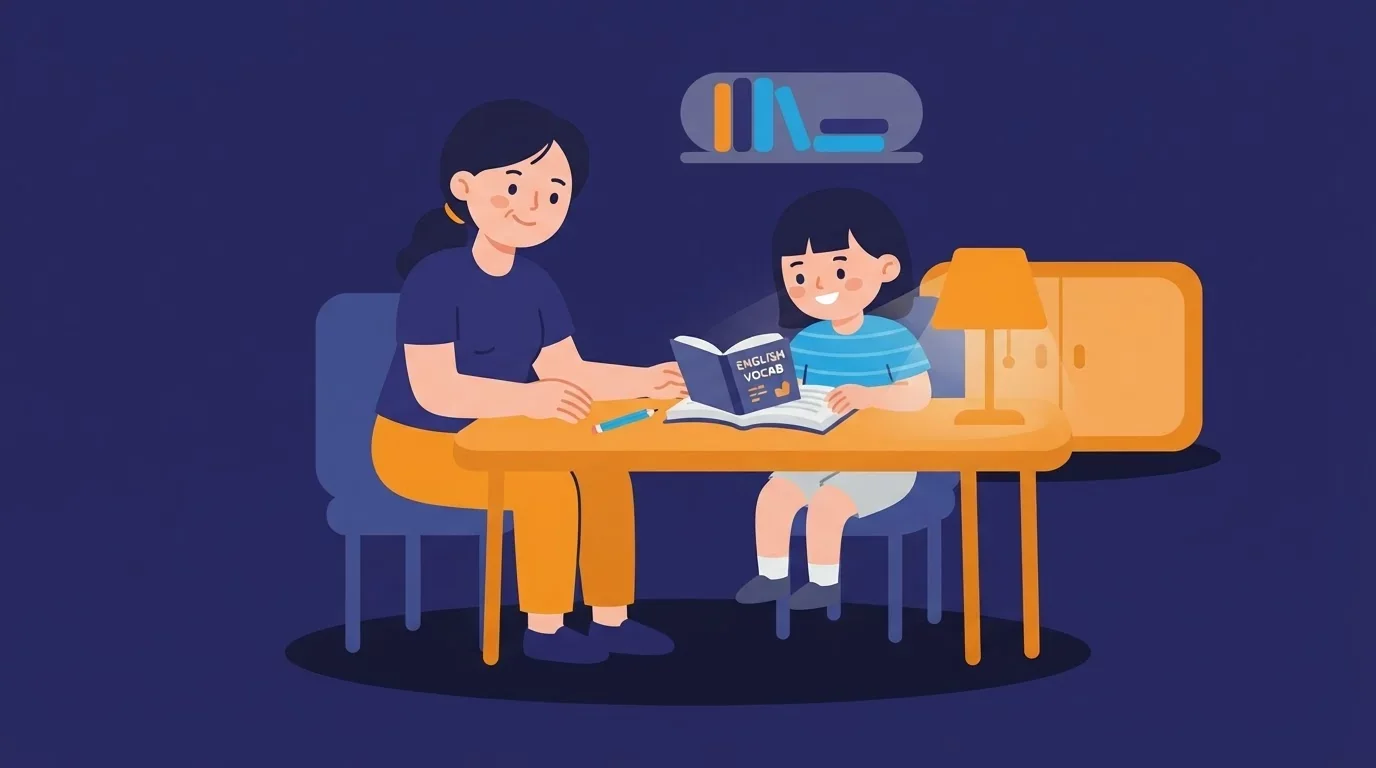
This at-home plan is designed for busy Primary 5 and Primary 6 students. It uses local texts to make learning relevant and effective. The goal is to master around 15-20 high-utility words per week through consistent, context-based practice. Dedicate just 20 minutes a day.
Week 1: Science, Technology and Our Future
- Focus: Words related to innovation, digital life and its challenges.
- Local Text Idea: Read an article from a local news source like The Straits Times or CNA on Singapore's Smart Nation initiatives.
- Sample Words:innovative, ubiquitous, implications, ethical, transform, seamless, potential.
- Activity of the Week: Create a 'Word Map' for the word 'ubiquitous'. Write the word in the centre. Branching out, write its definition, a synonym (e.g. pervasive), an antonym (e.g. rare) and a PSLE-style sentence showing you understand its meaning.
Week 2: Community and Social Responsibility
- Focus: Words describing community spirit, empathy and social issues.
- Local Text Idea: Explore the Singapore Kindness Movement's website, 'The Pride', for stories about local heroes and community initiatives.
- Sample Words:compassion, vulnerable, initiative, advocate, resilience, solidarity, galvanise.
- Activity of the Week: Write three distinct sentences using 'resilience', each applicable to a different PSLE composition theme (e.g. overcoming a personal challenge, a community bouncing back from a setback, a character showing emotional strength).
Week 3: Our Environment and Sustainability
- Focus: Green issues, conservation and climate change.
- Local Text Idea: Find an article on the National Parks Board (NParks) website about Singapore’s City in Nature vision or the Green Plan 2030.
- Sample Words:conservation, sustainable, biodiversity, detrimental, mitigate, crucial, impact.
- Activity of the Week: Practise the context-clue strategy. Cover the dictionary definition of 'detrimental'. Read the sentence from the text where it appears. Try to write your own definition based purely on the clues in the sentence, then check your accuracy.
Week 4: Personal Growth and Overcoming Adversity
- Focus: Words about character, challenges and perseverance. This is a classic theme for P6 English tuition and composition.
- Local Text Idea: Read a short biography of a Singaporean athlete like Joseph Schooling or a respected public figure.
- Sample Words:persevere, adversity, tenacity, pivotal, aspiration, formidable, surmount.
- Activity of the Week: Connect a new word to a personal experience. For instance, write a short journal entry about a time you had to 'persevere' through a difficult task. This deepens emotional connection to the word.
Week 5: Arts, Culture and Heritage
- Focus: Words for describing aesthetics, traditions and cultural expression.
- Local Text Idea: Read a review of a local play or an exhibition description on the National Heritage Board's website.
- Sample Words:evocative, poignant, heritage, aesthetic, legacy, vibrant, intricate.
- Activity of the Week: For the word 'poignant', find one synonym (e.g. touching) and one antonym (e.g. cheerful). Explain how the subtle difference in meaning changes a sentence.
Week 6: Consolidation and Mock Application
- Focus: Reviewing all words and applying them under timed conditions.
- Local Text Idea: Use a comprehension passage from a top school's past-year preliminary paper.
- Activity of the Week: Write a one-page composition based on a picture stimulus from a PSLE assessment book. Challenge your child to correctly use 5-7 words from the past five weeks. This simulates real exam pressure and reinforces active recall.
When is it time to consider professional help?
This six-week plan can significantly boost your child’s vocabulary. However, some students may need more structured guidance to build confidence or tackle specific weaknesses. This is where a good Primary English tuition centre or programme can make a difference.
With tuition fees starting from S$240 for four weekly lessons, the investment is significant. If you're considering this path, look for programmes that go beyond worksheets. The best support focuses on targeted remediation and provides opportunities for application, like mock oral exams, which are increasingly sought after since the removal of mid-year school exams.
For many families, flexible solutions like online tuition can provide the expert support needed without the logistical challenges. The key is finding a good fit that reinforces contextual learning, not just more memorisation.
Frequently Asked Questions
Why is memorising vocabulary not enough for the PSLE English exam?
Memorising vocabulary is not enough for the PSLE English exam because the updated syllabus rewards students who can understand and use words in context, not just those who know definitions. The exam tests the ability to apply words precisely across all papers, including writing, comprehension and oral communication, moving the focus from rote learning to active, contextual use.
How can I help my child improve their vocabulary for PSLE English at home?
You can help your child improve their vocabulary at home by following a structured, context-based plan, such as the 6-week programme using local texts described in the article. This method, one of the most effective PSLE English tips, focuses on teaching 15-20 high-utility words weekly through practical activities, which is more effective for building usable PSLE vocabulary than flashcards.
How do I know if my child is a 'word user' or just a 'word collector'?
You can tell if your child is a 'word user' by asking them to do three things with a word: define it, provide a synonym and use it correctly in a new sentence. A child who can confidently perform all three tasks is a 'word user' demonstrating true understanding, whereas a 'word collector' can likely only provide a basic definition.
What are the most important types of vocabulary words to learn for the PSLE?
The most important types of vocabulary words to learn for the PSLE are high-utility words that can be used flexibly across various topics, rather than obscure or 'bombastic' words. The learning plan focuses on thematic words related to common PSLE subjects like technology, social issues, the environment and personal growth, as these are crucial for both the comprehension and composition papers.
When should I consider getting P5 English tuition or P6 English tuition?
You should consider getting P5 English tuition or P6 English tuition if your child needs more structured guidance to build confidence or tackle specific weaknesses that at-home study cannot solve. If a student continues to struggle with applying vocabulary in context, a good primary English tuition programme can provide the targeted support and practice needed for improvement. Options like online tuition can also offer this expert help with more flexibility.