 SG
SG  VN
VN 

28-Day Local-Context PSLE Chinese Revision Plan: Turn Everyday Singaporean Moments into High-Scoring Answers
Why a ‘Local-Context’ Approach to PSLE Chinese Works
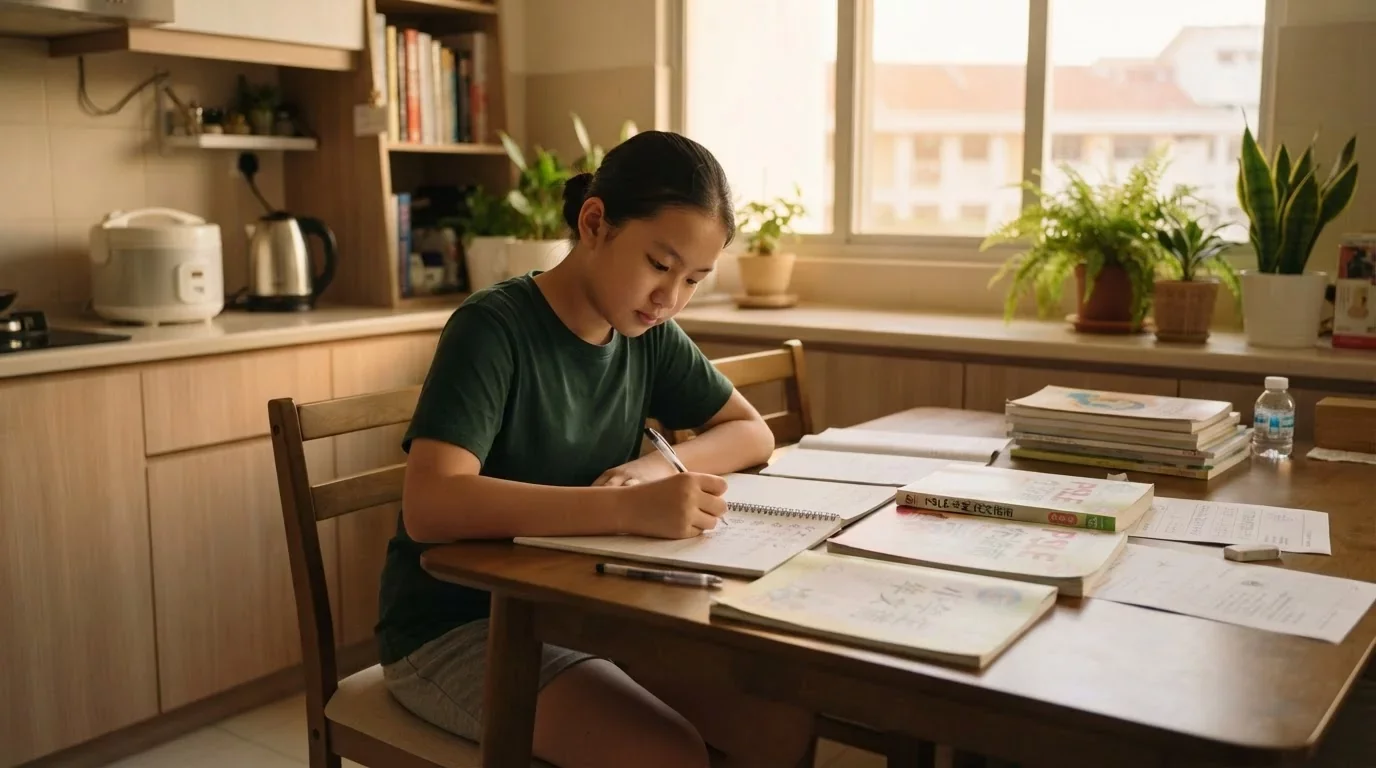
For many families, preparing for the PSLE Chinese paper feels like a grind of assessment books and tuition. This 28-day plan offers a different, more integrated approach. It turns everyday Singaporean life into a dynamic classroom, making the language relevant and alive for your child. Instead of just memorising idioms, they learn to use them when describing a long queue at a popular hawker stall. This method is not a shortcut. It is a strategy to build deeper, more applicable skills that align with what the Ministry of Education (MOE) and the Singapore Examinations and Assessment Board (SEAB) value: the ability to use the language in real-world situations.
This context-driven learning isn’t just a trend. It reflects a fundamental shift in the PSLE, where the new AL scoring system rewards genuine understanding over rote learning. By connecting revision to familiar sights and sounds, we reduce dependency on pure memorisation and build a stronger foundation for all three papers.
The PSLE Chinese Exam: Where Marks Are Often Lost
To revise effectively, we need to know the common pitfalls. While students may be proficient in vocabulary lists, marks are often lost in the application of language across different components.
The Overlooked 25%: PSLE Chinese Listening & Oral
The listening comprehension and oral components together make up a significant portion of the total score. The oral exam in particular tests a student's ability to respond to everyday scenarios. A simple daily habit of discussing the day’s events in Chinese for 5 to 10 minutes can build conversational confidence far more effectively than memorising model answers.
PSLE Chinese Comprehension: Reading Between the Lines
Like its English counterpart, the Chinese comprehension paper's biggest challenge lies in inferential questions. Students are generally good at finding literal answers but struggle to understand implied meanings. The key is training them to trace their inferences back to specific clues in the text, a skill best honed by practising with a wide variety of materials including local news articles or even community centre brochures.
PSLE Chinese Composition: Structure Is Everything
A stellar composition requires more than just good vocabulary. It needs a clear structure, logical flow and relevant content. By practising with prompts based on local experiences, students can write more authentically and persuasively. Instead of imagining a trip to a foreign country, they can write a vivid account of a visit to the newly revamped Bird Paradise.
Your 28-Day Local-Context PSLE Chinese Revision Plan
This plan breaks down revision into manageable, themed weeks. The goal is consistency not intensity. Dedicate just 15 to 20 minutes each day to these bite-sized tasks.
Week 1: The Community & Home (社区与家庭)
-
Listening: Listen to a parent recount their day at work for 5 minutes. Ask your child to summarise it in two sentences.
-
Reading: Find a notice in your HDB lift or condo lobby. What is its main purpose? Who is the intended audience?
-
Writing: Write a short paragraph (4 to 5 sentences) describing a family dinner, using at least two descriptive phrases (e.g., 热气腾腾的米饭, 香喷喷的菜肴).
Week 2: The Hawker Centre & Market (小贩中心与巴刹)
-
Listening: During your next hawker centre visit, have your child listen to how people order food. What are the common phrases used?
-
Reading: Look at a menu from a food stall. Ask your child to identify the most expensive dish and the most popular one based on visual cues.
-
Writing: Write a picture composition based on a scene at a bustling market. Focus on using sensory details: the sounds of bargaining, the smell of fresh produce.
Week 3: Getting Around Singapore (新加坡出行)
-
Listening: On the MRT, pay close attention to the announcements in Chinese. What is the next station? What side will the doors open on?
-
Reading: Analyse a bus stop advertisement. What product or service is it promoting? What words or images does it use to persuade you?
-
Writing: Your child has S$15 and wants to visit a friend in Pasir Ris from their home in Jurong. Have them write down a simple travel plan and budget in Chinese.
Week 4: School Life & Current Affairs (校园与时事)
-
Listening: Watch a short segment from Channel 8 news about a local event. Discuss the main points.
-
Reading: Read a school circular or e-newsletter. Summarise the most important announcement for a family member who missed it.
-
Writing: Write a short informal email to a friend about an upcoming school event, like Sports Day or a learning journey. This is a common situational writing format.
How to Track Progress Without Adding Stress
Forget marking every single mistake with a red pen. The aim is to build confidence and spot patterns. At the end of each week, review the work together. Ask your child: Which task was the easiest? Which was the most difficult? Focus on one recurring error, perhaps in sentence structure or a specific character, to improve in the following week. This approach is more sustainable than trying to fix everything at once and complements the work done in school or at a tuition centre.
A Parent's Role: Coach Not Just Corrector
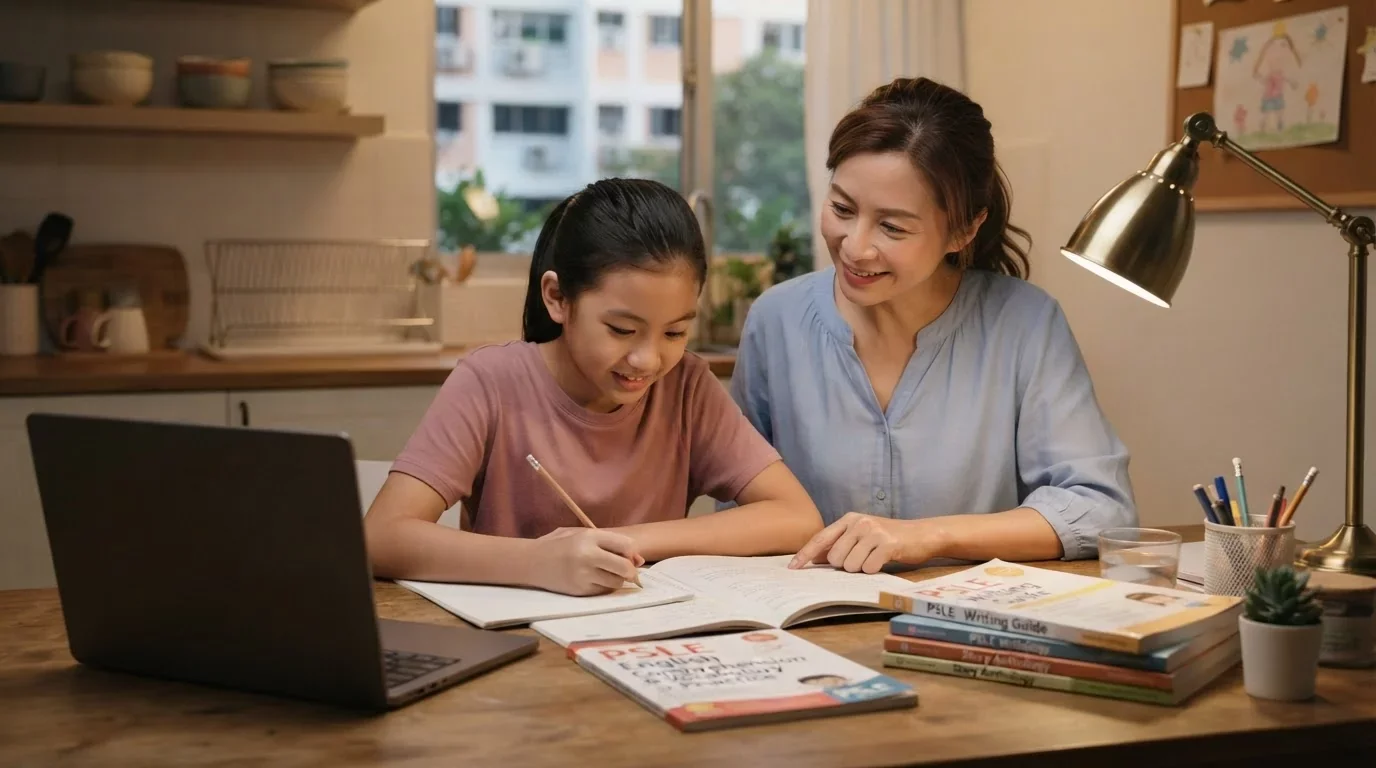
In Singapore’s competitive education landscape, it is easy to fall into the role of a taskmaster. This plan encourages you to be a learning partner. Engage with the tasks yourself. Share your own observations from the MRT ride. Laugh about mishearing a hawker’s order. By turning PSLE Chinese revision into a shared family activity, you make the language a living, breathing part of your home. You build not just a better student but a more confident and curious child, ready for the PSLE and beyond.
Frequently Asked Questions
Is Memorising Chinese Vocabulary Enough for a Good AL Score in PSLE Chinese?
Rote memorisation alone is often not enough for a good AL score in PSLE Chinese because the exam increasingly values the ability to use the language in real-world situations. The Ministry of Education (MOE) and the Singapore Examinations and Assessment Board (SEAB) now focus more on genuine understanding over rote learning. Using a local-context approach builds deeper, more applicable skills that align with what examiners look for.
How Can I Help My Child Improve Their PSLE Chinese Comprehension Score?
You can help your child improve their PSLE Chinese comprehension score by training them to understand implied meanings and trace their inferences back to specific clues in the text. A common challenge for students is moving beyond literal answers. To build this skill, it is helpful to practise with a wide variety of materials including local news articles and community brochures, not just assessment books.
What Is an Effective Way to Improve My Child's PSLE Chinese Composition?
An effective way to improve your child's PSLE Chinese composition is to focus on a clear structure, logical flow and relevant content drawn from personal, local experiences. A composition requires more than good vocabulary. By practising with prompts based on familiar Singaporean scenarios, like visiting a hawker centre or a local attraction, students can write more authentically and persuasively.
How Can We Prepare for the PSLE Chinese Listening and Oral Exams at Home?
You can prepare for the PSLE Chinese listening and oral exams at home by incorporating short, daily conversations in Chinese about everyday events. These two components make up a significant 25% of the total marks and test a student's ability to respond to real-life scenarios. A simple habit of discussing the day's events for 5 to 10 minutes can build conversational confidence more effectively than memorising model answers.
Is This 28-Day Revision Plan Very Intensive and Time-Consuming?
No, this 28-day PSLE Chinese revision plan is designed for consistency not intensity, requiring only about 15 to 20 minutes of practice each day. The goal is to make revision manageable through bite-sized tasks themed around everyday life. This approach complements schoolwork or lessons from a Chinese tuition centre in Singapore by turning moments like a family dinner or an MRT ride into learning opportunities.