 SG
SG  VN
VN 

P3 to P4 Science Transition: Building a Strong Foundation for PSLE
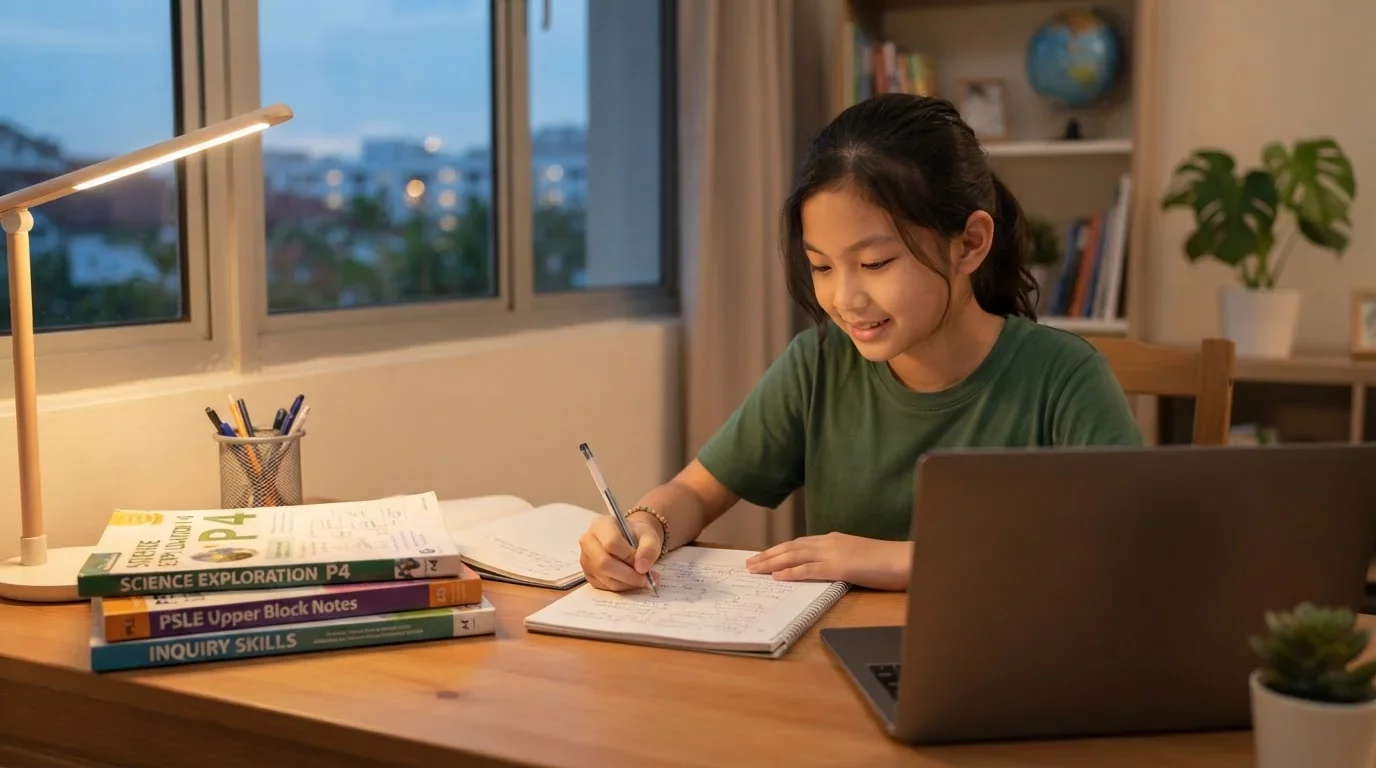
Why The Primary 3 To Primary 4 Science Jump Feels So Big
The transition from Primary 3 to Primary 4 Science is one of the most significant academic leaps your child will face in lower primary. It’s a shift from foundational exposure to genuine conceptual understanding, laying the groundwork for upper block Science and beyond. Many parents I speak with are surprised by the increased rigour but this change is by design. It builds the analytical skills needed for Primary 5, Primary 6 and the PSLE.
In fact, data from top academic centres suggests that roughly 30% of PSLE Science questions are based on Primary 3 and Primary 4 topics. Mastering this content isn't just about passing Primary 4 exams. It's about building a crucial foundation that will not be extensively retaught in upper primary. This is the year where the 'what' of Science evolves into the 'how' and 'why'.
A Veteran Educator's Breakdown: Primary 3 Vs Primary 4 Science Demands
To understand the leap, you need to see the curriculum changes side-by-side. The MOE syllabus intentionally increases the cognitive load. Primary 3 focuses on observing and classifying, while Primary 4 demands analysis and a grasp of interconnected systems. This is the first real test of a child’s scientific reasoning.
Here’s a clear breakdown of the shift:
| Aspect | Primary 3 Focus (lower block foundation) |
Primary 4 Expectation (upper block bridge) |
|---|---|---|
| Core Themes & Topics | Diversity: Classifying living/non-living things, materials. Cycles: Basic life cycles of some animals and plants. Systems: Plant parts, magnets. |
Systems: Human digestive system, plant transport system. Energy: Heat and light energy, states of matter. Cycles: More complex life cycles, matter cycles. |
| Question Style | Mostly direct recall. Questions ask to “Name”, “State” or “Classify”. Multiple Choice Questions (MCQs) are straightforward. | Increased complexity in MCQs. Introduction of multi-step Open-Ended Questions (OEQs) that require students to “Explain”, “Compare” or “Relate”. |
| Required Skills | Observation, basic classification, memorising facts and keywords. | Analytical reasoning, linking concepts, using evidence from diagrams or tables and formulating structured written answers. |
How To Bridge The Gap: 4 Expert Strategies For Mastery
Navigating this transition requires a deliberate strategy. Rote learning, which may have worked in Primary 3, is no longer sufficient. Your child needs a new toolkit for thinking and answering questions. These strategies are what we use to prepare students for the demands of advanced primary Science tuition.
1. Go Beyond Memorising Keywords In Primary 4, knowing the word “digestion” is not enough. A student must be able to explain the process, name the organs involved and describe their functions in a sequence. Encourage your child to explain concepts to you in their own words. Use diagrams to map out systems like the digestive tract. Correcting misconceptions early prevents them from becoming fossilised errors in Primary 5.
2. Build A Framework For Open-Ended Questions (OEQs) The fear of OEQs often begins in Primary 4. Students struggle to structure their thoughts. Teach them a simple framework. For example, when a question asks to explain a phenomenon, the answer should have a clear cause-and-effect link. Identifying command words like “describe” versus “explain” is a critical skill. An explanation requires a scientific principle while a description only requires observation.
3. Make Science Real In Your HDB Home The Primary 4 topics of Heat, Light and Matter are perfect for home-based learning. Why does a metal spoon in hot soup feel warm? (Heat transfer). Why does a puddle of water disappear after a few hours? (Evaporation). These are not just interesting questions; they are exam scenarios. Relating abstract concepts to everyday Singaporean life makes learning sticky and intuitive. A simple experiment in the kitchen can be more powerful than hours of reading.
4. Practise With A Purpose Don't just drill Primary 4 assessment books. The goal is to prepare for the upper block. Once your child has grasped a Primary 4 topic like ‘Matter’, challenge them with Primary 5 top school exam questions on that same topic. This shows them the level of application expected and builds confidence. It shifts their mindset from merely passing Primary 4 to preparing for the future challenges of Science tuition for Primary 5.
Finding The Right Support For Your Child's Primary 4 Journey
While some children manage this transition independently, many benefit from structured support. The goal is to build skills and confidence not just content knowledge. A good primary Science tuition programme for this level focuses on teaching students how to think and analyse scientifically.
Here are some options to consider:
-
Specialised tuition centres: Some specialised tuition programmes are specifically designed to bridge the Primary 3-Primary 4 gap, focusing on scientific inquiry and exam techniques.
-
Online tuition platforms: An online tuition platform like Geniebook can offer personalised learning paths. AI-powered tools can identify a child's specific weaknesses in Primary 4 topics and provide targeted practice with worksheets and explanation videos, making revision highly efficient.
-
Subsidised schemes: For families who need financial assistance, organisations like Mendaki offer quality, subsidised tuition schemes (MTS) for students, often in collaboration with CDAC and SINDA.
Ultimately, the support you choose should prepare your child for the marathon ahead, including the rigours of Primary 6 Science tuition and the PSLE. The Primary 4 year is the best time to invest in building a strong, stress-free foundation.
Frequently Asked Questions
Why Is P4 Science So Much Harder Than P3 Science?
Primary 4 Science feels much harder than P3 Science because the curriculum intentionally shifts from simple observation and classification to requiring genuine conceptual understanding and analytical skills. The MOE Science syllabus moves from foundational exposure in P3 to demanding analysis of interconnected systems in P4, which is the first real test of a child’s scientific reasoning and the bridge to upper block Science.
How Important Is The P3 And P4 Science Syllabus For The PSLE?
The P3 and P4 Science syllabus is crucial for the PSLE, as approximately 30% of PSLE Science questions are based on topics from these two levels. Mastering this content is vital because these foundational concepts are not extensively retaught in upper primary, making P4 a critical year for building a strong base for the final exam.
What Is The Main Difference Between The MOE Science Syllabus For Primary 3 And Primary 4?
The main difference in the MOE Science syllabus is the cognitive demand, with Primary 3 focusing on observing and classifying while Primary 4 introduces analysis and requires students to understand interconnected systems. For example, P3 Science involves basic classification and identifying plant parts, whereas P4 Science covers more complex topics like the human digestive system, heat and light energy and multi-step questions that ask students to 'explain' or 'compare'.
How Can I Help My Child Answer Open-Ended Science Questions In Primary 4?
You can help your child answer open-ended questions (OEQs) by teaching them a framework to structure their answers, such as using a clear cause-and-effect link for 'explain' questions. It is also important to help them identify command words, understanding that 'explain' requires a scientific principle while 'describe' only requires observation. Practising these skills helps overcome the common fear of OEQs that begins in P4.
What Should I Look For In Primary Science Tuition To Help My Child With The P4 Transition?
When looking for primary Science tuition for the P4 transition, you should choose a programme that focuses on building scientific thinking and analysis skills, not just memorising content. Whether through a specialised centre or online tuition in Singapore, the right support will teach a child how to think and analyse scientifically, preparing them for the greater challenges of Science tuition for Primary 5 and beyond.