


How to Analyze Your Child’s Exam Paper: A Checklist for Parents

When a returned exam paper lands on the kitchen table in Singapore, the initial instinct for many parents is to look straight at the top right corner. The Achievement Level (AL) or percentage score tells you where your child stands, but it tells you almost nothing about how they got there. A score of 75 percent could mean a student who knows the content but is untidy, or it could mean a student who is working hard but has massive holes in their foundational knowledge.
To help your child improve, you need to move beyond the number. You need to perform a "post-mortem" on the paper itself. By following a structured exam paper analysis, you can identify whether the lost marks were a result of "I don't know" (conceptual) or "I wasn't careful" (procedural).
The Conceptual Gap vs Careless Mistake Audit
The first step in any exam paper analysis is categorising every lost mark. Take a red pen and a piece of paper, then go through the script question by question. You are looking for two distinct types of errors:
- Conceptual Gaps: These are marks lost because the student simply did not understand the underlying principle. In Science, this might be a failure to explain energy conversion. In Math, it could be a misunderstanding of how to find the area of a shaded triangle. If a child cannot explain the "why" behind a question even after seeing the correct answer, the gap is conceptual.
- Careless Mistakes: These are the most frustrating marks to lose. The student knew the concept but made a "slip." This includes miscopying a number from the question to the working, forgetting to include units like "cm" or "kg," or simple calculation errors in the final step.
The "Keyword" and "Technique" Checklist
In the Singapore Ministry of Education (MOE) syllabus, especially for Science and English, knowing the answer is only half the battle. The other half is using the correct technique. During your exam paper analysis, check for the following:
- Missing Keywords: In Science, did they use "attracted" instead of "magnetised"? Did they mention "heat gain" but forget to say "from the surroundings"?
- Instruction Blindness: Did the question ask them to "list" or "explain"? If they gave a one-word answer to an "explain" question, they lost marks on technique, not knowledge.
- The Final Step Slip: In Math word problems, did they find the value of u but forget that the question asked for the total cost of three items?
Let AI Do the Heavy Lifting: AI Mastery Reports
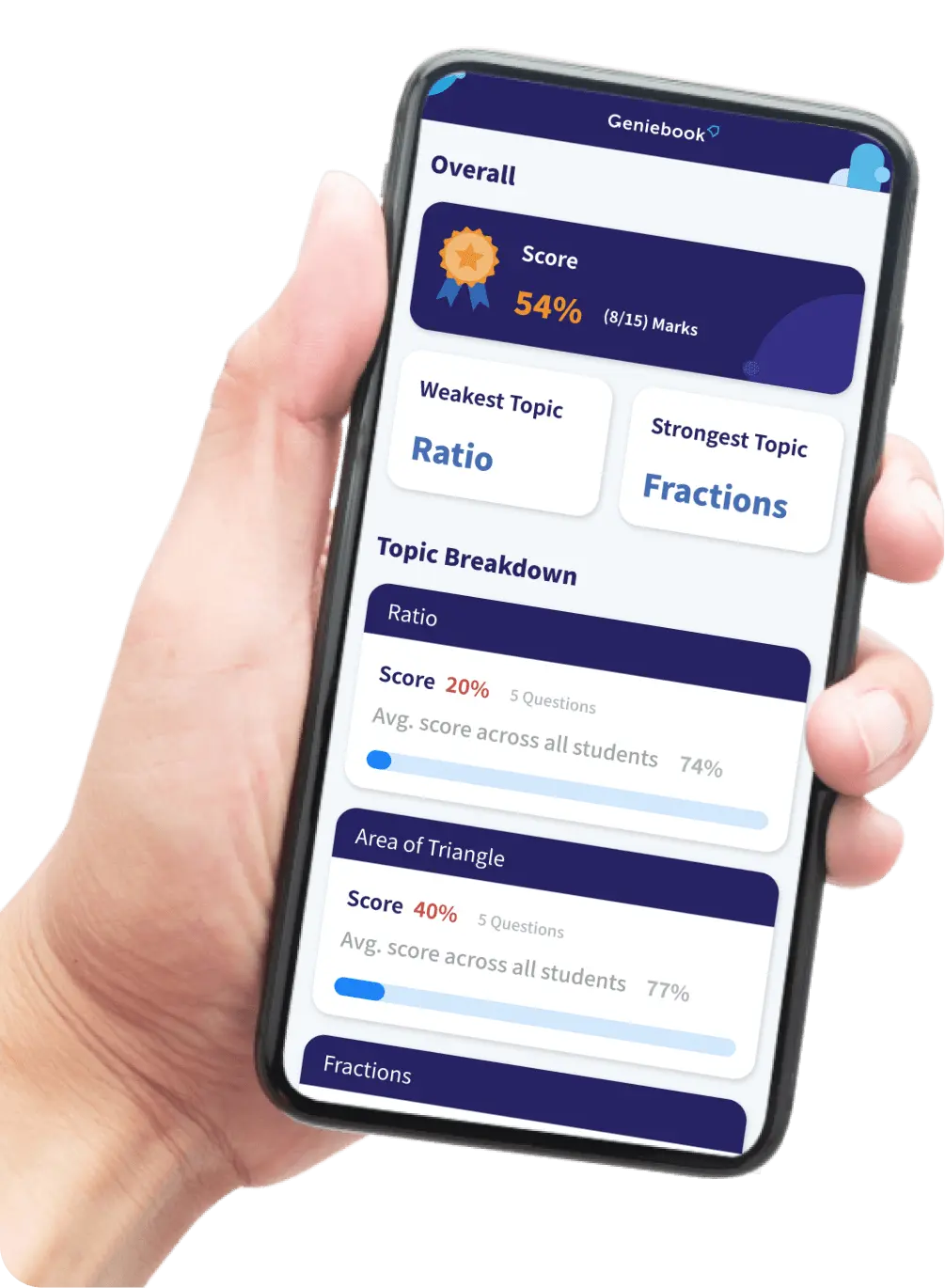
If the idea of spending your Sunday afternoon manually categorising Math questions feels overwhelming, you aren't alone. This is exactly why we developed the AI Mastery Reports at Geniebook. We believe that parents should be strategic coaches, not data entry clerks.
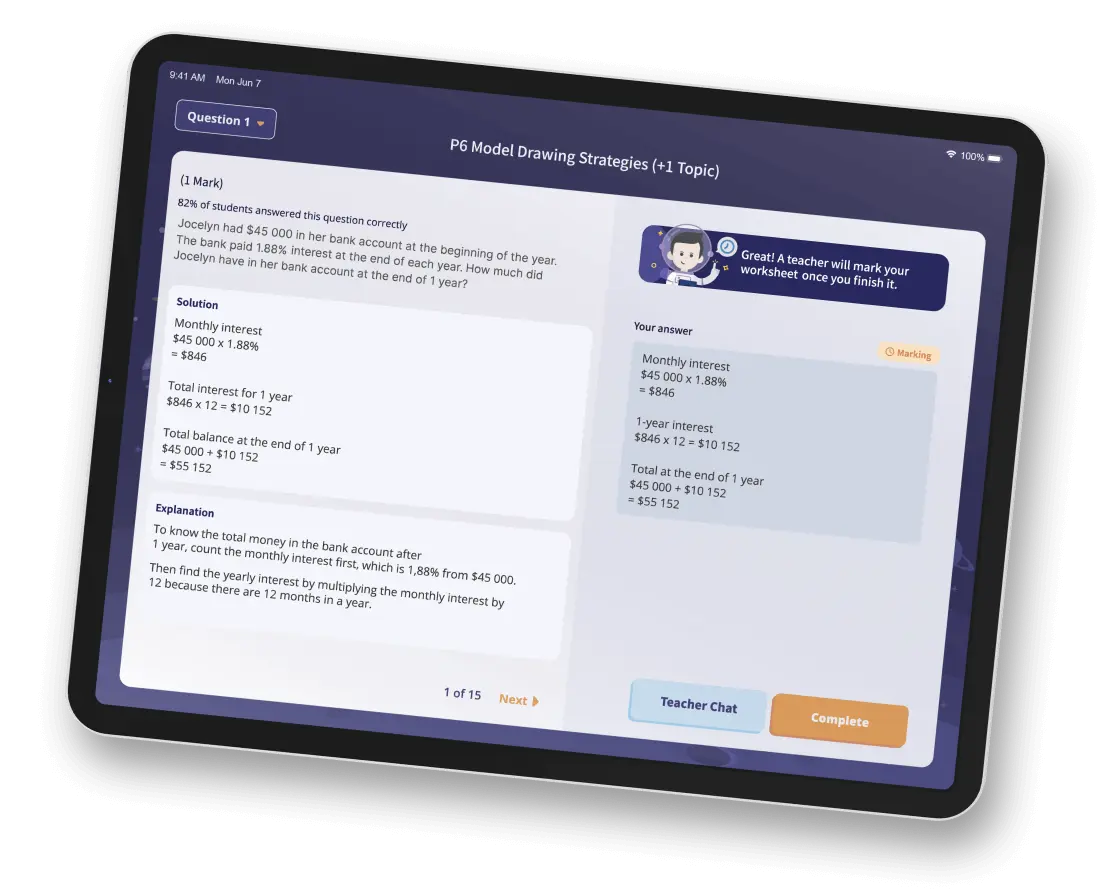
Our system automates the entire exam paper analysis process. As your child completes worksheets and assessments, our AI tracks every single click and answer.
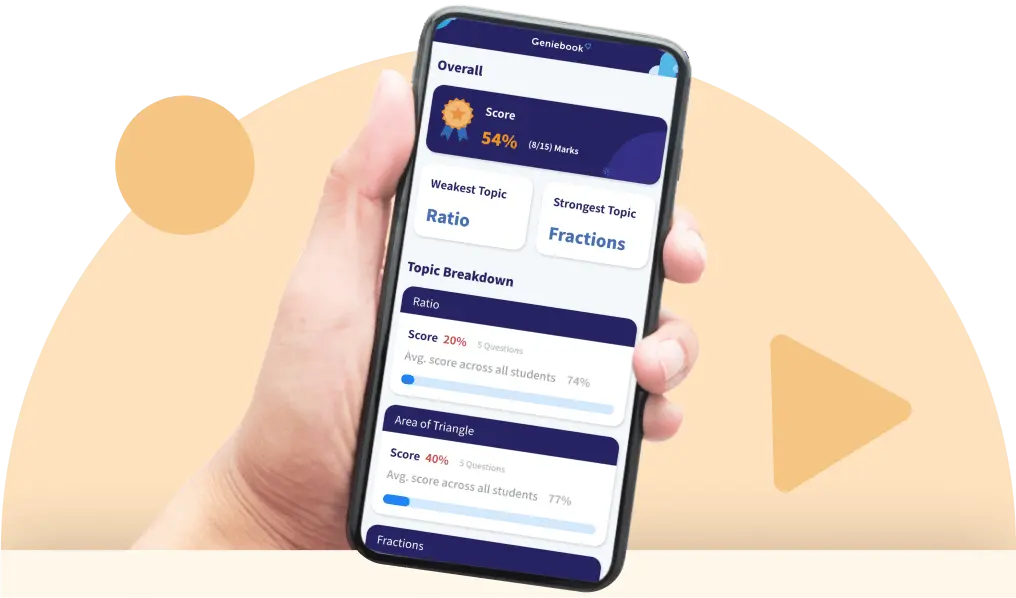
- Automatic Gap Detection: The AI identifies if a student is losing marks due to a recurring conceptual weakness (like Ratio) or a procedural one (like Unit Conversion).
- Visual Progress Tracking: Instead of a pile of paper, you get a clean, data-driven report. You can see at a glance which topics are "Mastered" (Green), "Developing" (Amber) or "Critical" (Red).
- Effort vs Result: The report also tracks attempt rates, helping you see if a low score is due to a lack of effort or a genuine struggle with the difficulty level.
Developing a Forward-Looking Action Plan
Once you have completed the exam paper analysis, the most important thing is what you do next. A common mistake is to tell the child to "be more careful" next time. This is vague advice that rarely works. Instead, create a specific action plan based on your findings.
If the audit showed 10 marks lost to careless calculation, set a goal of doing five minutes of mental sums every morning. If the audit showed a conceptual gap in "Geometry," assign three targeted GenieSmart worksheets on that specific topic. By focusing on the "Red" areas identified in your AI Mastery Reports, you ensure that the next revision cycle is efficient and targeted. You stop practicing what they already know and start fixing what actually matters.
Conclusion: Turning Data into Confidence
Analyzing an exam paper shouldn't be a source of stress or a reason for a lecture. It should be a fact-finding mission. When you approach the results with a checklist and data, you remove the emotion from the conversation. Your child stops feeling like they "failed" and starts seeing their mistakes as a map for their next victory.
By leveraging the precision of AI Mastery Reports, you can stay informed without the burnout of manual tracking. You gain a clear-eyed view of your child's academic health, allowing you to provide the right support at the right time.
Book a Complimentary Strengths Analysis today to receive your first automated Mastery Report and see exactly where your child stands before the next exam season.