


Stop Losing Marks to Careless Mistakes: 5 Habits to Build Mathematical Accuracy
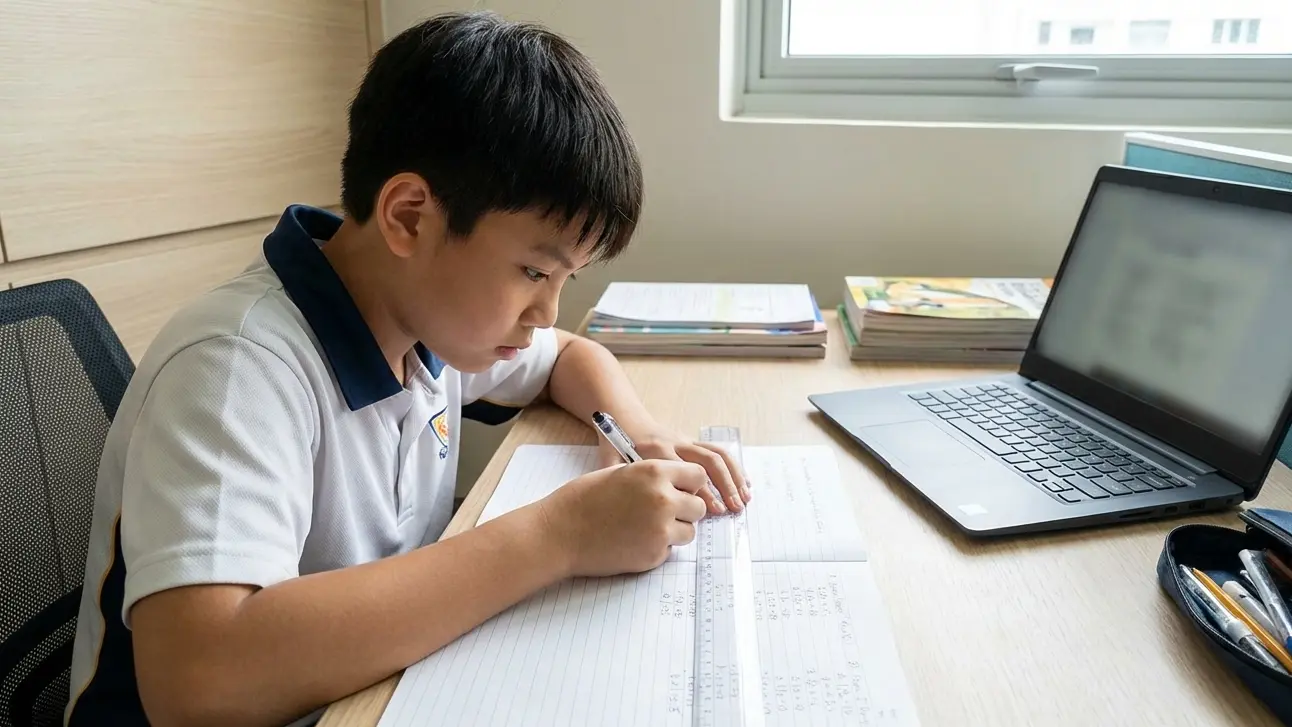
The most common frustration for parents in Singapore after a Math exam is the discovery of the "careless error." You look at the returned paper and see that your child understood the complex four-mark problem but lost everything because they copied a "6" as a "0" or failed to convert kilometres to metres. It is heart-breaking for the student because they have the conceptual knowledge but cannot translate it into a high score. Improving mathematical accuracy is not about studying harder; it is about building a systematic way of working that leaves no room for slips.
In the fast-paced environment of a primary or secondary exam, the brain often moves faster than the pen. This disconnect is where most marks are lost. To fix this, students need to move beyond "looking over" their work and start using active checking mechanisms.
Habit 1: The "Vertical Alignment" Rule
Neatness is not a matter of aesthetics; it is a tool for precision. Many careless mistakes happen during the "transfer" stage when a student moves from one line of a calculation to the next. If the equal signs and digits are not aligned vertically, it is incredibly easy to misread your own handwriting.
Encourage your child to treat every Math problem like a vertical column. By keeping digits and decimal points aligned, they can see exactly where a number came from. This simple habit of neatness acts as a visual guardrail. It makes it nearly impossible to accidentally add a tens digit to a hundreds digit or lose a negative sign during algebraic expansion. Mathematical accuracy starts with a clean workspace.
Habit 2: Reverse-Engineering the Answer
The biggest mistake students make is checking their work by simply re-reading what they have already written. This is ineffective because the brain tends to repeat the same logical error it made the first time. To truly check for accuracy, students should use the "Reverse-Engineering" method.
If a student has solved an algebraic equation and found that x = 5, they should plug that number back into the original question to see if it works. If they solved a subtraction problem, they should add the result back to the smaller number to see if it equals the original total. By approaching the problem from the opposite direction, the brain is forced to process the data fresh, making it far more likely to catch a calculation slip.
Habit 3: Identifying Recurring Error Patterns with AI
Every student has a "signature" careless mistake. Some consistently forget to write the units (like cm² or $), while others always make errors when regrouping in subtraction. It is difficult for a human tutor or a busy parent to spot these patterns across months of worksheets.
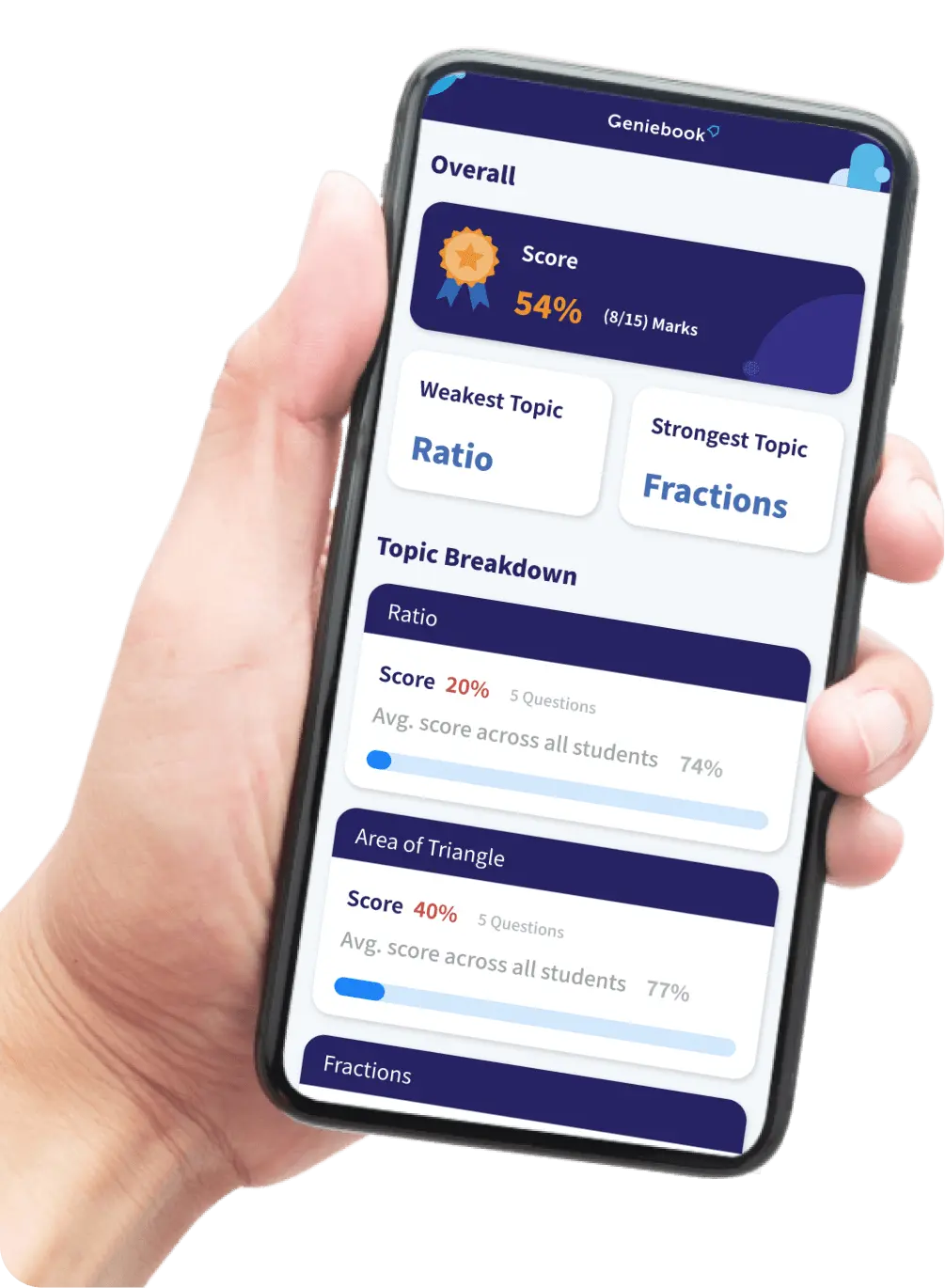
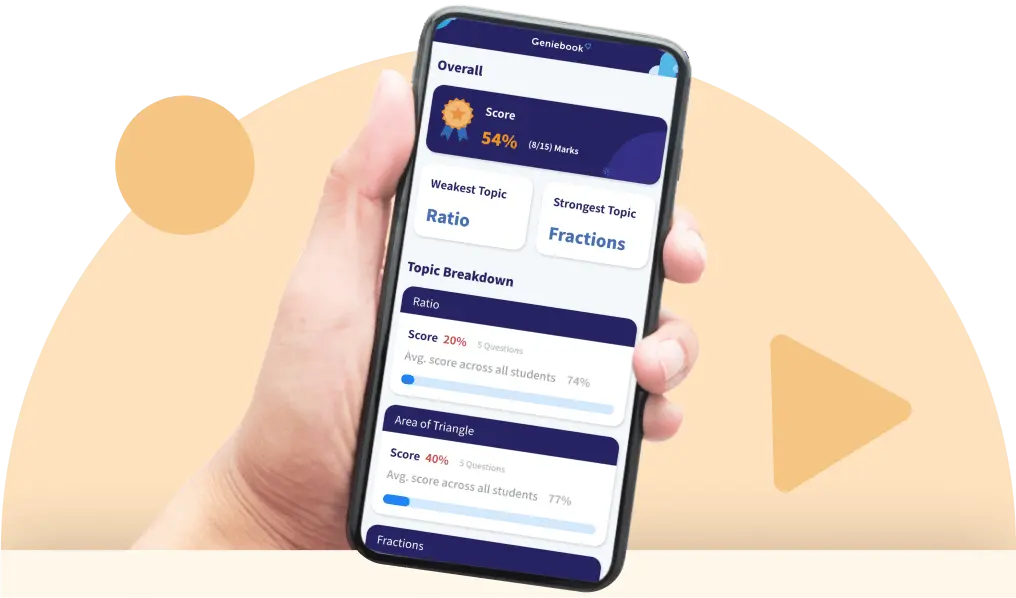
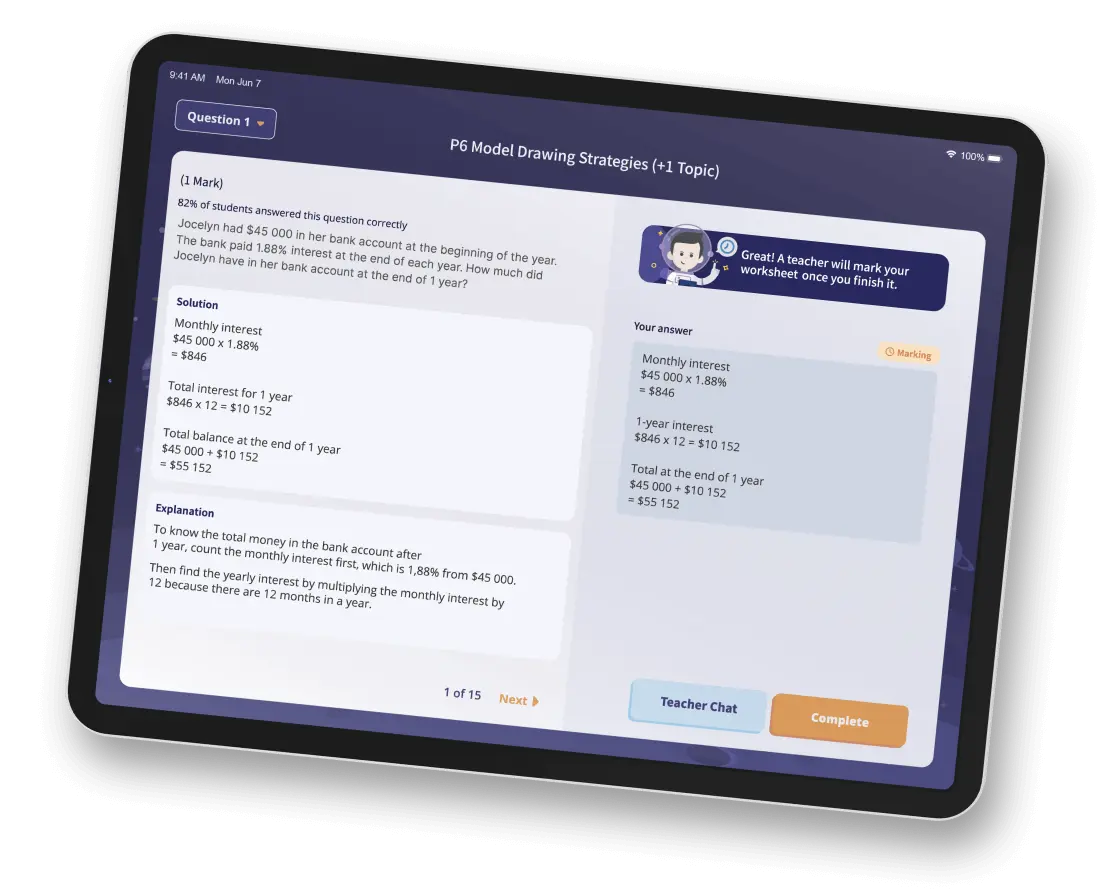
This is where the Geniebook AI becomes an essential partner in building mathematical accuracy. Our AI Worksheets don't just mark an answer as right or wrong. They analyze the specific way a student fails.
- Pattern Recognition: Our system can identify if a student is consistently making "transfer errors" or "unit conversion slips."
- Targeted Practice: Once a pattern is found, the AI generates specific questions that "bait" the student into making that specific mistake again. By forcing the student to confront their recurring errors in a low-stakes environment, we build the "mental muscle memory" needed to avoid those same traps during the official Ministry of Education (MOE) exams.
Habit 4: The "Units and Sanity" Check
Before moving to the next question, a student should spend five seconds on a "sanity check." This involves looking at the final answer and asking: "Does this number actually make sense in the real world?"
If a word problem asks for the mass of an apple and the student's answer is 50kg, a quick sanity check will immediately signal that something went wrong in the decimal placement. Similarly, students must habitually scan for units. A perfect numerical answer is often worth zero marks in a Science-based Math question if the unit is missing. Making the "unit check" the very last step of every single question is a high-yield habit for protecting marks.
Habit 5: Bracket and Bubble Checking
In the final ten minutes of an exam, most students aimlessly flip through pages. Instead, they should use the "Bracket and Bubble" technique. They should put a bracket around the final answer to ensure it matches what the question actually asked for (e.g., did the question ask for the area or the perimeter?). Then, they should check the "bubble" on the Optical Answer Sheet (OAS) to ensure they haven't shaded the wrong row.
This habit ensures that even if a mistake was made, it is caught before the paper is handed in. Developing mathematical accuracy is about accepting that humans are prone to errors and building a safety net to catch them.
Conclusion: Accuracy is a Skill, Not an Accident
Losing marks to careless errors is a fixable problem. When a child says "I knew how to do it," they are halfway there. The second half is building the discipline to ensure their pen reflects their knowledge. By focusing on vertical alignment, reverse-checking and using AI to identify personal "trap" patterns, students can walk into the exam hall with a new level of confidence.
Book a Complimentary Strengths Analysis today to see how our AI-driven worksheets can identify your child’s specific error patterns and help them build perfect mathematical accuracy.