


Online Math Diagnostic Autopsy: 3 Errors Costing Your Child Marks

What Are We Getting Wrong With Online Mathematics Diagnostics?
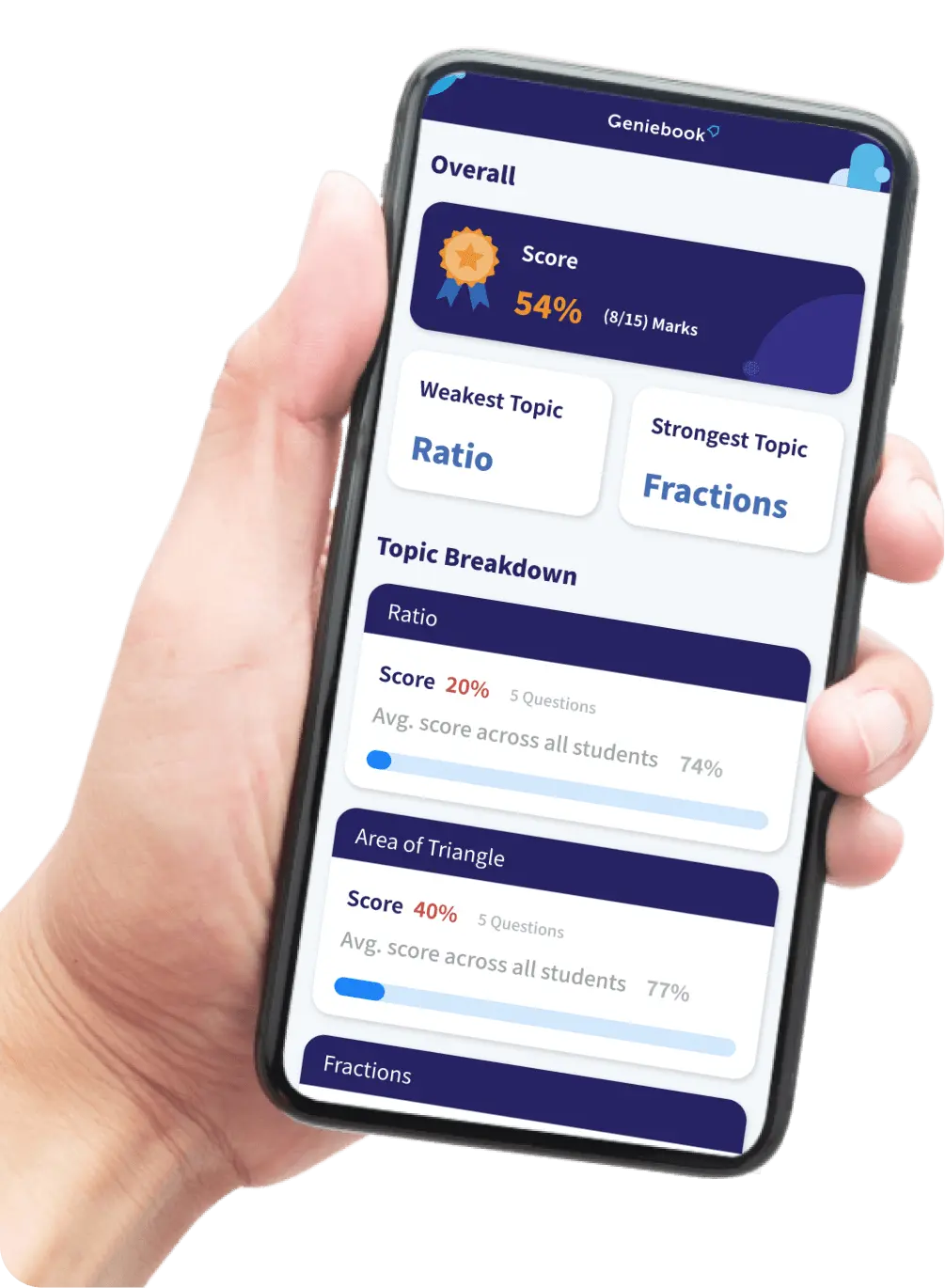
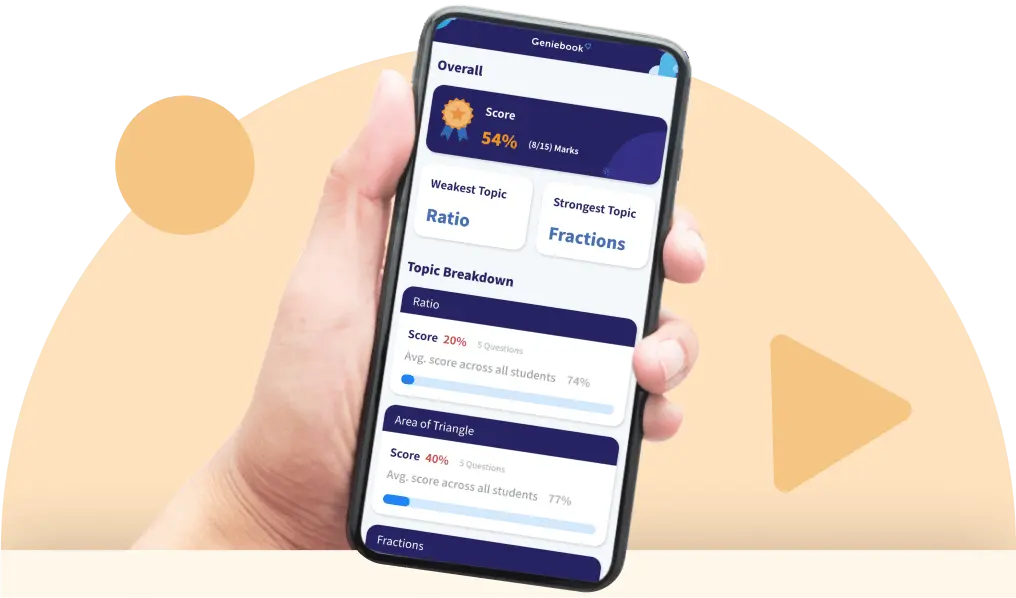
You’ve just received your child’s online mathematics diagnostic report. The first instinct for most parents is to look at the overall score. A high score brings relief. A low one, anxiety. But this focus is the first mistake. The real, actionable intelligence isn't in the percentage but in the errors themselves. After decades in Singapore’s education system, I've seen parents repeatedly misinterpret these valuable reports, leading to frustrating cycles of practice with no real improvement. Here are the three most common and costly errors.
Error 1: Chasing 'Careless' Mistakes, Missing the Root Cause
It’s tempting to dismiss an error as 'careless'. When your child writes 7 x 8 = 54, it feels like a simple slip that just needs more practice. But often, this isn't the case. I once worked with a Primary 6 student who kept making small calculation mistakes on complex PSLE Paper 2 word problems involving rate and volume. His parents were convinced he was just being sloppy under pressure.
The diagnostic autopsy told a different story. The calculation errors were merely symptoms. The real issue was that he fundamentally didn't understand how to set up the multi-step problem. His cognitive load was so high from trying to figure out the steps that he had no mental bandwidth left for accurate calculation. We stopped drilling multiplication and went back to re-teaching the problem-solving framework. The 'careless' mistakes vanished.
Error 2: Ignoring Yesterday’s Gaps for Today’s Topics
Another frequent misstep is focusing solely on the current topic. A Primary 5 diagnostic might show weakness in algebra, so the immediate reaction is to drill more algebra questions. This rarely works. More often than not, the problem lies in a prerequisite topic from a year ago.
A shaky understanding of Primary 4 number operations or foundational concepts of variables makes it nearly impossible to master Primary 5 algebra. A good diagnostic should function like a building surveyor, identifying the cracks in the Primary 4 foundation rather than just pointing out the peeling paint on the Primary 5 top floor. Without fixing the foundation, any new learning built on top will be unstable and likely to collapse during an exam.
Error 3: Treating a Diagnostic Like a Final Exam
Perhaps the biggest error is one of mindset. A diagnostic test is not a summative assessment like the PSLE. Its purpose is not to deliver a final verdict. It is a formative tool, a map that shows you exactly where the learning gaps are. When a report is treated as a final grade, it becomes what one tuition centre aptly called a 'decoration': a piece of paper to be filed away.
Its true purpose is to provide actionable data for targeted intervention. Every wrong answer is a breadcrumb leading you to a specific misunderstanding. Without a proper 'autopsy' of these errors, the test is a wasted opportunity.
So, What's the Real Problem? Identifying True Root Causes
To move beyond a superficial analysis, you need to learn to distinguish between different types of errors. An AI-powered diagnostic can do this automatically but you can also do it manually by asking 'why' an answer was wrong. The error is a symptom. The root cause is the diagnosis.
| Symptom (Superficial Error) | Root Cause (What to Fix) | Example |
|---|---|---|
| Wrong Value in Fraction Problem | Conceptual Gap | Calculating 1/4 of the total instead of 1/4 of the remainder. The student doesn't truly grasp the "branching" concept in fraction word problems. |
| Incorrect Data Point Extracted | Representation Error | Misreading the scale on a line graph (e.g., assuming each small marking is 1 unit when it actually represents 2 units). The student struggles to interpret intervals correctly. |
Correcting a 'Setup Error' in model drawing requires very different intervention from fixing a 'Conceptual Gap' in fractions. One needs practice in translating language and equating parts into visual proportions. The other needs the core branching concept to be re-taught from the ground up.
How Personalised Online Tuition Turns Diagnostics Into Mastery
This is where effective online tuition becomes more than just a convenience. The shift towards digital learning, accelerated since 2020 and supported by MOE's own initiatives like the Singapore Student Learning Space, has made truly personalised learning accessible.
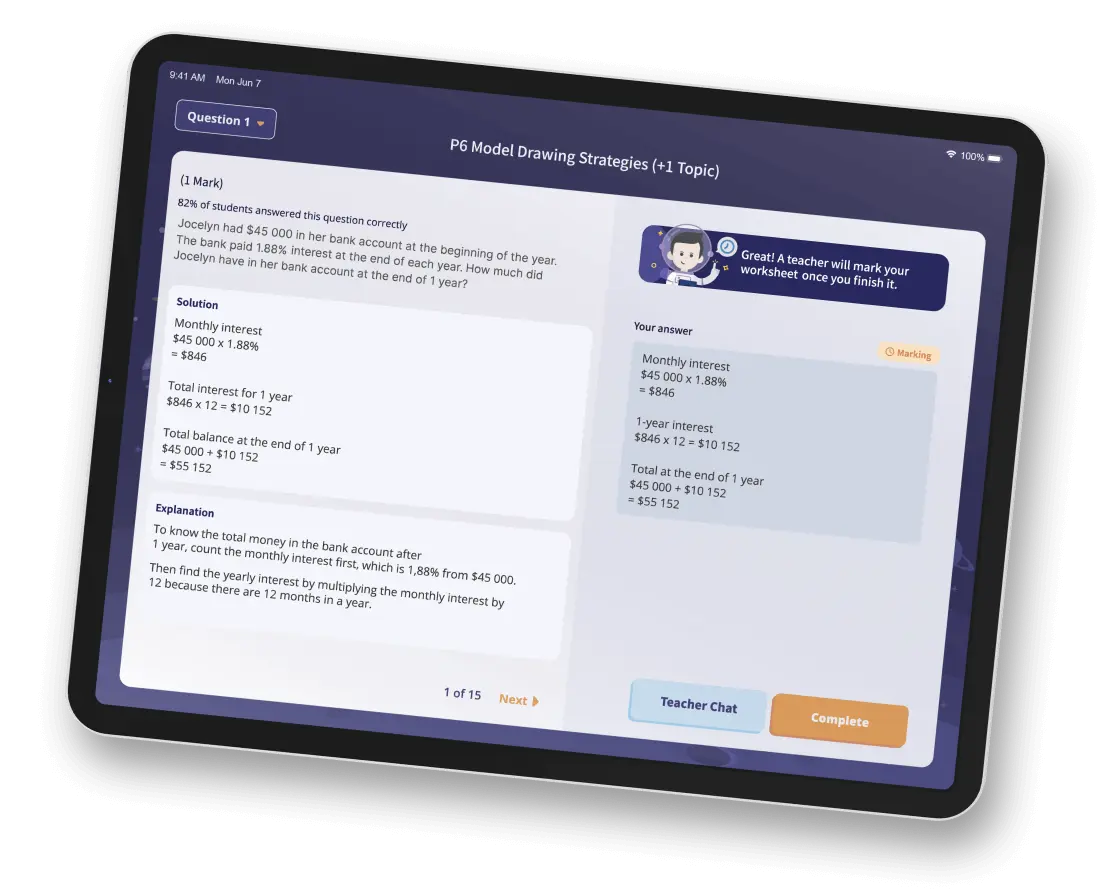
Leading e-tutoring platforms don't just provide a test and a score. They use diagnostic data to create a dynamic and personalised learning path. If the system flags a weakness in Primary 4 fractions, it will automatically assign lessons on that specific prerequisite before challenging the student with Primary 6 rate problems that depend on it. This integrated approach ensures that foundational gaps are repaired, not just patched over.
This level of precision is what makes modern tutoring services online so effective. It’s a targeted strike on learning gaps, guided by data.
A Parent's 4-Step Action Plan for Diagnostic Reports
Instead of feeling overwhelmed by a report, use it to take control. Here is a simple, actionable framework:
- Ignore the score (at first). Open the report and go straight to the list of incorrect answers. This is your treasure map.
- Play detective. For each wrong answer, ask your child to explain their thinking. Was it a genuine slip, or can they not explain the underlying concept? Note down the 'why'.
- Hunt for patterns. Look at all the 'whys'. Are the mistakes clustered around a single topic, like fractions or ratios? Or do they all involve multi-step word problems? This pattern reveals the true foundational weakness.
- Target the gap, not the topic. Once you find the root cause, focus your effort there. If Primary 4 model drawing is the issue, re-teach it. Don't just drill more Primary 6 questions. This is where a live tutor online or an adaptive learning system can provide the specific, targeted help your child needs to rebuild their understanding.
The Final Word
An online mathematics diagnostic is a powerful tool but only if used correctly. Stop treating it like a final exam and start treating it like a doctor's report: a detailed analysis that guides a precise treatment plan. By performing a proper autopsy of the errors and focusing on the foundational gaps they reveal, you can turn these insights into real, lasting improvement for your child as they prepare for PSLE 2027 and beyond.
Frequently Asked Questions
What Should I Do if My Child Gets a Low Score on Their Maths Diagnostic Test?
The first step is to ignore the overall score and instead focus on the specific questions your child answered incorrectly. A maths diagnostic test is not a final exam but a tool to identify learning gaps, so the real value is in analysing the errors, not the percentage. By asking your child to explain their thinking for each mistake, you can uncover the root cause, such as a conceptual gap or a problem-solving framework issue.
How Can I Tell if My Child's Maths Mistakes Are Just 'Careless' or a Bigger Problem?
You can tell if a mistake is more than just 'careless' by looking for underlying patterns of misunderstanding rather than focusing on the mistake itself. For example, a calculation error on a complex PSLE Maths word problem might not be carelessness but a symptom that your child is struggling to understand the multi-step problem, causing cognitive overload. A proper diagnostic autopsy involves finding the root cause which reveals the true learning issue.
How Can Online Tuition Help Fix the Problems Found in a Maths Diagnostic Report?
Effective online tuition for students can help by using the data from a diagnostic report to create a personalised learning path for your child. Instead of just drilling the current topic, leading e-tutoring platforms identify and address foundational gaps from previous years, such as a weakness in Primary 4 fractions affecting performance in Primary 6 rate problems. This targeted approach ensures that root causes are fixed for lasting understanding.
Why is My Child Struggling With Their Current Maths Topic Even After a Lot of Practice?
Your child may be struggling with their current maths topic because of a hidden learning gap in a prerequisite topic from a previous school year. For instance, a weak foundation in Primary 4 model drawing makes it very difficult to master Primary 6 multi-step problems, no matter how much they practise the new questions. A good diagnostic helps identify these foundational cracks so you can fix the older gap first, which many tutoring services online are equipped to handle.