


PSLE Science Keywords: Avoid Losing Marks in OEQs
PSLE Science Keywords: Avoid Losing Marks in OEQs
The most common frustration I hear from parents is, “My child studied so hard and understands the science topic but still lost marks in the open-ended section.” This happens because understanding a concept is only half the battle. Communicating it precisely with the right PSLE Science keywords is what secures the marks.
Students often lose precious marks in PSLE Science Open-Ended Questions (OEQs) not from a lack of knowledge but from using vague language instead of the specific scientific terms required by MOE examiners. It's a solvable problem but it requires a deliberate shift in how your child approaches these questions for the PSLE 2027.
Why Your Child Might Be Losing Marks in Science OEQs
For years, I’ve seen bright students stumble in Section B of the Science paper. The reason is rarely a conceptual gap. It almost always comes down to execution. The MOE marking scheme is strict and systematic. Examiners are trained to look for specific phrases that prove a deep and accurate understanding of scientific principles.
The key pitfalls include:
-
Missing Scientific Keywords: A student might write that a metal spoon “gets hot” when placed in soup. The answer is conceptually right but scores zero. The examiner is looking for “The spoon is a conductor of heat and gained heat from the hot soup.”
-
Vague Descriptions: Instead of saying water “disappeared”, a complete answer must describe the process. For example, “Water gained heat and evaporated, changing from a liquid to a gaseous state (water vapour).”
-
Incorrect Answer Structure: The question might ask “Explain why...” which requires a cause-and-effect reason but the student provides a simple observation (“State what happened...”). This mismatch in structure leads to an immediate loss of marks.
What do PSLE Science Examiners Actually Look For?
Contrary to what some believe, the PSLE Science paper is not just a memory test. MOE’s curriculum framework consistently emphasises scientific literacy and inquiry. Examiners are assessing a student's ability to think and communicate like a scientist at the primary school level.
In any OEQ, the marker is tasked with verifying:
-
Accurate Application: Can the student correctly apply a scientific concept (like photosynthesis or heat transfer) to the given scenario?
-
Precise Vocabulary: Does the answer use the accepted scientific keywords? This is non-negotiable.
-
Logical Structure: Is the explanation clear, demonstrating a cause-and-effect relationship? The answer must flow logically from premise to conclusion.
Without these elements, even a seemingly correct answer will fall short.
The 'Vague vs Precise' Trap: A Before-and-After Comparison
To see the difference keywords make, let's look at two common OEQ scenarios. The vague answers feel correct in everyday conversation but fail to meet the standards for PSLE Science.
This table shows exactly how to turn a zero-mark answer into a full-mark one.
| Topic | Vague Answer (likely 0 marks) |
Precise Answer With Keywords (Full Marks) |
|---|---|---|
| Plant Reproduction | "The seed has wings so the wind can blow it far away from the tree." | "The wing-like structures allow the seed to stay in the air for a longer time to be dispersed further away by wind. This reduces competition for space, sunlight, water and nutrients with the parent plant." |
| Materials | "The glass is clear so the driver can see through the windscreen." | "Clear glass is a transparent material that allows most light to pass through so the driver can see the road clearly." |
A 3-Step Framework to Master PSLE Science Keywords
Helping your child master this skill doesn't require endless drilling. It requires a smart, structured approach to answering questions.
Step 1: Identify the question type.
Train your child to spot trigger words. 'State' or 'Identify' requires a short, direct answer. 'Describe' requires detailing observations. 'Explain' or 'Why' demands a cause-and-effect explanation using scientific principles.
Step 2: Link concept to keywords.
Once the concept is identified (e.g. Condensation), your child should mentally retrieve the associated keywords: 'warm water vapour', 'comes into contact', 'cooler surface', 'loses heat', 'condenses' and 'tiny water droplets'.
Step 3: Build the cause-and-effect story.
Structure the answer as a logical sequence. Start with the cause and end with the effect. For condensation on a cold can: “The warm, moist air (cause) comes into contact with the cooler outer surface of the can. The water vapour in the air loses heat to the cooler surface and condenses to form tiny water droplets (effect).”
Is More Tuition the Only Answer?
It's understandable why parents feel the pressure. With reports showing average spending on tuition hitting S$500 a month, the “education arms race” is a real source of anxiety. Many parents wonder if simply adding more hours of primary science tuition is the solution. Sometimes, it isn't about more help but the right kind of help.
Effective support for a Primary 5 or Primary 6 student focuses on diagnosing these precise weaknesses. Whether you are looking for science tuition for Primary 5 or intensive help for Primary 6 science tuition, the goal should be to find a programme that specifically addresses answering techniques, not just content revision.
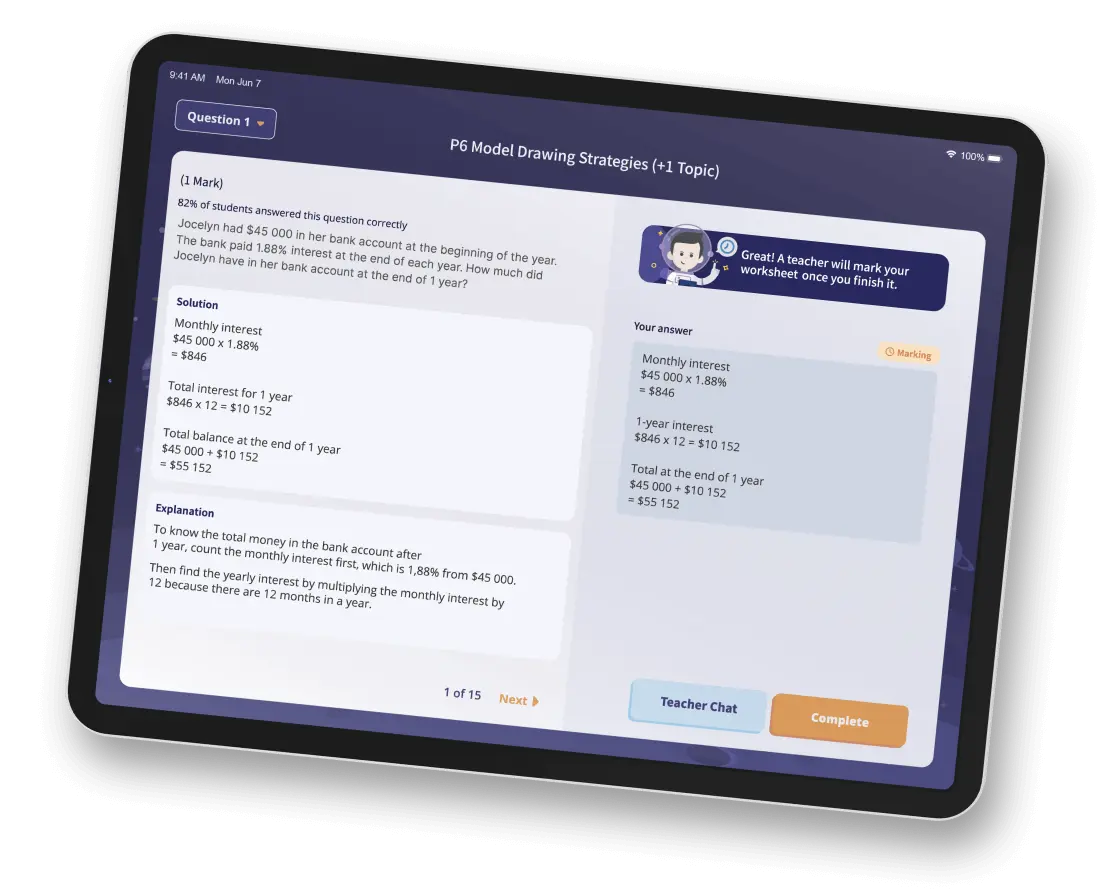
This is where targeted practice and feedback become critical. Modern online tuition platforms can be particularly effective, offering access to annotated model answers and personalised feedback that helps a child see exactly where they went wrong with keyword usage or answer structure.
Mastering PSLE Science keywords is less about memorising a dictionary and more about learning a new, precise language. It's a skill that transforms a child's understanding into marks on the page. With the right strategy and focused practice, your child can learn to communicate their scientific knowledge with the confidence and accuracy that examiners reward.
Frequently Asked Questions
Why is My Child Losing Marks in PSLE Science Open-Ended Questions?
Students often lose marks in PSLE Science Open-Ended Questions (OEQs) because they use vague, everyday language instead of the specific scientific keywords that MOE examiners require. Even if the core concept is understood, failing to communicate it with precise terms like "gained heat" or "evaporated" can result in losing precious marks.
What are PSLE Science Keywords and Why are They so Important?
PSLE science keywords are the specific, official scientific terms and phrases that demonstrate a student's accurate understanding of a concept according to the MOE science syllabus. They are critically important because examiners use a strict marking scheme where vague answers score poorly, while answers using precise keywords like "rate of evaporation" or "chlorophyll" are awarded full marks.
What are the Best PSLE Science Tips for Answering Open-Ended Questions?
One of the most effective PSLE science tips is to use a structured, three-step approach for OEQs: first, identify the question type (e.g. 'explain' vs 'state') and second, recall the specific scientific keywords related to the topic and third, build your answer as a logical cause-and-effect story. This method helps ensure the answer is not only correct but also structured in the way examiners expect.
Do I Need More Primary Science Tuition for My Child to Improve?
More primary science tuition is not always the only solution. The right kind of help focusing on specific weaknesses is more important. For students in Primary 5 or Primary 6, an effective programme should address answering techniques and keyword usage, not just content revision. Targeted online tuition can be particularly useful for providing personalised feedback on OEQ answers.