


PSLE Maths 2024: Solving Tricky Questions with Model and Ratio Methods

PSLE Maths 2024: Solving Tricky Questions With Model and Ratio Methods
We understand that helping your child master complex problem-solving strategies and cope with the high-pressure PSLE Maths preparation can feel like an incredibly demanding and stressful experience for busy families in Singapore. Specifically, we observe that students often struggle to identify the correct heuristic in Paper 2, leading to careless mistakes and a loss of confidence. We believe that by understanding the key differences between ratio heuristics like constant difference and other problem types and focusing on structured, conceptual practice, your child is fully empowered to build mathematical resilience, stay on track and achieve their academic potential.
To verify our solution, let us perform a quick check. Siti's age now is represented by one unit, which equals 5 years. Her father's age now is six units, which equals 30 years. In 5 years' time, Siti will be 10 years old and her father will be 35 years old. The ratio of 10:35 simplifies perfectly to 2:7, confirming that our calculations are correct.
Why Do Students Still Get It Wrong?
The number one reason students struggle with these questions is misidentification. Under examination pressure, a student might see a before-and-after scenario and wrongly apply the constant total method, leading to a complete collapse of their solution. This is where consistent, guided practice in a structured environment, such as a Primary Maths tuition programme or a quality online tuition platform, becomes invaluable.
As Ministry of Education curriculum specialists often point out, simply showing a child the solution is not enough. They need scaffolding to help them build the mental framework to deconstruct problems on their own. This involves targeted practice rather than endless, repetitive drilling. For parents seeking support through Primary 5 Maths tuition, ensuring your provider focuses on these heuristics is critical for long-term success.
Achieve Academic Goals With Geniebook's Tech-Enabled Suite
At Geniebook, our suite of online learning products is designed to complement your child's primary school preparation, helping primary and secondary school students learn smarter, stay on track and do better. We believe that when technology supports experienced educators, your child is fully empowered to close their learning gaps and achieve their academic potential.
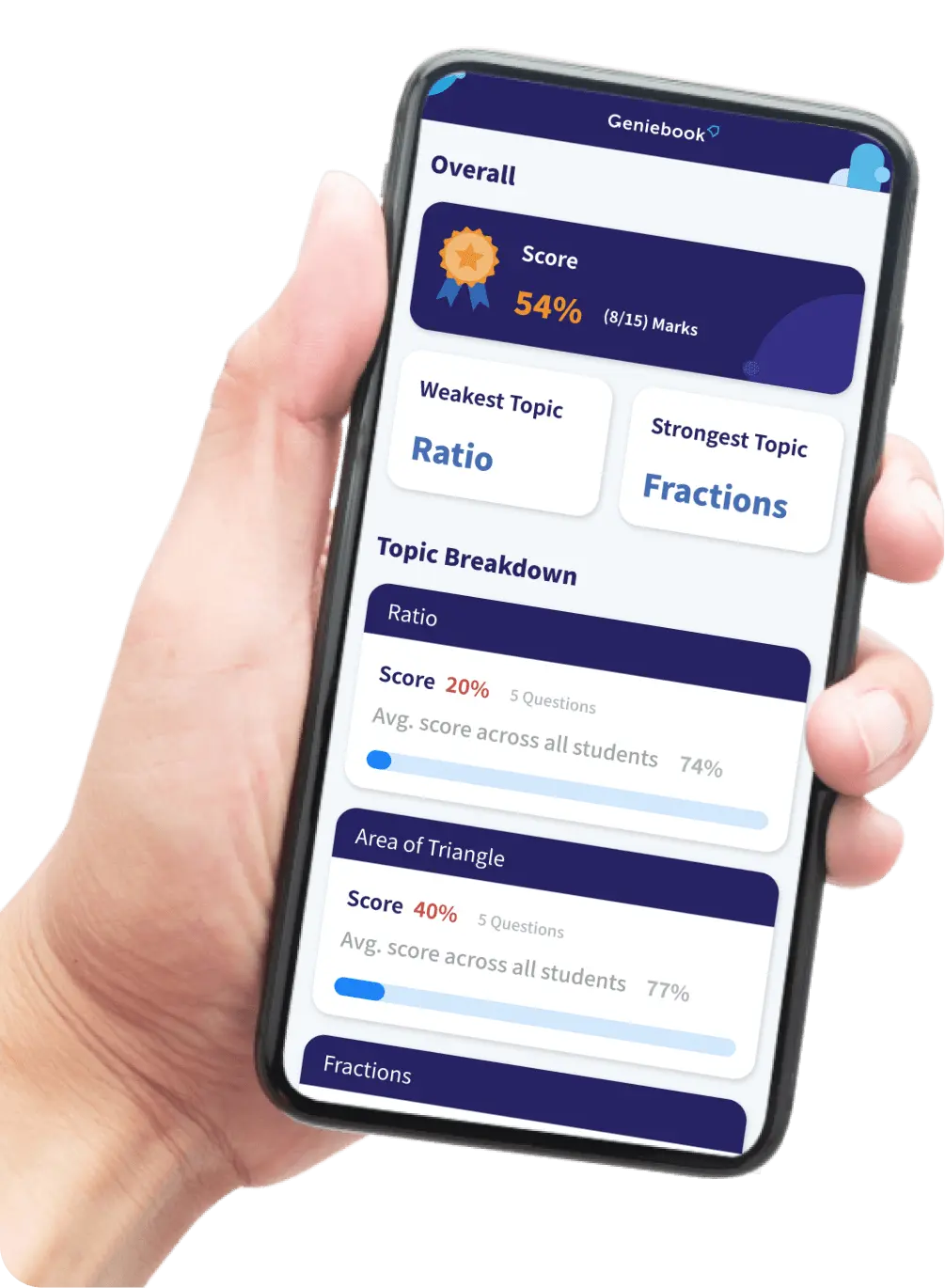
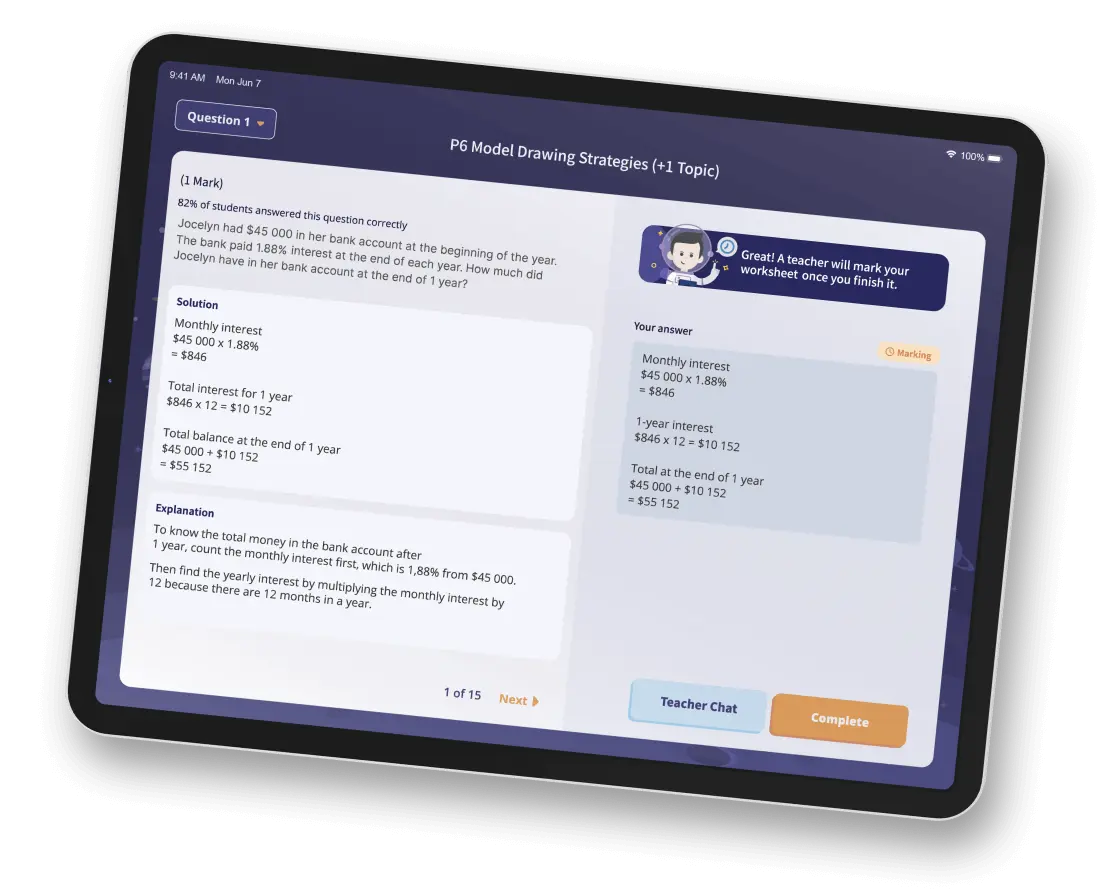
Through GenieSmart, our AI-personalised worksheets recommend targeted practice questions strictly aligned with the MOE syllabus, with difficulty levels that constantly adjust to your child's mastery of each topic. With over 300,000 questions in our database, our proprietary AI algorithm leverages over 1,000,000 data points to identify strengths and learning gaps. On GenieClass, experienced educators lead weekly live online classes, explaining complex mathematical concepts, heuristics and problem-solving skills using storytelling, live polls and interactive visual aids.
If your child has doubts or needs help with homework, they can clarify concepts instantly through our real-time teacher chat on GenieAsk, which offers continuous support seven days a week. Additionally, our unique rewards system motivates students to learn independently. As your child completes worksheets and participates in classes, they earn Bubbles that can be redeemed for over 5,000 exciting, kid-safe items from our Bubble Store, turning daily practice into a rewarding habit. With half of our students successfully achieving AL 1 to AL 3 in PSLE and jumping two grades on average, we believe our personalised pedagogy is highly effective in building academic confidence. Have you planned how to help your child stay focused and on track for their upcoming examinations?
Frequently Asked Questions
Why Do Students Struggle With Ratio Questions in PSLE Maths Paper 2?
The main reason students struggle with ratio questions in PSLE Maths Paper 2 is misidentifying the correct heuristic to use under exam pressure. For example, a student might see a before-and-after problem and incorrectly apply the constant total method instead of the appropriate ratio method, causing their solution to fail.
How Do I Know Whether to Use the Model Drawing or Ratio Method for a PSLE Maths Problem?
Choosing between the model drawing and ratio method in PSLE Maths depends on correctly identifying the problem type, as misidentification is a common pitfall. While both methods can represent relationships, the ratio method maths is particularly effective for 'before-and-after' scenarios, but students must learn to distinguish between different PSLE paper 2 heuristics like constant difference versus constant total. Consistent, guided practice helps build the skill to select the most efficient method for a given question.
How Does Primary Maths Tuition Help Students Solve Difficult PSLE Maths Questions?
Primary Maths tuition helps students solve difficult PSLE Maths questions by providing consistent, guided practice in a structured environment. An effective tuition programme focuses on building a mental framework for deconstructing problems and offers targeted practice on specific heuristics, rather than just repetitive drilling, which helps students avoid common errors like misidentifying the correct problem-solving strategy.
What's the Best Way to Prepare for Tricky Problem Sums in PSLE Maths 2024?
The best way to prepare for tricky problem sums in PSLE Maths 2024 is to focus on understanding key problem-solving strategies and engaging in structured, conceptual practice. This approach helps build the mathematical resilience needed to identify the correct heuristic, such as the right ratio method, under exam pressure. Using tools like AI-personalised worksheets for targeted practice and attending live online classes can also help close learning gaps and build confidence for the examination.