Vocabulary Cloze: Why 15 Marks Shift Entire AL Bands
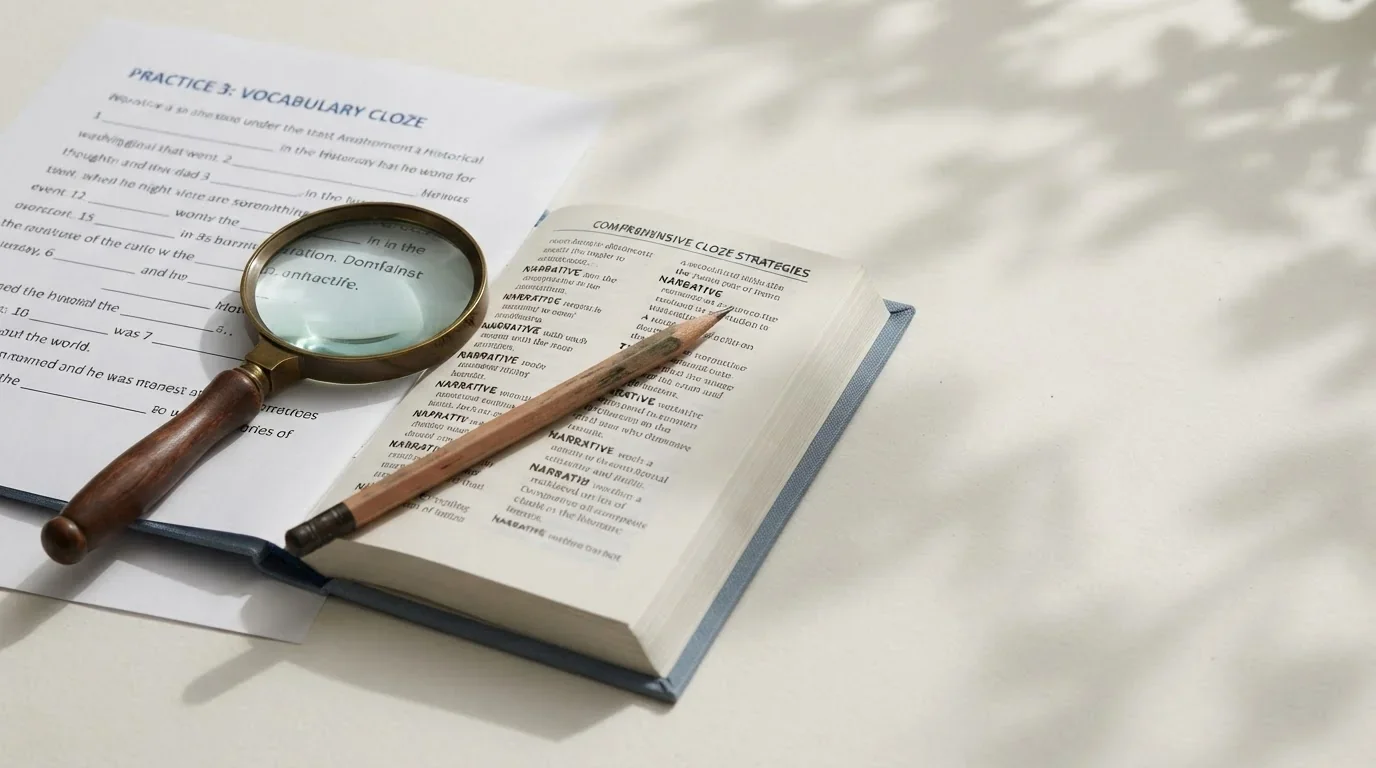
The 15 marks that define an AL 1
In the quiet tension of the PSLE English exam hall, one section in Paper 2 often holds disproportionate power over a student's final Achievement Level (AL): the 15-mark Comprehension Cloze. A seemingly minor slip, a loss of just three marks here, can be the precise event that downgrades a student’s result from a coveted AL 1 to an AL 2. For parents seeking the best support, whether through primary English tuition or focused home practice, understanding this section’s leverage is the first step towards securing a top-tier grade. Many are surprised to learn that effective online tuition can pinpoint and fix weaknesses in this specific area with remarkable efficiency.
What is the 15-mark cloze section, exactly?
The PSLE English Paper 2 is a 90-mark paper that tests language use and comprehension. It contains three distinct cloze passage sections that collectively account for 30 marks:
- Vocabulary Cloze (Booklet A): 5 multiple-choice questions (5 marks)
- Grammar Cloze (Booklet B): 10 fill-in-the-blanks from a given word list (10 marks)
- Comprehension Cloze (Booklet B): 15 open-ended, fill-in-the-blanks (15 marks)
The game-changer is this final 15-mark Comprehension Cloze. While its name suggests comprehension, it is fundamentally a high-stakes test of vocabulary in context. Students must supply a grammatically correct word that fits the precise meaning of the passage, without any options provided.
How can just a few marks cause an AL band to drop?
The PSLE AL system is criterion-referenced, meaning grades are awarded based on a student’s mastery against fixed standards. At the top, the bands are unforgivingly narrow. An AL 1 requires a score of 90 or above. This creates a sharp cliff: a score of 90 is an AL 1, but 89 is an AL 2.
Imagine a student on track for 92 marks. A few careless mistakes in the Comprehension Cloze, losing just three marks, plunges their score to 89. They drop to AL 2. This is why I've seen students with strong overall ability miss their target secondary school by a hair’s breadth, all traceable back to this single 15-mark section. This is a common focus for any good primary 5 English tuition programme preparing students a year ahead.
Is a bigger vocabulary the only answer?
This is the most common misconception. While a rich vocabulary certainly helps, technique is the true differentiator between a student who scores 8/15 and one who consistently hits 13/15. The difference is rarely about knowing more words. It’s about knowing how to deduce the *right* word.
Students who struggle often fall into the “it sounds right” trap. They fill the blank with a word that feels plausible, but they miss a subtle contextual clue or a grammatical requirement. Top-performing students, on the other hand, use a systematic approach to analyse the sentence structure and the passage’s overall meaning. Specialised help from a primary English tutor can be invaluable in honing this skill.
A 3-step strategy to secure the Comprehension Cloze marks
To move beyond guesswork, students need a repeatable process. This is a framework I've refined over two decades that builds accuracy and confidence, especially for those in their critical primary 6 English tuition year.
Step 1: The full passage scan
Never start by filling in the first blank. Read the entire passage from beginning to end with the blanks still in it. The goal is to understand the overall topic, tone and narrative. Who are the characters? What is happening? Where is it set? This initial scan provides the macro-context needed for the micro-decisions ahead.
Step 2: The clue hunt method
Address each blank one by one, looking for clues before, in and after the sentence.
- Grammatical clues: Does the blank need a noun, verb, adjective or adverb? Is it singular or plural? Does it require a past-tense verb? The surrounding words provide these structural hints.
- Contextual clues: Look for synonyms, antonyms or descriptions in nearby sentences that point to the correct word. Sometimes the clue for blank #3 is hidden in the sentence for blank #8.
Step 3: The final read-through
After filling in all the blanks, reread the entire passage one last time. This is a critical quality check. Does it make sense? Does it flow naturally? This step often reveals one or two answers that seemed right in isolation but are wrong in the context of the complete story. Consistent practice, whether in a PSLE English tuition centre or at home, makes this process second nature.
Beyond the exam hall
The parental arms race is real. An Institute of Policy Studies survey confirmed what many of us feel, showing that nearly 85% of parents believe tuition provides a significant advantage. The stress is palpable. However, focusing on high-leverage areas like the Comprehension Cloze provides a strategic, less overwhelming path forward. It’s not about endless drills but about smart, targeted practice. Whether you are using a top-tier primary English tuition service or guiding your child yourself, mastering this section is one of the surest ways to protect their hard-earned marks and secure the AL band they deserve for PSLE 2027. The right online tuition programme can provide thousands of practice questions with instant feedback, accelerating this entire process.
Frequently asked questions
Why is the 15-mark comprehension cloze so important for achieving an AL 1 in PSLE?
The 15-mark comprehension cloze is critical because PSLE AL bands are extremely narrow, meaning a loss of just three marks in this section can cause a student to drop from an AL 1 to an AL 2. Because an AL 1 requires a score of 90 or above, there is no margin for error, and this specific section often determines whether a student secures their target secondary school.
How can my child improve their performance in the comprehension cloze section of the PSLE English paper?
Your child can improve by moving away from guessing and using a systematic 3-step strategy: scanning the entire passage first for context, hunting for grammatical and contextual clues before and after each blank, and performing a final read-through to ensure the completed text flows naturally. Consistent practice through primary 6 English revision is the most effective way to make this process second nature before the actual exam.
What is the difference between the vocabulary, grammar and comprehension cloze sections in PSLE English Paper 2?
The PSLE English Paper 2 contains three distinct cloze sections worth 30 marks total: a 5-mark vocabulary cloze in Booklet A, a 10-mark grammar cloze in Booklet B using a word list, and a 15-mark open-ended comprehension cloze in Booklet B that requires students to supply words without any provided options. Mastering the 15-mark comprehension cloze is particularly vital because it tests vocabulary in context rather than simple word knowledge.
Are there any specific psle english paper 2 tips for handling the open-ended cloze?
For the open-ended cloze, students should avoid filling in blanks immediately and instead perform a full passage scan to understand the narrative tone and context. Once the context is established, they should treat each blank as a detective task by identifying the specific part of speech required, such as a noun or verb, and looking for synonyms or antonyms in the surrounding sentences that act as clues.
Why does my child keep losing marks on cloze passages even though they have a good vocabulary?
Students often lose marks because they fall into the trap of choosing words that merely sound right rather than using strict grammatical and contextual analysis. Success in Singapore primary school English depends on knowing how to deduce the precise word that fits the passage, which requires a deliberate methodology rather than just possessing a large vocabulary size.