Decoding Your Child's Composition Score: An MOE Marking Guide for Parents

How Are Primary School Compositions Actually Marked?
MOE teachers mark primary school compositions against two core criteria: Content, worth 20 marks, and Language, also worth 20 marks. The common misconception among parents is that using advanced, 'bombastic' vocabulary is a shortcut to high marks but this often backfires, hurting the Language score if the words feel unnatural. Understanding this rubric is the first step, whether your child is attending a centre for Primary English tuition or working independently at home.
The MOE Marking Scheme Unpacked: Content Vs Language
When your child’s script comes back, you will see two distinct scores, often labelled 'C' and 'L'. While marking can vary slightly between schools, the principles set by the Ministry of Education remain consistent. They are not looking for the next literary genius but for a clear, competent storyteller.
Content (20 Marks): Is The Story Relevant?
This is where the marker judges the plot itself. The most important factor is relevance: does the story directly address the given topic and incorporate the picture prompt logically? Many students lose marks here by creating an interesting story that unfortunately goes off-topic. A high-scoring composition will have:
- A clear problem that needs solving.
- A logical sequence of events that builds to a climax.
- A satisfying ending that feels earned, not rushed.
- Strong alignment with the theme, avoiding plot holes or irrelevant detours.
Language (20 Marks): Is The Writing Clear?
Contrary to popular belief, the Language score is not about using the most complex words. It is about effective communication. Markers are trained to spot vocabulary that sounds forced or is used incorrectly. Common reasons for deductions include:
- Grammar, spelling and punctuation errors.
- Repetitive sentence structures or vocabulary.
- Poor paragraphing and awkward transitions.
- Unnatural phrases that disrupt the flow of the story.
Clarity and precision are far more valuable than a string of memorised 'good phrases'.
Why School Feedback Can Seem Vague
Many parents feel that the feedback on their child’s work is too limited. A few ticks, some underlined words and a question mark in the margin might be all they get. This is rarely a reflection on the teacher’s dedication. With large classes, there is simply not enough time to provide detailed, line-by-line comments for every student. This lack of in-depth feedback is a key reason parents begin looking for a dedicated primary English tutor or a high-quality PSLE English tuition centre to bridge the gap.
The 'Bombastic Word' Trap: Parental Anxiety And Over-Editing
In the competitive Singapore education landscape, parental anxiety is high. We see it in the rising spending on enrichment, a trend that has grown significantly over the past decade. This anxiety often leads well-meaning parents to 'help' by editing their child’s draft, peppering it with impressive-sounding words. However, a Primary 5 student’s story about a lost wallet doesn't need words like 'pulchritudinous' or 'magnanimous'. When a marker reads a phrase that sounds like an adult wrote it, it breaks the narrative and can lead to lower marks. This is a crucial lesson for students in both Primary 5 English tuition and Primary 6 English tuition programmes.
A Practical 10-Minute Routine To Build An Independent Writer
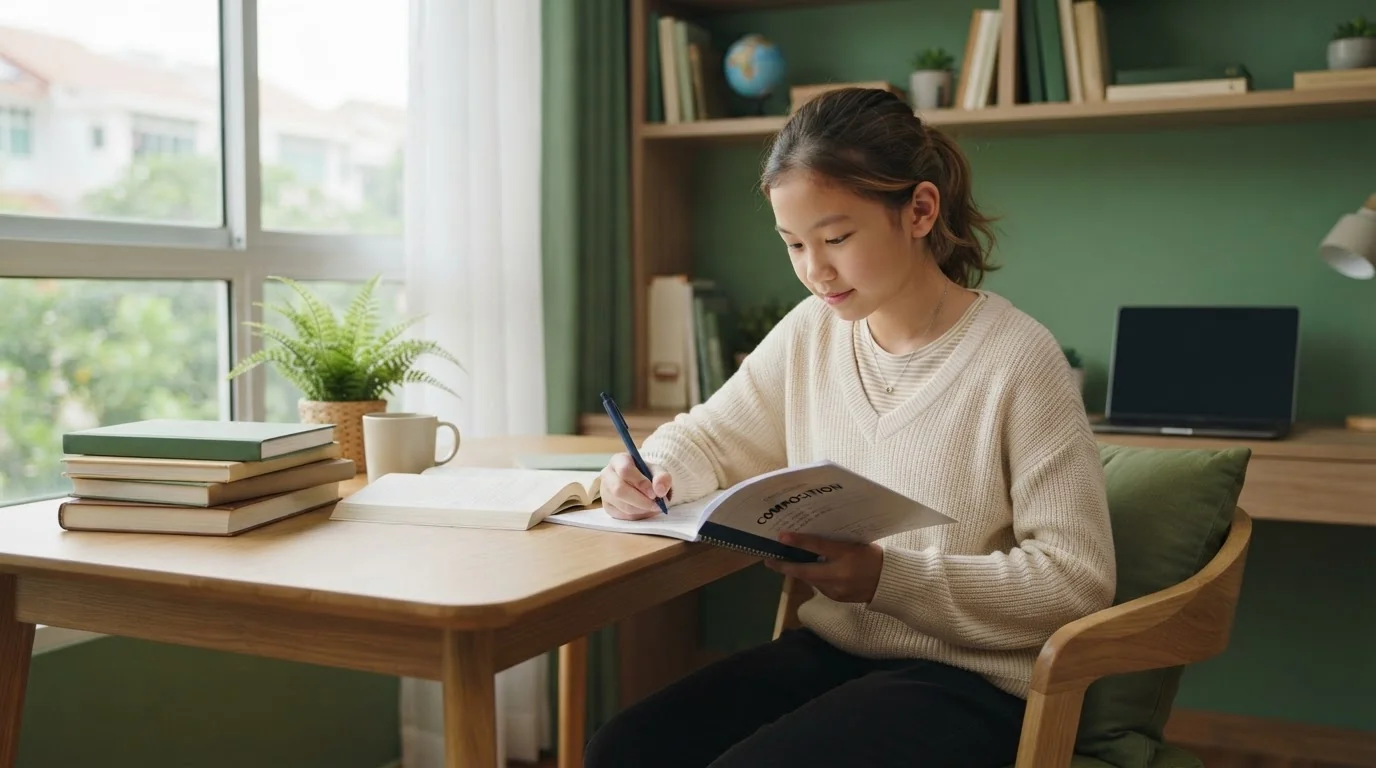
Instead of correcting every mistake, you can empower your child to become their own editor. This simple routine takes just 10 minutes and focuses on building their critical eye.
- Read it aloud (2 minutes): Ask your child to read their composition out loud. Awkward phrasing, repetition and grammatical errors are much easier to hear than to see.
- Check the plot (4 minutes): Ask questions focused on Content. "Does this part of the story relate to the topic?" "How does this event move the story to its climax?" "Does the ending make sense based on what happened before?" Guide them to spot where the story wanders.
- Refine the language (4 minutes): Instead of giving them better words, prompt them. Ask, "Is there a stronger verb you know?" or "Can you describe how the character felt instead of just telling me they were sad?" This encourages them to use their own vocabulary effectively.
- Target one revision: Don't overwhelm them. Pick just one or two areas for them to work on independently, like strengthening the story's climax or varying their sentence beginnings.
When Is More Specialised Guidance Needed?
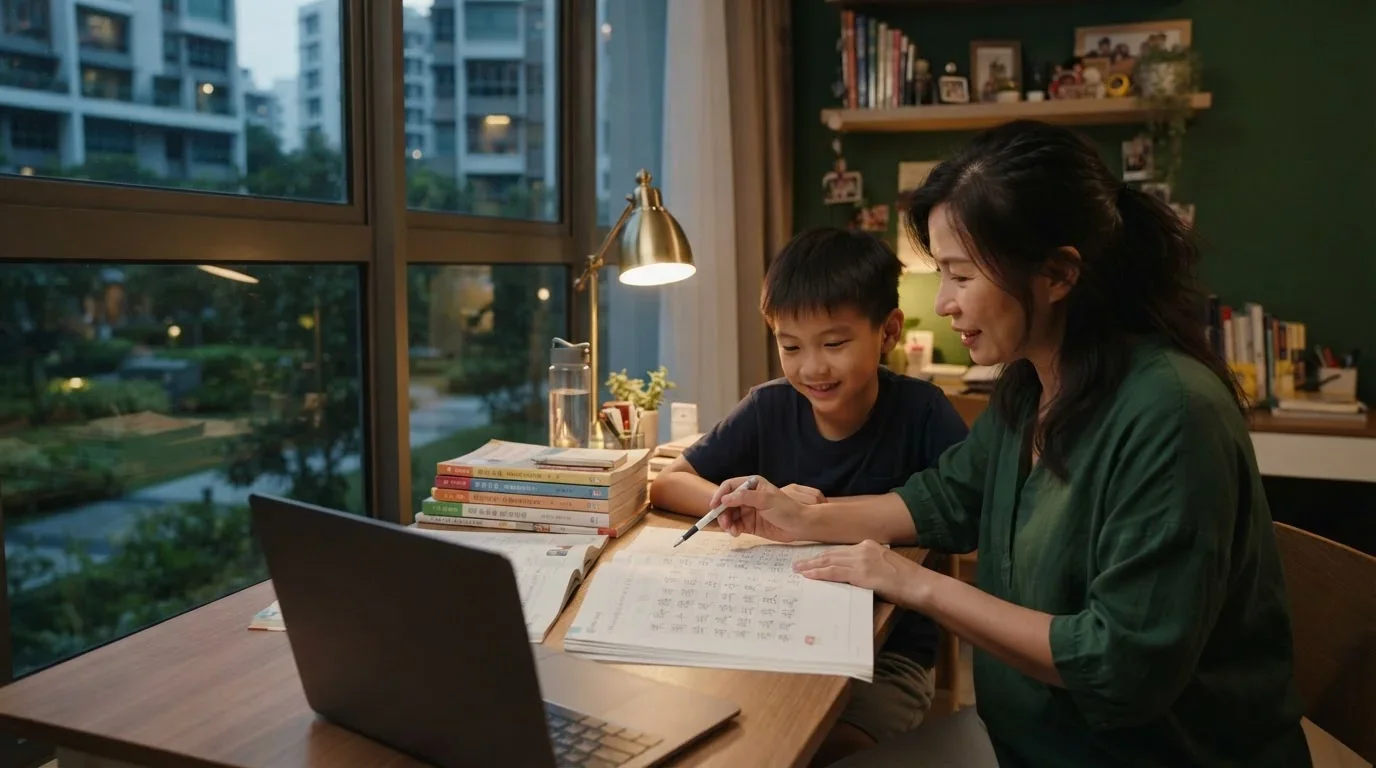
This home routine is powerful but sometimes a child needs more structured, personalised feedback. This is where specialised writing programmes, whether at a primary English tuition centre or through a reputable online tuition platform, add significant value. Expert instructors can provide detailed written feedback, model how to rewrite weak sentences and offer targeted exercises based on PSLE rubrics. This kind of guided practice is essential for building confidence and skill, complementing the hard work done in school-based primary English tuition.
Frequently Asked Questions
How are marks allocated for primary school compositions?
Primary school compositions are marked based on two core criteria worth 20 marks each: Content and Language. The Content score assesses the relevance of the story to the topic and picture prompt, while the Language score evaluates the clarity, accuracy and flow of the writing. This 40-mark system is the standard for MOE composition marking in Singapore schools.
Why does my child get low marks for using complex words?
Your child may receive lower marks for using complex or 'bombastic' vocabulary if the words feel unnatural, forced or are used incorrectly within the context of the story. Markers prefer clear, precise communication over the use of memorised phrases that disrupt the narrative flow. Using simpler words accurately is generally more effective for improving primary school writing than inserting overly sophisticated vocabulary.
How can I help my child improve their composition writing at home?
You can help your child improve their composition writing by implementing a 10-minute routine that encourages them to edit their own work. Start by having them read their story aloud to catch awkward phrasing, followed by a check of the plot for relevance to the topic and finally, prompting them to replace weak verbs or basic descriptions with stronger, more accurate language. This approach builds independence and is a valuable strategy for those seeking effective PSLE composition tips.
What should I do if my child's school feedback is too vague?
If your child's school feedback is too limited to actionable advice, it is often due to the time constraints teachers face with large class sizes rather than a lack of dedication. To bridge this gap, many parents seek additional guidance through a structured primary English programme or a reputable centre that offers detailed, line-by-line feedback. Such support provides the consistent monitoring needed to improve Singapore primary English skills beyond what the school environment can provide.
How do I know if my child's story is off-topic?
A story is considered off-topic if it fails to address the given theme or does not logically incorporate the picture prompt provided. To avoid this common pitfall, ensure your child's plot includes a clear problem, a logical sequence of events leading to a climax and a satisfying ending that is directly tied to the prompt. Checking for these narrative elements is a crucial part of the editing process for all primary school writing.