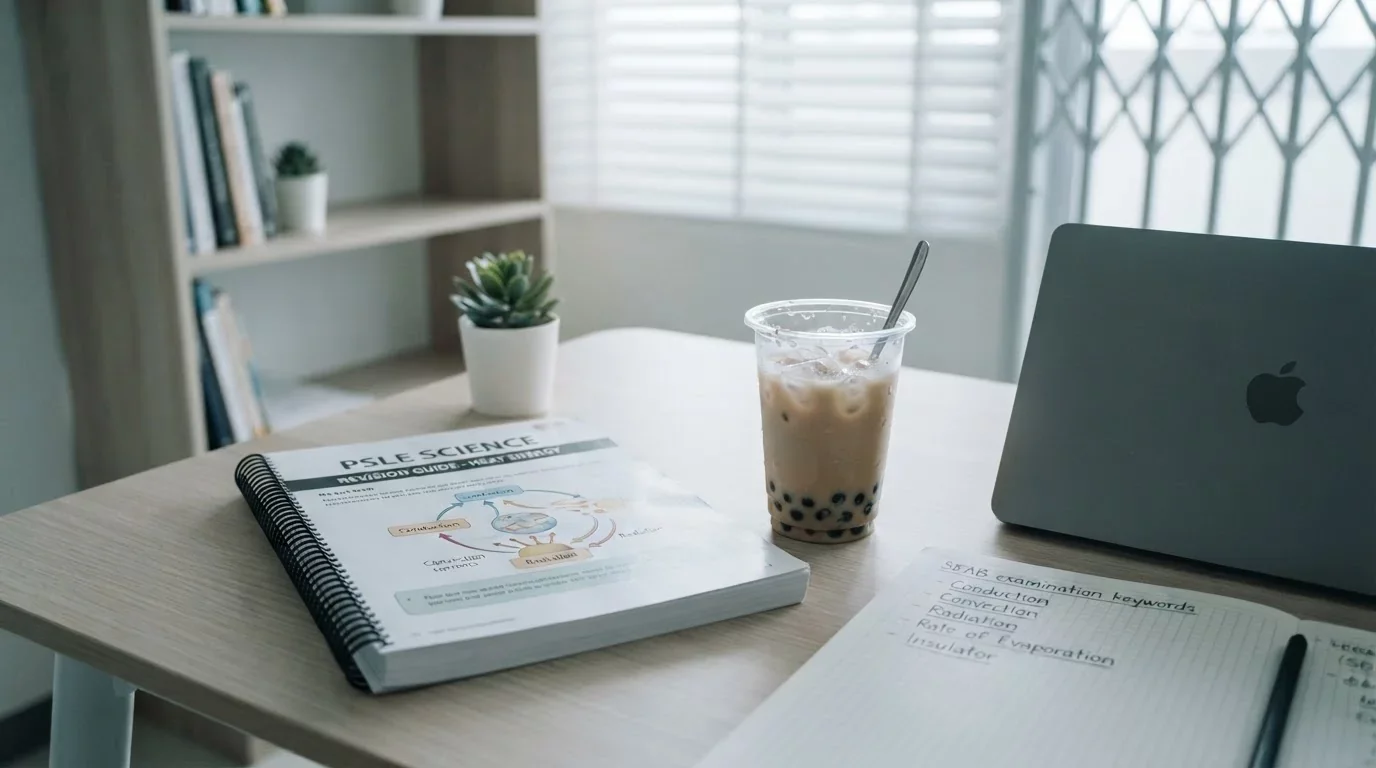



Observation to Explanation: A 6-Week At-Home Journal System to Boost PSLE Science Mastery

Why Does My Child Know the Textbook but Fumble in PSLE Science Paper 2?
Your child can define photosynthesis but struggles to explain why a plant near the window grows better than one in a dark room. This is a common and frustrating reality for many Singaporean parents. This “application gap” is where marks are lost in the PSLE Science paper, particularly in the open-ended questions (OEQs) of Paper 2. Students often provide vague answers or mix up concepts because they have not internalised how textbook theories apply to the world around them.
The Ministry of Education (MOE) and the Singapore Examinations and Assessment Board (SEAB) design the PSLE Science syllabus to test more than just memory. It heavily assesses inquiry and process skills like observing, inferring and analysing. Without a strong foundation in these skills, even the best students can find it difficult to construct the precise, logical answers needed to score full marks.
The C-E-R Framework: Your Child's Secret Weapon for OEQs
To bridge the application gap, we must teach our children to think and write like scientists. The most effective method for this is the Claim-Evidence-Reasoning (CER) framework. It is a simple but powerful structure that aligns perfectly with how PSLE markers award marks for OEQs.
Think of it as a three-step process to build a rock-solid answer:
-
Claim: A direct answer to the question. (e.g., “The plant will die.”)
-
Evidence: The data or observation that supports the claim. (e.g., “The leaves turned yellow and withered.”)
-
Reasoning: The scientific principle that explains why the evidence supports the claim. (e.g., “This is because plants need sunlight for photosynthesis to make food. Without food, the plant does not have the energy to survive.”)
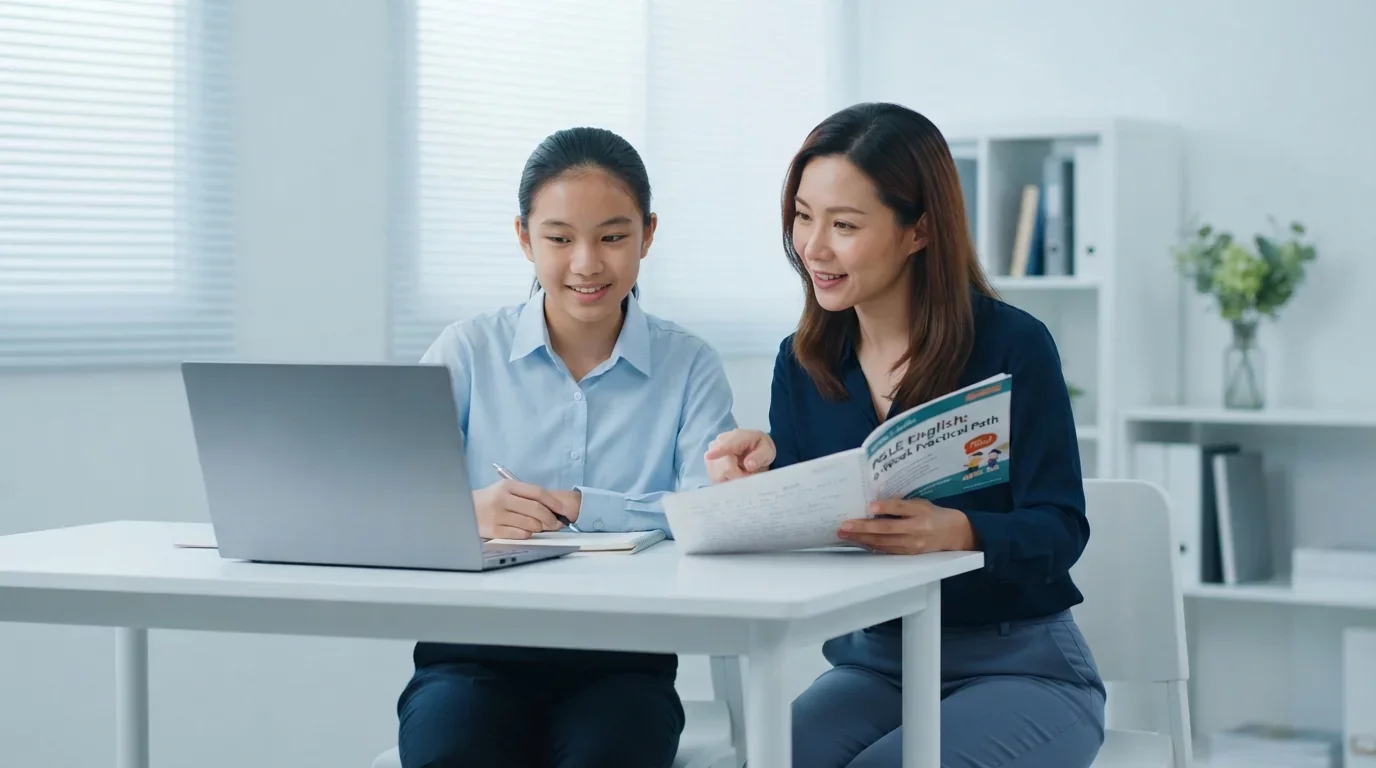
Practising this framework is essential, and it is a core component of good Primary Science tuition. Our at-home journal system is designed to make this thinking process a daily habit.
Your 6-Week Plan to Build PSLE Science Inquiry Skills at Home
This plan turns your HDB flat and neighbourhood into a science lab. Dedicate just two or three 30-minute sessions each week. The goal is not to get the “correct” answer immediately but to practise the observation and reasoning process.
| Theme (PSLE Syllabus Link) |
Simple At-Home Activity | Journal Prompt (Using C-E-R) |
|---|---|---|
| Week 1: Heat & Energy Transfer |
Take a cold can of soda from the fridge and leave it on the table. | Observe: What forms on the outside of the can after 10 minutes? Explain: Where did this substance come from and why did it appear? |
| Week 2: Living Things & Fungi |
Lightly dampen a slice of bread, seal it in a zip-lock bag and keep it in a dark cupboard. | Observe: Check it every two days. What do you see growing? Explain: What are the conditions that allowed this to grow? (Link to warmth, moisture, lack of light). |
| Week 3: Water & Its Three States |
Boil a small pot of water. Carefully hold a cool metal lid above the pot. | Observe: What do you see rising from the water? What forms under the lid? Explain: Describe the process of evaporation and condensation you just saw. |
| Week 4: Plant Transport System |
Place a white flower or celery stalk in a glass of water mixed with dark food colouring. | Observe: What happens to the flower petals or celery leaves after a few hours? Explain: How did the colour travel up the stalk? What does this tell you about how plants get water? |
| Week 5: Matter & Its Properties |
Stir a spoonful of salt or sugar into a glass of warm water until it disappears. | Observe: Where did the salt go? Explain: How do you know it is still there? What is this process called? |
| Week 6: Forces (Gravity & Air Resistance) |
Drop a crumpled piece of paper and a flat piece of paper from the same height. | Observe: Which one hits the ground first? Explain: Why did one fall faster than the other? (Use the concepts of gravity and air resistance). |
How This Journal Complements Primary 6 Science Tuition
Some parents might wonder if this replaces the need for formal lessons. The answer is no. This at-home system is a powerful complement to structured learning, whether it is in a physical classroom or through online tuition. Think of it this way: your child’s tutor builds the car engine (the core concepts) and teaches them the rules of the road (exam techniques). This journal system is the daily driving practice that builds the reflexes and confidence to handle any situation.
When a child who uses this journal attends their Primary 6 Science tuition class, they are more engaged. They can connect the teacher’s explanation of condensation to the water droplets they saw on their own cold drink can. This active, first-hand experience makes learning stick and transforms passive listening into active understanding.
Building a Scientist's Mindset for the PSLE and Beyond
Mastering PSLE Science is not just about scoring an AL 1. It is about nurturing a curious, analytical mind that can see the science in everyday life. This is the core principle behind the MOE’s push for inquiry-based learning.
By transforming your home into a place of discovery, you are not just preparing your child for an exam. You are equipping them with the critical thinking skills to observe, question and reason: abilities that will serve them well through secondary school, the Integrated Programme (IP) and beyond. This simple 6-week journal habit is a small investment of time that can fundamentally change your child’s relationship with science, turning frustration into fascination and careless mistakes into confident mastery.
Frequently Asked Questions
- Why does my child struggle with PSLE Science open-ended questions even if they know the concepts?
Many children struggle with PSLE Science open-ended questions because of an 'application gap' where they cannot connect textbook theories to real-world situations. The MOE science syllabus tests inquiry skills like observing and analysing, not just memory, so students need to practise applying concepts to score well in Paper 2.
- What is the C-E-R framework and how can it help my child score in PSLE Science?
The C-E-R framework is a method for structuring answers to open-ended questions by making a Claim, providing Evidence and giving scientific Reasoning. This structure helps children provide the precise, logical answers that PSLE markers look for, making it one of the most effective PSLE Science tips for improving scores in Paper 2.
- How does this at-home system align with the MOE science syllabus?
This at-home journal system directly supports the inquiry-based learning goals of the MOE science syllabus for the PSLE. The syllabus heavily assesses process skills like observing, inferring and analysing, and these weekly activities provide a practical way for children to develop and apply those exact skills at home.
- Does this at-home science journal replace the need for tuition?
No, this at-home journal system is designed to be a powerful complement to structured lessons, not a replacement for Primary Science tuition. The journal provides daily practice to reinforce concepts learned during Primary 6 Science tuition or online tuition, helping to build the reflexes and confidence needed for exams.
- Is this journal system also useful for a Primary 5 student?
Yes, this system is highly suitable for building foundational skills in a Primary 5 student preparing for the PSLE. Starting these observation and reasoning habits early is an excellent way to prepare for the demands of the PSLE, complementing what is taught in Science tuition for Primary 5 and making the transition to Primary 6 smoother.