Electricity and Circuits: A 7-Item Starter Checklist for Parents to Begin This Week (PSLE Science)
Electricity And Circuits: A 7-Item Starter Checklist For Parents To Begin This Week (PSLE Science)
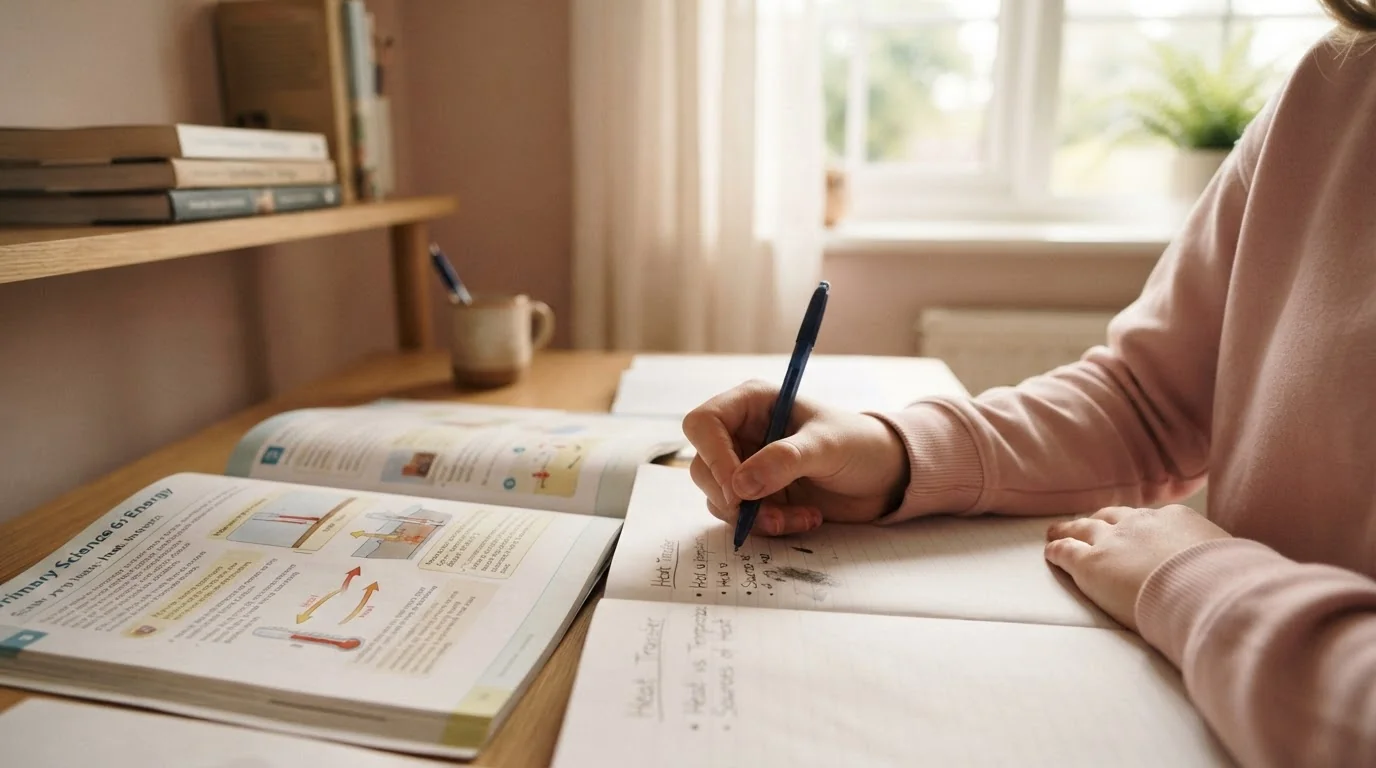
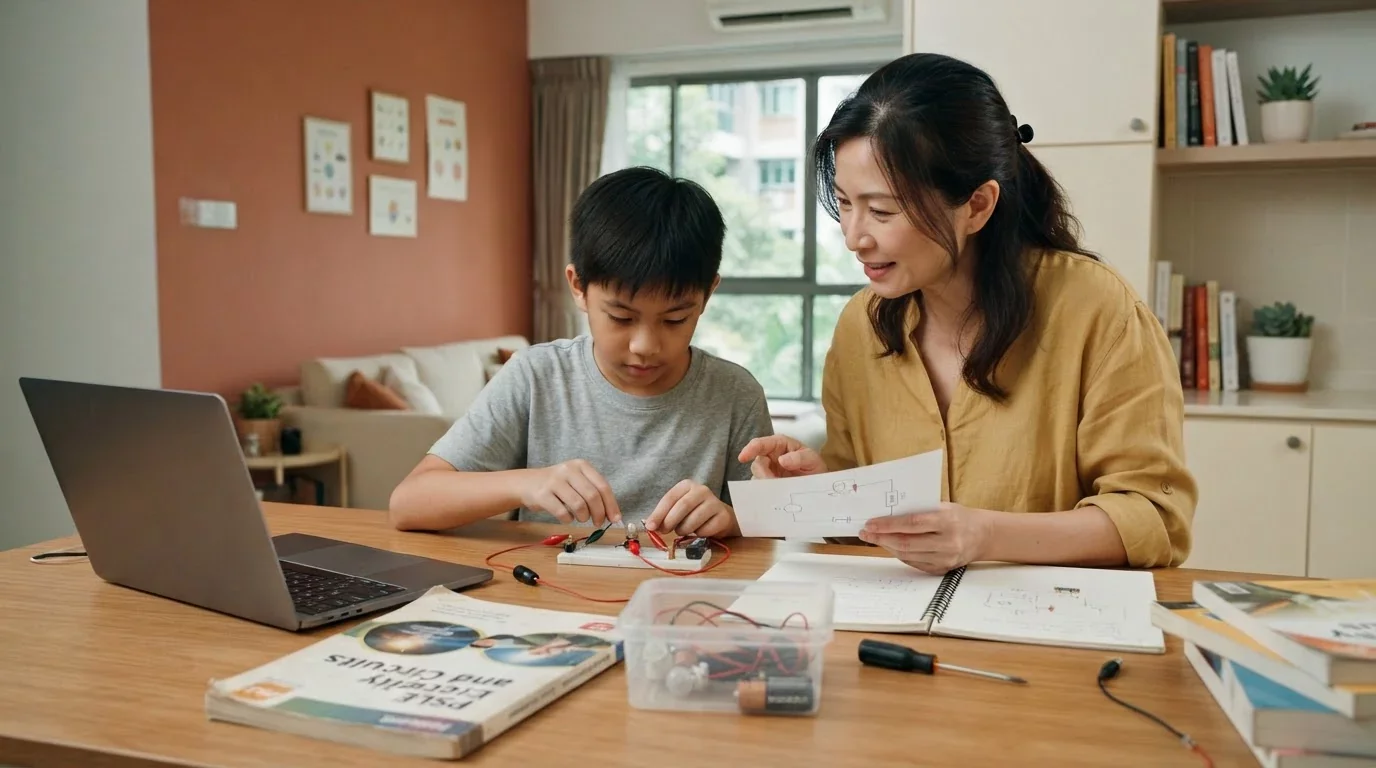
To master the PSLE Science topic of electricity and circuits, your child needs more than just textbook reading. They need hands-on experience. This practical 7-day checklist provides a simple, structured way for parents to demystify abstract concepts like current flow and conductors right at the kitchen table. Many parents find that even with excellent school support or dedicated PSLE Science tuition, this topic truly clicks only when a child builds their first working circuit.
Why Is Electricity Such A Tricky Topic For Primary 5 And Primary 6 Students?
Unlike plants or magnets, electricity is invisible. This abstract nature makes it one of the more challenging topics in the upper Primary Science syllabus. Students cannot see the current flowing through a wire, so they must rely on understanding principles and observing outcomes, like a bulb lighting up. The Ministry of Education (MOE) syllabus rightly emphasises an inquiry-based approach, which is why at-home experiments are not just fun. They are essential for building a deep, lasting understanding that goes beyond rote memorisation. These simple activities can powerfully supplement a formal Primary Science tuition programme.
Your 7-Day Starter Checklist For PSLE Electricity
Set aside 15 to 20 minutes each day this week to transform this topic from daunting to doable. Remember to supervise all activities closely.
Day 1: Gather Your Tools & Talk Safety First
Before you begin, have a crucial safety conversation. Explain that the experiments use low-voltage batteries (e.g., 1.5V AA batteries), which are safe to handle. However, household electricity from wall sockets is extremely dangerous and must never be played with.
Your toolkit:
- Batteries: 2-3 AA batteries
- Power source: A battery holder
- Light source: 2-3 small torchlight bulbs (1.5V)
- Connectors: Bulb holders
- Wiring: 4-5 insulated wires with crocodile clips
These are available in simple kits from electronics shops or online.
Day 2: Build Your First Simple Circuit
The goal today is to light a bulb. Guide your child to connect the battery, wires and bulb to form a complete loop. This is their first lesson in a closed circuit: an unbroken path for electricity to flow. When the bulb lights up, they've succeeded. Then, disconnect one wire. The bulb goes out. This demonstrates an open circuit.
Day 3: The 'What If?' Game (Testing Open Circuits)
Today is about inquiry. Ask your child to predict what will happen before they test it. This fosters scientific reasoning.
- Test 1: "What if we clip the wire to the glass part of the bulb instead of the metal casing?"
- Test 2: "What if one wire touches the other wire instead of the bulb?"
- Test 3: "What if the battery is placed backwards in the holder?"
Each 'failure' to light the bulb reinforces the strict conditions needed for a closed circuit.
Day 4: The Conductor Vs. Insulator Hunt
Modify yesterday's circuit by leaving a small gap. Use this gap to test different household objects. If the bulb lights up, the object is a conductor. If it doesn't, it's an insulator.
- Conductors to test: A metal paperclip, a coin, a key
- Insulators to test: A plastic spoon, a rubber band, a piece of paper
Encourage your child to record their findings in a simple table. This is a common focus in Science tuition for Primary 5.
Day 5: Learn The Language: Draw Circuit Diagrams
Bridge the gap between the hands-on activity and exam questions. Introduce the standard scientific symbols for the components: a battery, a bulb, an open/closed switch and wires. Have your child draw the diagram for the simple circuit they built on Day 2. This is a vital skill for interpreting questions in worksheets and assessments.
Day 6: Spot The Circuits In Your Home
Connect learning to the real world. Discuss how a light switch works to open or close a circuit. Talk about the circuit inside a remote control or a torch. This real-world connection is something we often reinforce in our online tuition sessions to make learning stick. This step helps them see science not as an isolated subject, but as a part of their daily lives. (Again, reiterate that they must never tamper with appliances).
Day 7: Review With An Observation Log
Ask your child to write down or explain two things they learned this week. Prompt them with questions like, "Why didn't the bulb light up when we used a plastic spoon?" A good answer would be: "Plastic is an insulator, so it does not allow electricity to flow through, keeping the circuit open." This solidifies their understanding and ability to articulate scientific concepts, a key goal for any Primary 6 Science tuition programme.
What Does The MOE Syllabus Actually Require For Electricity?
Your week of activities has directly covered the core learning objectives for this topic in the PSLE Science syllabus. According to MOE guidelines, students should be able to:
- Circuit Types: Distinguish between an open and a closed circuit.
- Materials: Identify common electrical conductors and insulators.
- Components: Understand the function of basic components like wires, bulbs and batteries.
- Safety: Recognise the importance of electrical safety.
While more complex series and parallel circuit problems are often tested, mastering these fundamentals is the non-negotiable first step.
Common Pitfalls In PSLE Electricity Questions
Once your child has the basics down, be aware of how exam questions add difficulty.
- Tricky diagrams: Questions often feature diagrams with hidden breaks or components made of insulating materials, designed to test careful observation.
- Misidentifying the path: Students must be able to trace the complete path of the circuit from the power source, through the components and back. Any break means it's an open circuit.
- Explaining the 'why': It's not enough to state that a bulb won't light up. A top-scoring answer must use keywords like 'open circuit' or 'insulator' to explain why. Finding a good Primary Science tutor can help your child practise articulating these explanations precisely.
Frequently Asked Questions
Why is electricity such a difficult topic for Primary 5 and Primary 6 students?
Electricity is a challenging topic for upper primary students because it involves abstract concepts that cannot be seen, such as current flow through wires. Unlike other science topics involving living things or physical magnets, students must rely on understanding principles and observing outcomes, such as a bulb lighting up, to grasp how circuits function.
How can I make science experiments for kids safer at home?
You can ensure safety by strictly using low-voltage batteries, such as 1.5V AA batteries, for all household experiments and keeping them completely separate from household electrical appliances. Always have a clear safety conversation with your child to explain that wall sockets are extremely dangerous and must never be tampered with or played with.
What materials do I need to build simple circuits for PSLE Science revision?
To build a basic circuit for learning purposes, you will need a small set of tools including 2-3 AA batteries, a battery holder, 2-3 small torchlight bulbs, bulb holders and 4-5 insulated wires with crocodile clips. These items can typically be purchased as a kit from electronics shops or online, providing a practical way for children to practise PSLE Science electricity concepts.
What is the difference between a conductor and an insulator in PSLE science?
A conductor is a material that allows electricity to flow through it to complete a circuit, causing a bulb to light up, whereas an insulator blocks the flow of electricity and keeps the circuit open. Students can test this by leaving a gap in their circuit and placing different objects inside. If the bulb lights up, the object is a conductor and if it does not, it is an insulator.
What are the common pitfalls in PSLE science electricity questions? Common pitfalls in PSLE science electricity questions include misinterpreting tricky diagrams that contain hidden breaks, failing to trace the complete path of the current from the power source and not using scientific keywords like open circuit or insulator when explaining answers. To score well, students must practise articulating their reasoning clearly rather than just stating whether a bulb will light up or not.