


The Math Diary: A Simple Daily Habit to Turn PSLE Maths Mistakes into Mastery

The Real Reason Your Child Keeps Losing Marks in PSLE Maths
As a parent, there is nothing more frustrating than seeing your child lose marks for the same 'careless' mistakes in their maths paper, again and again. You know they understand the topic, you’veseen them do the work, yet those 5 to 8 marks vanish in every practice paper from a forgotten decimal point or a misread question. This isn't a knowledge problem. It's a habit problem. The gap between an AL3 and a coveted AL1 often isn’t about doing more practice questions but about stopping this cycle of repeated errors.
Endless assessment books can feel productive but they often just reinforce bad habits if the underlying reasons for mistakes are never addressed. This is where a simple, structured method called the Math Diary comes in. It’s a low-cost, high-impact strategy that shifts the focus from just getting the right answer to understanding why the wrong answer occurred. It's a method I have personally used with hundreds of students to build their confidence and accuracy before the PSLE.
What is a Math Diary and How Does It Work?
A Math Diary, sometimes called a Mistake Log or an Error Journal, is a dedicated notebook (physical or digital) where a student systematically records and analyses their mistakes. The goal is to move beyond simply redoing a problem and instead, perform a small post-mortem on every error. This transforms mistakes from something to be feared into valuable data for targeted revision.
Implementing this habit is simple. For every incorrect answer in a worksheet, quiz or practice paper, your child should:
- Record the Problem: Write down the question number or stick a copy of the question into the diary.
- Document the Mistake: Write down their original, incorrect solution. This is crucial for pattern recognition.
- Analyse the 'Why': This is the most important step. They must reflect and identify the true source of the error. Was it a calculation slip, a misunderstood concept, a misread keyword or a wrong formula?
- Write the Correction: Document the correct method and final answer.
A simple A4 notebook works perfectly but for tech-savvy kids, a note-taking app like GoodNotes on an iPad is just as effective.
A Parent's 4-Step Guide to Starting a Math Diary
Helping your child build this habit is straightforward. Your role is not to be a tutor but a guide, encouraging reflection. Renowned Singaporean mathematics expert Dr. Yeap Ban Har advocates for 'scaffolding': guiding a child to find the solution themselves rather than just giving it. The Math Diary is a perfect tool for this.
Step 1: Get a Dedicated Notebook
Designate a specific book for this purpose. Let your child own it and feel a sense of purpose when they use it. This isn't just another workbook. It's their personal guide to mastery.
Step 2: Create the Entry Structure
Help them divide a page into four simple columns:
- Problem: Source of the question (e.g., 2022 Top School Paper, Paper 2, Q11).
- My Mistake: What they did wrong in their own words (e.g., “I calculated the area of the square instead of the perimeter”).
- The Real Reason: Why it happened (e.g., “I rushed and didn’t read the question carefully” or “I forgot the formula for the circumference of a circle”).
- The Fix: The correct steps and the key takeaway (e.g., “Always highlight the keyword: perimeter or area” or “Write down the circle formulas before starting”).
Step 3: From Correction to Deep Analysis
Encourage your child to be brutally honest in the 'Real Reason' column. 'Careless mistake' is too vague. Push for specifics. “Forgot to carry over” is a habit issue. “Used the wrong model drawing” is a conceptual gap. This analysis is what builds the mental checks to prevent future errors.
Step 4: Schedule a 15-Minute Weekly Review
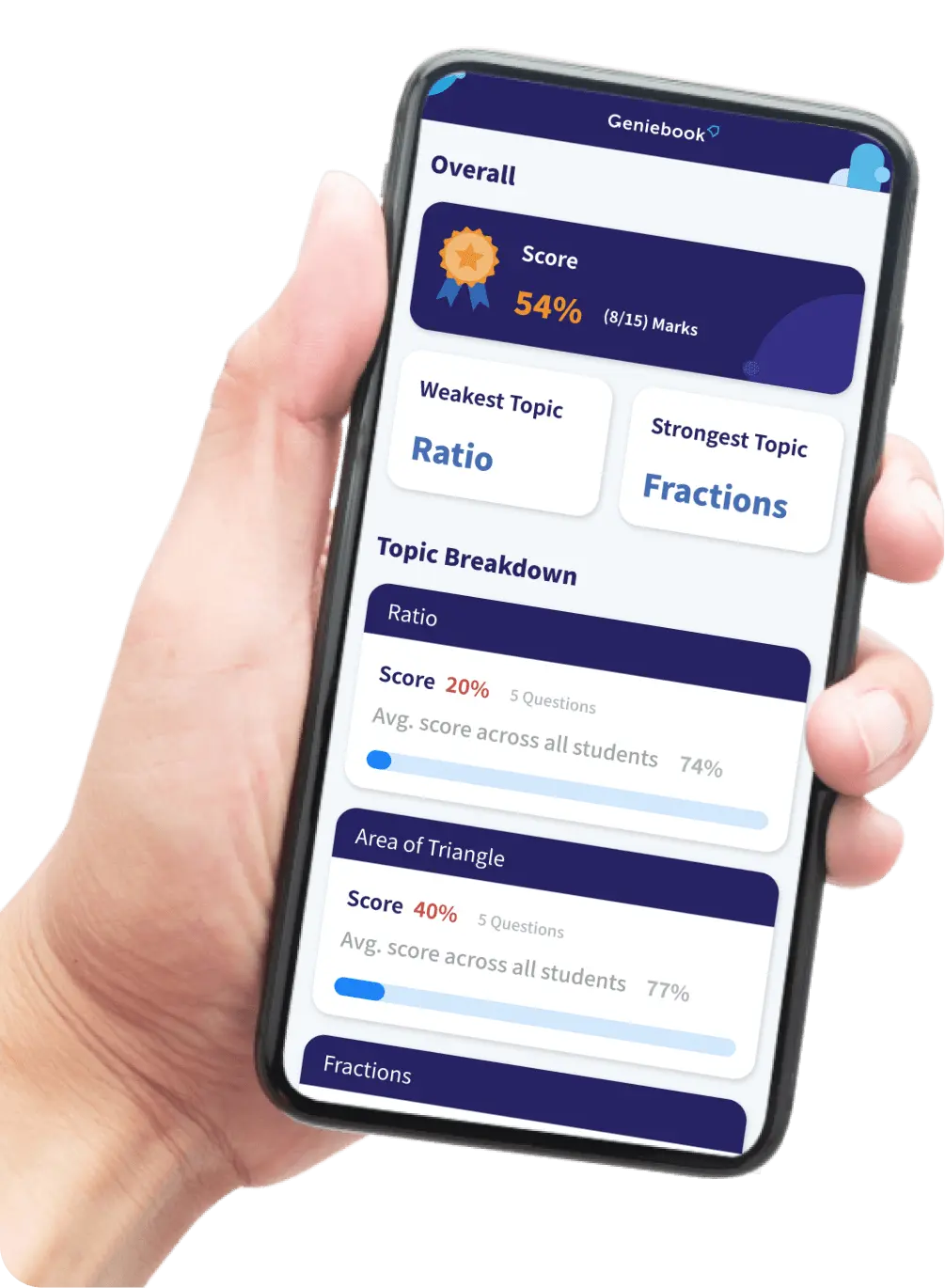
Once a week, sit with your child and review the Math Diary. Look for patterns. Are they consistently making errors in fractions or ratios? Is it always on multi-step word problems? This turns the diary into a powerful diagnostic tool, showing you exactly where to focus your revision or seek help from a teacher or a good primary maths tuition provider.
Can a Math Diary Replace P6 Maths Tuition?
This is a question many parents in Singapore ask, especially when facing monthly tuition fees that can range from S$700 to S$1,500. For some students, the answer is yes. A well-maintained Math Diary fosters independent learning and self-correction skills that are more valuable than passive listening in a class.
However, the diary can also make existing primary maths tuition far more effective. A student who arrives at their Primary 6 Maths tuition class with a diary highlighting their exact weaknesses will get much more out of the session than one who is just there to do another worksheet. It allows the tutor to target the root cause of problems immediately.
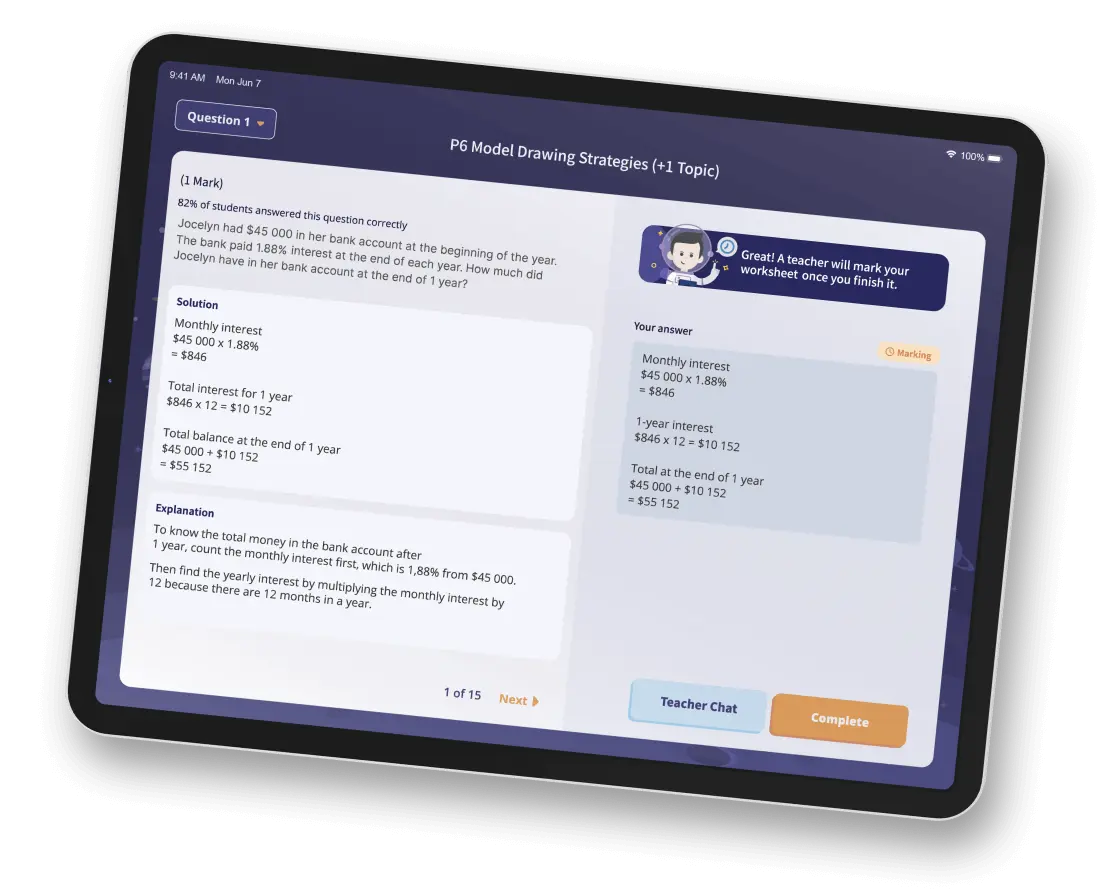
The rise of affordable and accessible online tuition also presents a compelling middle ground. AI-powered platforms are now available for as little as S$49 a month, offering 24/7 support. A Math Diary can help your child identify a tricky problem, which they can then clarify using these online tools without waiting a week for their next tuition class.
Ultimately, the goal is to build a confident, resourceful learner. The Math Diary is a foundational habit that puts your child in control. It teaches them that the path to an AL1 in PSLE Maths isn’t paved with endless practice papers but with the intelligent, reflective work of turning every single mistake into a lesson learned.
Frequently Asked Questions
What is the main purpose of keeping a math diary for PSLE?
The main purpose of a math diary is to help a student systematically analyse their mistakes in PSLE Maths practice papers to understand the root cause of their errors, which helps prevent them from being repeated. By identifying patterns in 'careless' mistakes like calculation slips or misread questions, the diary turns errors into valuable lessons for targeted revision.
Is a math diary useful for younger students like in Primary 4 or Primary 5?
Yes, a math diary is a very useful habit for younger students in levels like Primary 4 and Primary 5, not just for the PSLE year. The method of recording and analysing mistakes helps build strong foundational habits early on, which can improve accuracy and confidence long before a student needs P5 maths tuition or starts their final PSLE preparation.
Can a math diary replace the need for PSLE Maths tuition?
For some self-motivated students, a well-maintained math diary can replace the need for traditional PSLE Maths tuition by fostering independent learning and self-correction skills. However, for many others, the diary works best to make P6 maths tuition more effective, as it allows a tutor at a PSLE maths tuition centre to immediately target the specific weaknesses the student has identified.
How is a math diary different from just redoing incorrect maths questions?
A math diary is different from redoing corrections because it focuses on analysing the 'why' behind the mistake, not just fixing the wrong answer. Instead of simply correcting the calculation, the student must reflect on the root cause, such as misreading the question or forgetting a formula, and then identify a specific 'fix' to prevent it from happening again.
What should I do if my child just writes 'careless mistake' for every error in their math diary?
If your child writes 'careless mistake' for every error, you should guide them to be more specific and analyse the real reason for the mistake. The article suggests that 'careless mistake' is too vague, so you can prompt them to identify the exact issue, such as “I forgot to carry over” or “I didn’t read the question carefully”, to build the mental checks needed to prevent future errors.
Can my child use a math diary with online tuition?
Yes, a math diary works very well with online tuition for primary school maths. The diary helps your child identify specific, difficult problems on their own, which they can then use an online platform to clarify with a tutor or AI tool without having to wait for their next scheduled Primary Maths tuition session.