Celery Stalk Experiment: Tackling Plant Transport OEQs
Why This Simple Experiment Is Crucial for PSLE Science
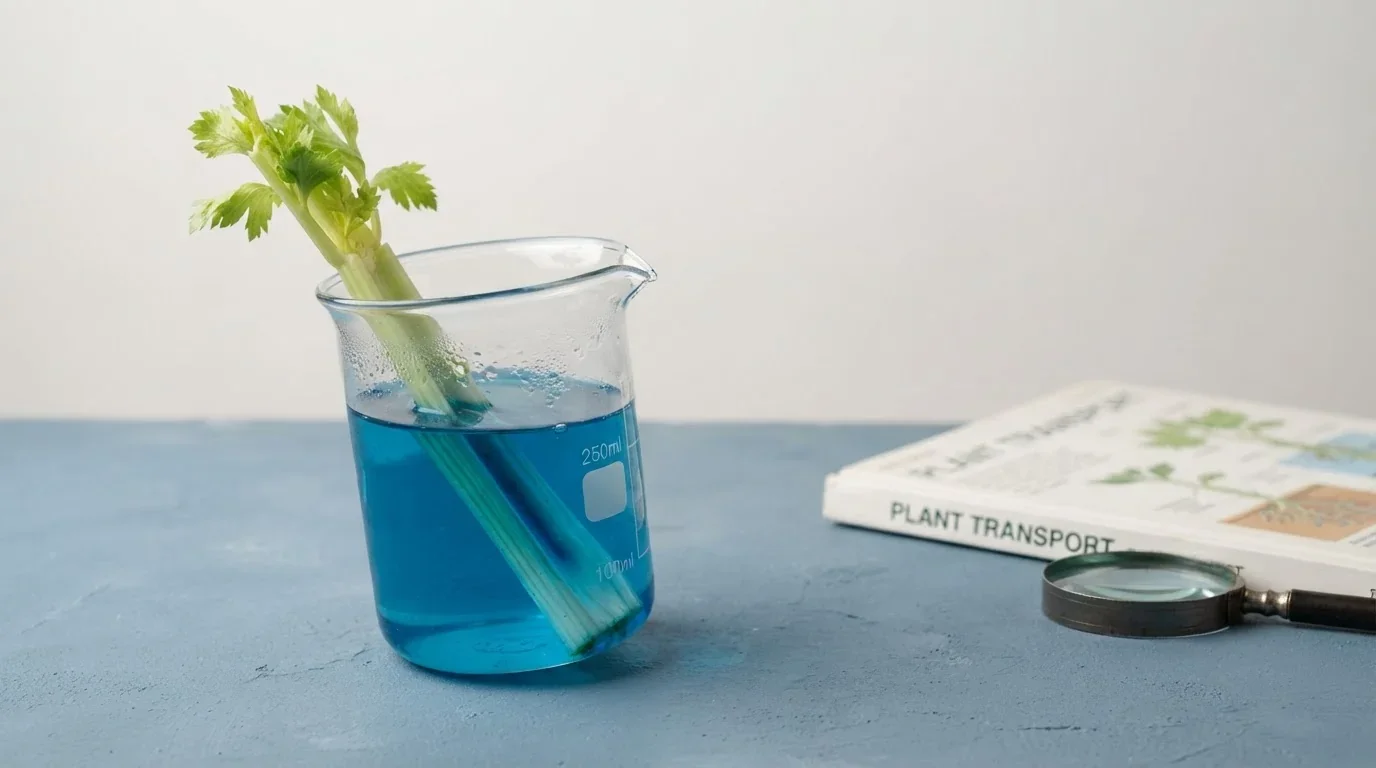
The celery stalk experiment is a classic for a reason. It visually demonstrates how plants transport water, a core topic for Primary 5 and 6. For many students, this experiment is the 'aha!' moment when the abstract concept of the plant transport system becomes real. This hands-on experience is invaluable, especially since many parents seeking Primary Science tuition want to bridge the gap between textbook theory and exam application. Quality online tuition platforms often use animations of this very process to reinforce learning but doing it at home provides a tangible lesson that's hard to forget.
Understanding this experiment goes beyond simple observation. For the PSLE, students must articulate why it happens using specific scientific keywords. The dye travelling up the stalk isn't just a neat trick. It's visible proof of the water-carrying tubes' function. Mastering the explanation for this is essential for scoring well on Open-Ended Questions (OEQs).
Running the Experiment: A Quick Guide for Parents
You can easily do this experiment on a weekend afternoon. It’s a fantastic way to engage your child and reinforce what they learn in their Primary Science tuition.
What you'll need:
- A fresh stalk of celery, preferably with leaves
- A tall, clear glass or jar
- Water
- Red or blue food colouring (darker colours work best)
- A pair of scissors (for adult use)
Step-by-step instructions:
- Fill the glass about halfway with water.
- Add 10-15 drops of food colouring and stir until the colour is deep and uniform.
- With an adult's help, carefully cut about 2cm off the bottom of the celery stalk. A fresh cut absorbs water more effectively.
- Place the celery stalk into the coloured water.
- Leave it in a well-lit area and check on it every few hours. You should start seeing results within 2-4 hours, with more dramatic effects after 24 hours.
Pro-tip: To take the learning further, carefully split the bottom of a celery stalk halfway up. Place each 'leg' into a separate glass, one with red water and one with blue. This advanced version dramatically illustrates how the water-carrying tubes run independently up the stalk.
From Observation to Full Marks: Deconstructing a PSLE OEQ
Seeing the coloured leaves is the fun part. Explaining it correctly is where the marks are. Here’s how to guide your child from a simple observation to a 'gold-standard' PSLE answer.
Typical OEQ: "After several hours, the leaves of the celery turned red. Explain this observation."
Common mistake (0-1 mark) A typical, incomplete answer might be: "The celery absorbed the red water and it travelled to the leaves." While not wrong, it lacks the scientific vocabulary SEAB examiners look for.
Gold-standard answer framework (2 marks)
-
State the Key Structure: Start by identifying the part of the plant responsible. "The celery stalk has water-carrying tubes."
-
Describe the Function with Keywords: Explain what the water-carrying tubes do, using the precise phrasing from the syllabus. "The water-carrying tube's function is to transport water and dissolved mineral salts from the roots to all parts of the plant."
-
Link to the Experiment: Connect the function to the observation. "In this experiment, the red-coloured water was absorbed and transported upwards through the water-carrying tubes to the leaves, causing them to turn red."
This structured answer demonstrates a clear understanding of the plant transport system, hitting all the keywords an examiner needs to see. This level of precision is a key focus for any good Primary Science tutor.
Is Hands-On Learning Enough in Today's 'Education Arms Race'?
Some parents wonder if fun experiments are a distraction from the rigour of exam preparation. It's a valid concern, especially when a 2026 IPS study highlighted that parents' median monthly spending on tuition has risen to $500, feeling the pressure of the academic environment. Yet, this experiment proves the opposite.
Rote memorisation alone is fragile. The celery experiment builds deep, conceptual understanding that helps a child answer OEQs even when the question is phrased in an unfamiliar way. It moves them from just knowing 'what' to understanding 'how' and 'why'. This inquiry-based approach is exactly what's needed to build resilience for the challenges of PSLE 2027. Effective Primary Science tuition programmes recognise this, blending structured content with practical applications. Similarly, the best online tuition leverages technology not just to present information but to create interactive models that foster this deeper inquiry.
Ultimately, the goal of Primary 6 Science tuition isn't just to pass an exam. It’s to build a scientific mindset. The humble celery stalk, sitting in a glass of coloured water on your kitchen counter, is a surprisingly powerful tool in achieving that.
Frequently Asked Questions
Why do we use the celery stalk experiment to teach the plant transport system for primary school?
The celery stalk experiment is used because it provides a visual and tangible demonstration of how water moves through plants, which helps Primary 5 and Primary 6 students better understand the abstract concepts of the plant transport system. By observing the coloured water travelling up the stalk, students can clearly see the function of the water-carrying tubes in action, making it easier to recall and explain during PSLE Science exams.
What should students include in a PSLE Science OEQ answer about water transport in plants?
A high-scoring answer for a PSLE Science OEQ regarding water transport must identify the water-carrying tubes as the structure responsible for moving water and dissolved mineral salts from the roots to all parts of the plant. Students should clearly link the experimental observation, such as the leaves turning a specific colour, to the functional process of water absorption and transport through these water-carrying tubes.
How long does the celery stalk experiment take to show results?
You can typically start seeing the results of the celery stalk experiment within 2 to 4 hours, though more dramatic effects are usually visible after 24 hours. The speed of the results can depend on the freshness of the celery and the environmental conditions, so leaving it in a well-lit area is recommended for the best demonstration of the plant transport system.
Are PSLE Science experiments like the celery test essential for exam preparation?
Yes, hands-on PSLE Science experiments are essential because they promote deep conceptual understanding rather than simple rote memorisation. By engaging with experiments, students move beyond memorising facts to actually understanding the scientific processes, which allows them to handle unfamiliar OEQ phrasing with greater confidence and analytical skill.