

Singapore-Contexted PSLE Science: A 6-Week Home-Experiment Plan to Sharpen Inquiry Skills and Open-Ended Answers
Why your kitchen table is the ultimate Science laboratory
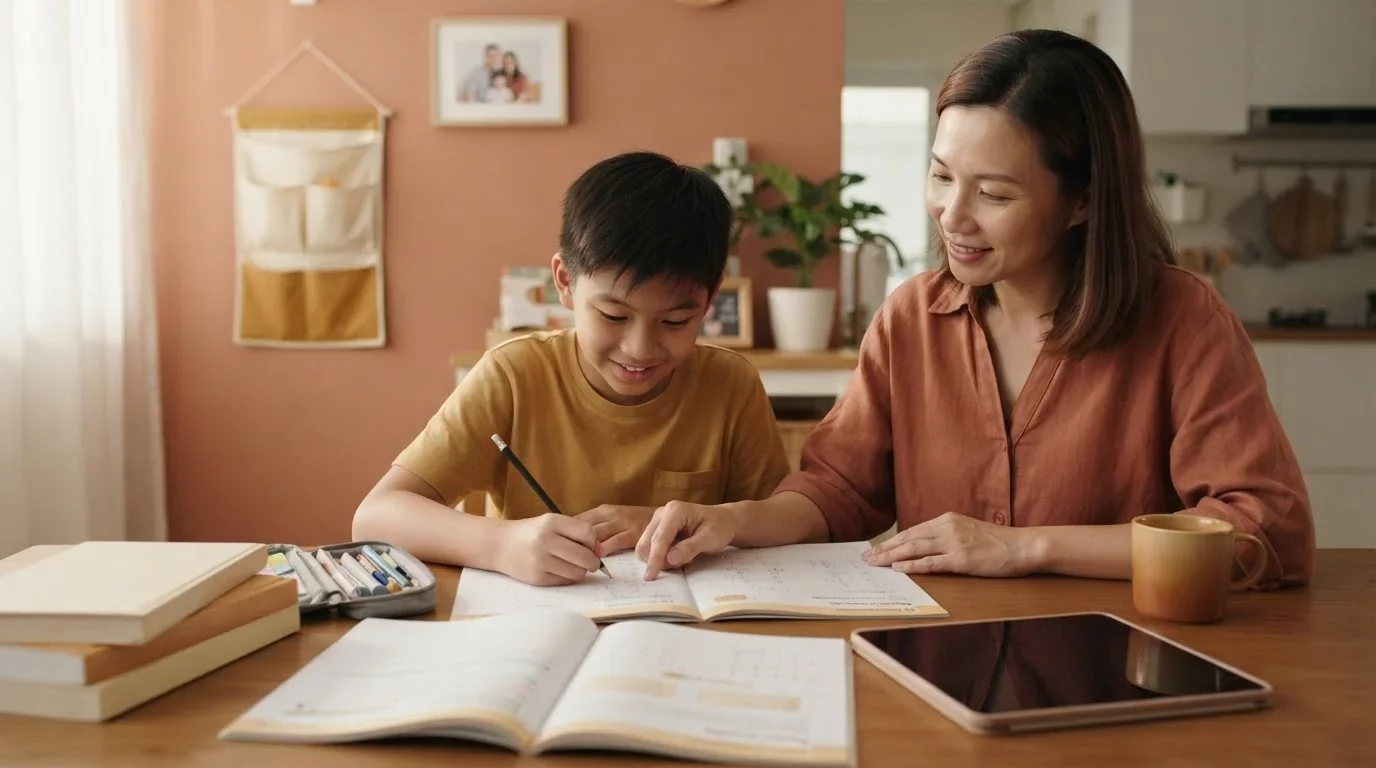
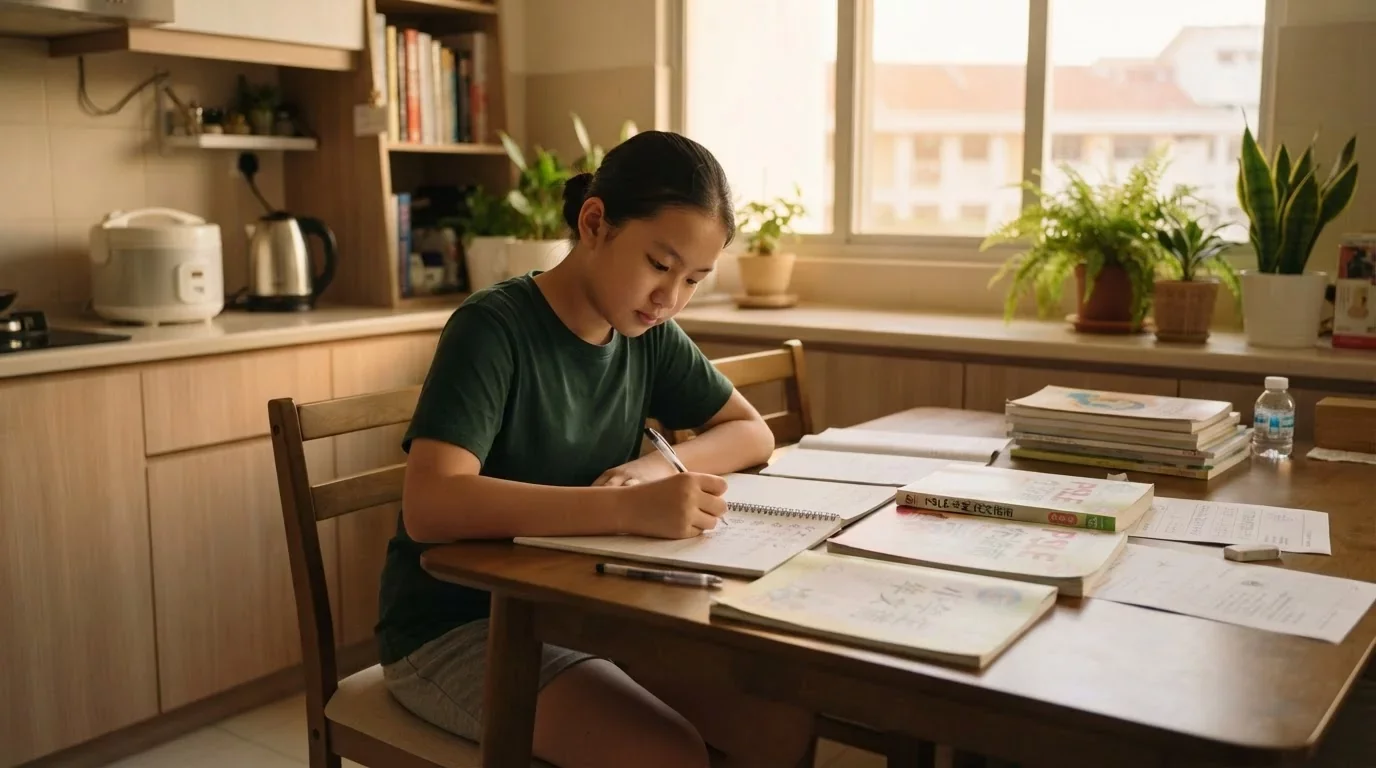
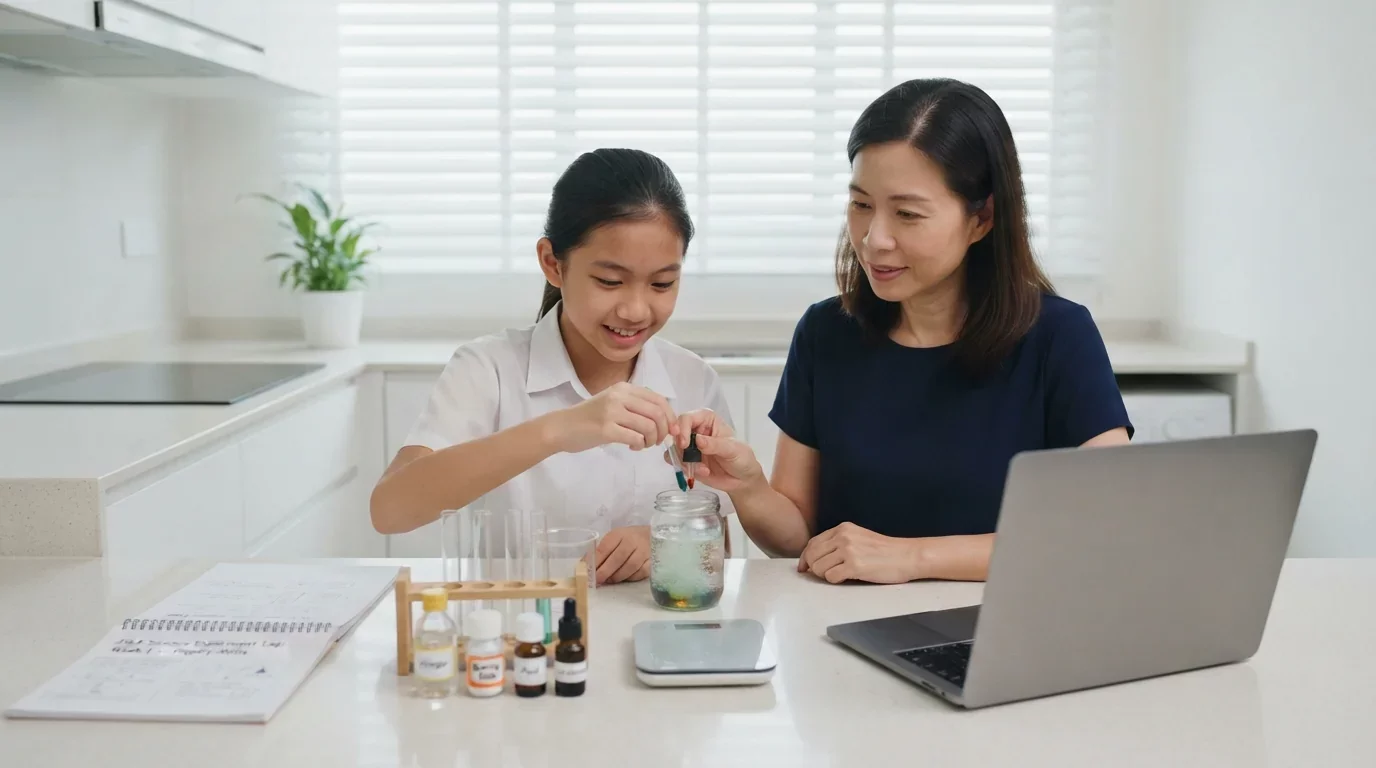
We understand that preparing for the primary school Science examinations can feel like an incredibly demanding and stressful journey for families in Singapore. Specifically, we observe that children often struggle to apply abstract concepts from textbooks to real-world scenarios, leading to frustration when faced with open-ended questions in Paper 2. We believe that by transforming your kitchen table into a hands-on learning laboratory, your child is fully capable of mastering critical inquiry skills, building academic confidence and doing better in their assessments.
The primary school Science paper is not just about memorising facts about photosynthesis or electricity. It is about thinking like a scientist. This means mastering essential inquiry skills like observation, forming a hypothesis and reasoning which are crucial for success in both school assessments and national examinations. While structured lessons from a primary school Science tutor are vital, a powerful and often overlooked training ground is your own home, using everyday items to build these core skills from primary 3 all the way to primary 6.
Fostering a scientific mindset at home
This approach is not about replicating a complex school laboratory. Instead, it is about fostering an inquisitive mindset that sees Science in everyday occurrences. The MOE curriculum, particularly leading up to the PSLE Science paper, increasingly tests the application of concepts in unfamiliar scenarios. Engaging in home experiments builds the confidence and analytical thinking required to tackle these application questions, making Science a tangible part of your child's world rather than just another textbook chapter to memorise.
Understanding the MOE Science staircase: From primary 3 to primary 6
The Singapore primary school Science syllabus is designed as a gradual staircase, with each level increasing in complexity. Understanding this progression is highly successful in helping you tailor home activities to your child's learning pace, ensuring they are well-prepared for what lies ahead.
Tailoring experiments to your child's level
For students in primary 3 and primary 4, the focus is on building foundational language and making simple comparisons. They learn to classify objects and describe their observations clearly. For example, simple experiments like exploring how different materials conduct heat or how magnets interact are excellent for this stage.
As students transition to primary 5, they must start explaining the scientific reasons behind their observations. They learn to identify variables, ensure fair tests and interpret results from diagrams or tables. This is the crucial year for building PSLE-ready study habits. Finally, in primary 6, students face complex, multi-step questions that require them to integrate concepts from different topics, such as forces, energy conversion and environmental interactions. Conducting structured home experiments helps primary 6 students practice describing these relationships using precise scientific keywords, which is highly successful in helping them secure full content marks under exam conditions.
The primary Science staircase: How skills evolve from primary 3 to primary 6
We understand that supporting your child through the primary school Science curriculum can feel like a demanding and highly complex task. Specifically, we observe that parents often feel unsure about how to help their child prepare because exam requirements seem to shift dramatically between grade levels. We believe that by understanding the structured progression of the MOE syllabus, you are fully empowered to support your child in building the specific inquiry skills they need at each stage of their primary education.
The Singapore Science curriculum is designed as a gradual staircase, with each academic year building on the last to increase complexity and depth. Let us look at how these expectations change from primary 3 to primary 6, and how you can help your child master each level with confidence.
Primary 3 and primary 4: Building the scientific vocabulary
In the lower primary years, the Science syllabus introduces foundational themes such as materials, magnets, life cycles and introductory concepts of heat and light. At this stage, the primary focus is on building a robust scientific vocabulary. Students learn to make simple comparisons, classify physical objects based on their characteristics and describe basic observations clearly. Assessment questions are usually direct and straightforward, often asking students to identify a simple difference between two items.
To support this level of learning at home, your experiments should focus on observation and recording. Encourage your child to describe what they see using precise terms rather than everyday language. This is also the ideal time to consider whether your child would benefit from a targeted primary 4 science tuition programme, which can help reinforce these core definitions and classification skills before the academic workload increases.
Primary 5: The critical transition to explaining the why
As students enter primary 5, they encounter more complex topics, including water and changes of state, electricity, living things and human body systems. We observe that this year represents a significant academic leap for many children. No longer are they expected to merely describe what they see. They must now explain the scientific reasons behind their observations, demonstrating a deep understanding of cause and effect.
Furthermore, primary 5 introduces the formal structure of experimental design. Your child must learn how to identify variables, explain what makes a test fair and interpret data presented in tables, line graphs or diagrams. Because primary 5 is the crucial year for building PSLE-ready habits, establishing a consistent study routine is essential. Enrolling your child in science tuition for primary 5 is a highly successful way to guide them through this demanding transition, helping them master the application of concepts before they face exam pressure.
Primary 6: Mastering application and multi-step analysis
In primary 6, the curriculum covers advanced topics such as forces, energy conversion and environmental interactions. At this final stage of primary school, students face complex, multi-step questions that require them to integrate knowledge from entirely different topics. They must confidently identify variables and controls, predict outcomes in unfamiliar real-world contexts and construct logical, evidence-based explanations.
This is where consistent, strategic practice truly pays off. To help your child navigate this challenging year, a specialised primary 6 science tuition or primary 6 science tuition programme can provide the structured guidance they need. Experienced tutors teach students how to dissect complex application questions methodically, ensuring they can express their answers using precise scientific keywords to secure maximum content marks in Paper 2.
Weeks 1-2: Simple home experiments to build core inquiry skills
We understand that teaching your child about abstract physical phenomena like evaporation and heat transfer can feel like an incredibly dry task. Specifically, we observe that many primary school students struggle to identify independent and dependent variables in experimental setups, which leads to lost marks in Paper 2. We believe that by conducting a simple evaporation race right on your kitchen counter, your child is fully capable of visualising these factors clearly, making the concept of variables easy to master.
Our weekly plan kicks off with two highly engaging experiments that use low-cost materials found in any Singaporean household. These activities are designed to turn passive reading into active inquiry, helping your child build the confidence they need for their Science assessments.
Experiment 1: The speedy evaporation race (primary 4 and primary 5 level: Heat)
The primary aim of this experiment is to find out if a larger surface area makes water evaporate faster. To begin, you will need a plate, a cup, a measuring cup and some water.
To conduct the test, pour an equal amount of water (such as 50ml) into the plate and the cup. Place both containers in the same sunny spot (such as a windowsill or balcony in your HDB flat) and check back every hour. This simple setup allows your child to observe the rate of evaporation directly over time.
To turn this activity into valuable exam marks, guide your child to practise identifying the key variables. Ask them: "What are we changing?" (the surface area), "What are we measuring?" (the amount of water left) and "What must we keep the same for a fair test?" (the initial amount of water, the location and the temperature). Mastering this distinction is highly successful in helping students tackle experimental design questions in Paper 2 with absolute clarity.
Experiment 2: The DIY string telephone (primary 5 and primary 6 level: Sound)
We understand that explaining how sound energy travels through different states of matter can be difficult without visual aids. Specifically, we observe that students often struggle to use precise scientific keywords like 'vibrations' and 'medium' when answering open-ended questions about wave propagation. We believe that by building a classic string telephone, your child is fully capable of feeling the physical vibrations directly, helping them translate this sensory experience into a high-scoring exam answer.
The aim of this experiment is to show that sound travels better through a solid than through air. You will only need two paper cups, a long piece of string (about 3 to 5 metres) and a pin.
First, poke a small hole in the bottom of each cup. Thread the string through both holes, tying a knot inside each cup to secure it. Have one person talk into a cup while the other listens, ensuring that the string is kept taut.
For valuable skills practice, have your child compare the sound quality when talking with the string taut versus when it is slack. Ask them to explain why the sound is clearer when the string is taut, using keywords like 'vibrations' and 'medium'. This targeted practice builds the critical skill of explaining a scientific concept using evidence from a setup, which is a highly successful way to secure full content marks under exam conditions.
Weeks 3-4: Investigating density and mastering documentation
We understand that teaching your child about abstract physical concepts like density and buoyancy can be a challenging task. Specifically, we observe that younger students in primary 3 and primary 4 often struggle to differentiate between simply stating what they see and describing an experimental change, which are distinct command words in school assessments. We believe that by using a simple egg and some table salt, your child is fully capable of visualising these differences clearly, helping them build critical thinking skills.
Experiment 3: The floating egg mystery (primary 3 and primary 4 level: Materials and density)
The primary aim of this experiment is to find out how salt affects whether an egg sinks or floats in water. To begin, you will need a tall glass, some tap water, a fresh egg and table salt.
First, fill the glass with plain water and gently place the egg inside. Your child will observe that the egg sinks to the bottom. Next, remove the egg and dissolve a generous amount of table salt (about 6 tablespoons) into the water. When you place the egg back in, your child will watch the egg float to the surface.
This simple activity is highly successful for training your child to recognise command words, which is a critical exam technique. Ask your child to 'state' what they see initially (the egg is at the bottom of the glass) and then 'describe' the difference after adding salt (the egg moves from the bottom to the top and floats on the water). Practising these distinct command words at home ensures your child can write precise answers that meet the expectations of examiners, avoiding common pitfalls that lead to lost marks.
How to turn play into PSLE marks: The scientific documentation method
We understand that while conducting hands-on experiments at home is enjoyable, translating these activities into high-scoring exam answers can feel like a major hurdle. Specifically, we observe that students often lose marks in the open-ended section of the Science paper because they describe their findings in a conversational manner instead of using a structured, logical format. We believe that by encouraging your child to document their findings systematically like a scientist, they are fully capable of mastering the exact structure required to score full marks in Paper 2.
To help your child bridge this gap, have them keep a dedicated science notebook. For every home experiment, guide them to follow this structured five-step framework, which directly mirrors how they should break down open-ended questions under exam pressure:
- Aim: State what we are trying to find out clearly. For example, investigating how surface area affects the rate of evaporation.
- Hypothesis: Predict what will happen and explain the scientific reason behind your prediction.
- Variables (for primary 5 and primary 6 students): Identify the independent variable (the one thing we change), the dependent variable (what we measure) and the constant variables (what we keep the same to ensure a fair test).
- Observations: Record what you see during the experiment. We recommend using a simple table to organise your results systematically.
- Conclusion and explanation: State whether your initial prediction was correct and explain the scientific principles behind your observations.
Does home-based learning replace the need for primary Science tuition?
We understand that conducting home experiments is an excellent way to build your child's curiosity and critical thinking. Specifically, we observe that while hands-on activities make lessons memorable, parents often struggle to help their child translate these experiences into precise, high-scoring answers under exam conditions. We believe that combining practical home exploration with structured support, such as primary Science tuition, is a highly successful way to help your child bridge this gap and achieve their potential.
While kitchen-table experiments are fantastic for visualising concepts, a comprehensive primary Science tuition programme or a proven online platform like Geniebook provides the targeted guidance needed to excel. Experienced educators help students master precise scientific keywords and teach them how to structure their answers methodically to secure full marks in Paper 2 open-ended questions. Using home experiments to understand the 'why' and relying on expert coaching to refine the written answers is a highly successful strategy to help primary 5 and primary 6 students build confidence and do better.
Achieve academic goals with Geniebook's tech-enabled suite
At Geniebook, our suite of online learning products is designed to complement your child's primary school preparation, helping primary and secondary school students learn smarter, stay on track and do better. We believe that when technology supports experienced educators, your child is fully empowered to close their learning gaps and achieve their academic potential.
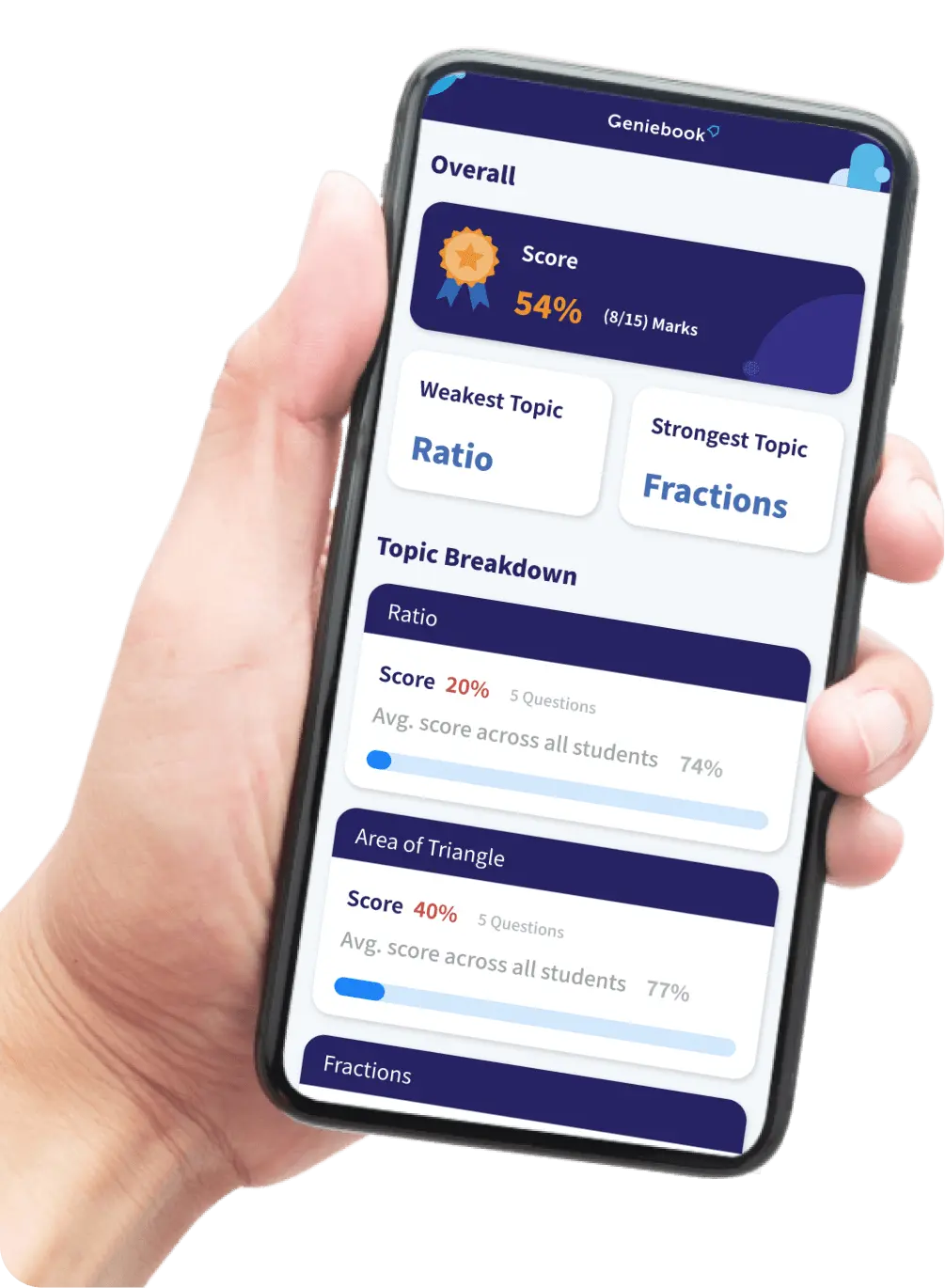
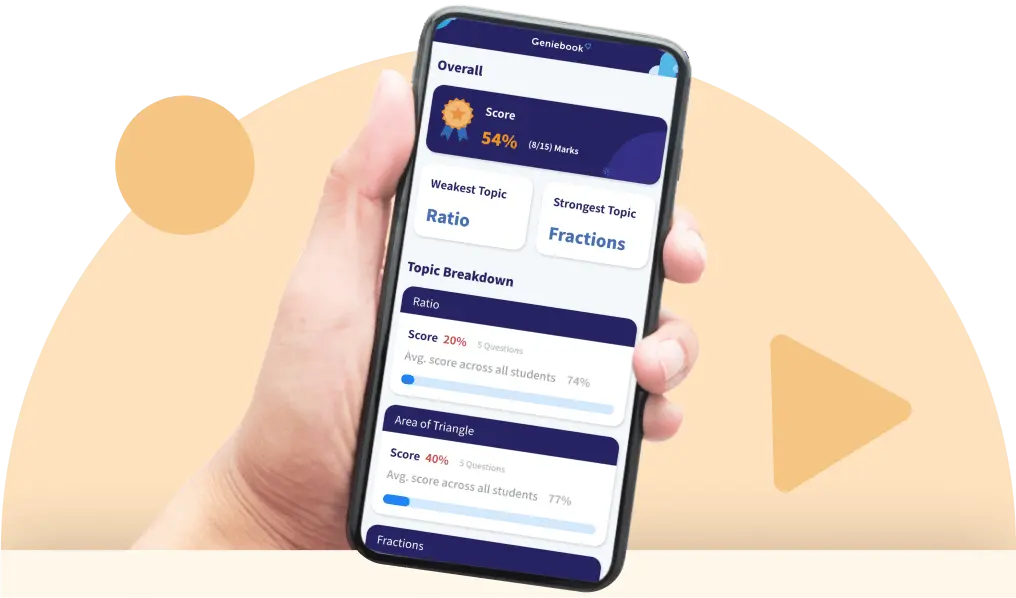
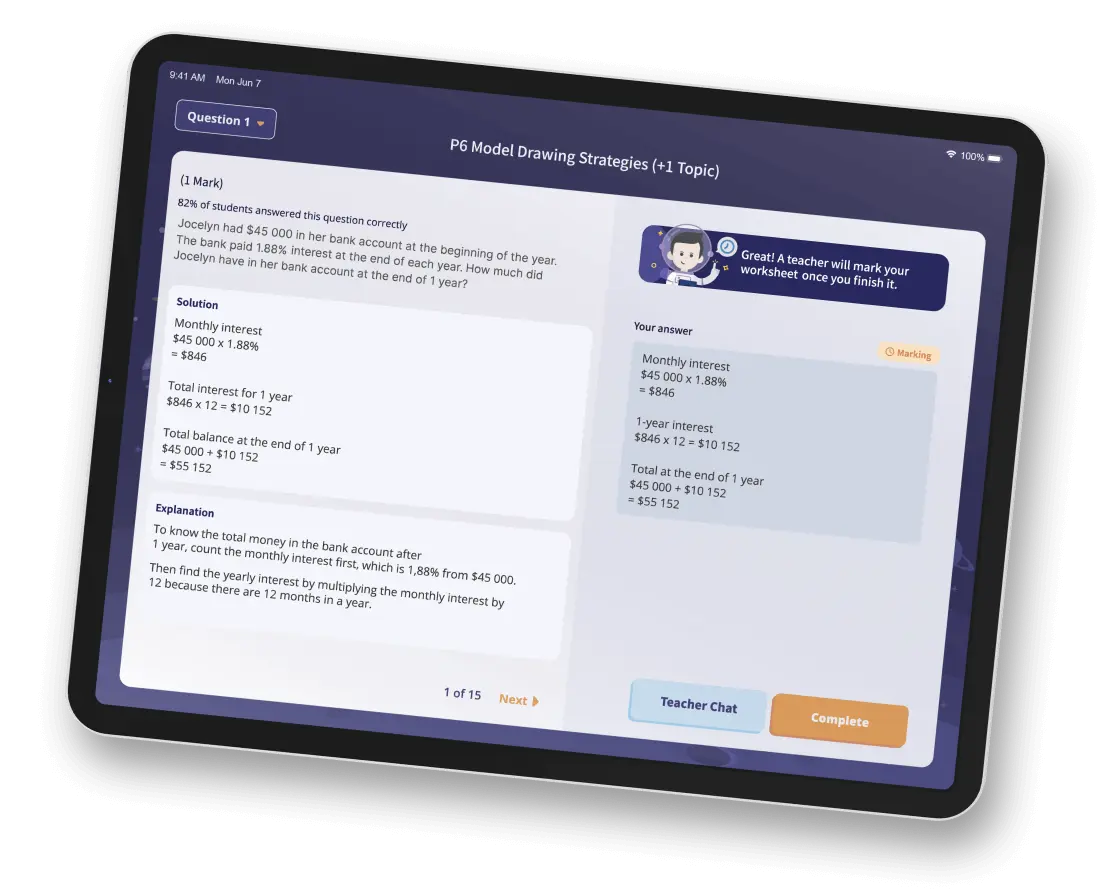
Through GenieSmart, our AI-personalised worksheets recommend targeted practice questions strictly aligned with the MOE syllabus, with difficulty levels that constantly adjust to your child's mastery of each topic. With over 300,000 questions in our database, our proprietary AI algorithm leverages over 1,000,000 data points to identify strengths and learning gaps. Notably, our new AI-marking feature covers 80% of primary 3 to primary 6 Science open-ended questions and provides immediate feedback so students can benefit from a faster learning loop. On GenieClass, experienced educators lead weekly live online classes, explaining complex scientific concepts and experimental designs using storytelling, live polls and interactive visual aids.
If your child has doubts or needs help with homework, they can clarify concepts instantly through our real-time teacher chat on GenieAsk, which offers continuous support seven days a week. Additionally, our unique rewards system motivates students to learn independently. As your child completes worksheets and participates in classes, they earn Bubbles that can be redeemed for over 5,000 exciting, kid-safe items from our Bubble Store, turning daily practice into a rewarding habit. With half of our students successfully achieving AL 1 to AL 3 in PSLE and jumping two grades on average, we believe our personalised pedagogy is highly effective in building academic confidence. Have you planned how to help your child stay focused and on track for their upcoming examinations?
Frequently asked questions
Why are home experiments useful for learning PSLE Science?
Home experiments are useful for learning PSLE Science because they help children apply abstract textbook concepts to real-world scenarios, building the critical inquiry skills needed to answer application questions. By transforming your kitchen into a hands-on laboratory, these activities make scientific principles like density or evaporation tangible, helping students master observation and reasoning skills that are tested in school assessments and the PSLE.
How can doing PSLE Science home experiments improve my child's open-ended answers?
Doing PSLE Science home experiments can improve a child's open-ended answers by teaching them to document their findings in a structured, scientific format instead of a conversational one. By practising how to state an aim, form a hypothesis, record observations and draw a conclusion, students learn to provide logical, evidence-based explanations. This method helps them master the Claim-Evidence-Reasoning framework, which is crucial for scoring full marks in Paper 2.
How do the skills required for the MOE Science syllabus change from primary 3 to primary 6?
The skills required for the MOE Science syllabus increase in complexity each year, forming a 'staircase' of learning. In primary 3 and 4, the focus is on building scientific vocabulary and making simple comparisons. Primary 5 introduces explaining the 'why' behind observations and understanding fair tests. Finally, primary 6 requires students to integrate concepts from different topics and apply their knowledge to complex, multi-step questions in unfamiliar contexts.
What is a simple experiment I can do at home to teach primary school Science concepts?
A simple experiment you can do at home is the 'floating egg mystery' to teach students about materials and density, a topic relevant for the primary 3 and 4 syllabus. By placing an egg in plain tap water and observing it sink, then adding salt to the water and watching it float, children can directly see how changing the density of water affects buoyancy. This activity is also excellent for practising different command words like 'state' and 'describe' used in exams.
If my child does home experiments, do they still need primary Science tuition?
Yes, your child can still benefit greatly from primary Science tuition even if they are doing home experiments, as the two approaches complement each other. While hands-on activities are excellent for building curiosity and understanding concepts, a structured primary Science tuition programme provides expert coaching on using precise scientific keywords and structuring written answers to meet specific exam requirements, which is a key factor for success in PSLE Science Paper 2.