How to Stay Calm With Just Over a Week to the Written PSLE Papers
How Do You Manage the Final Week Before the Written PSLE Papers?
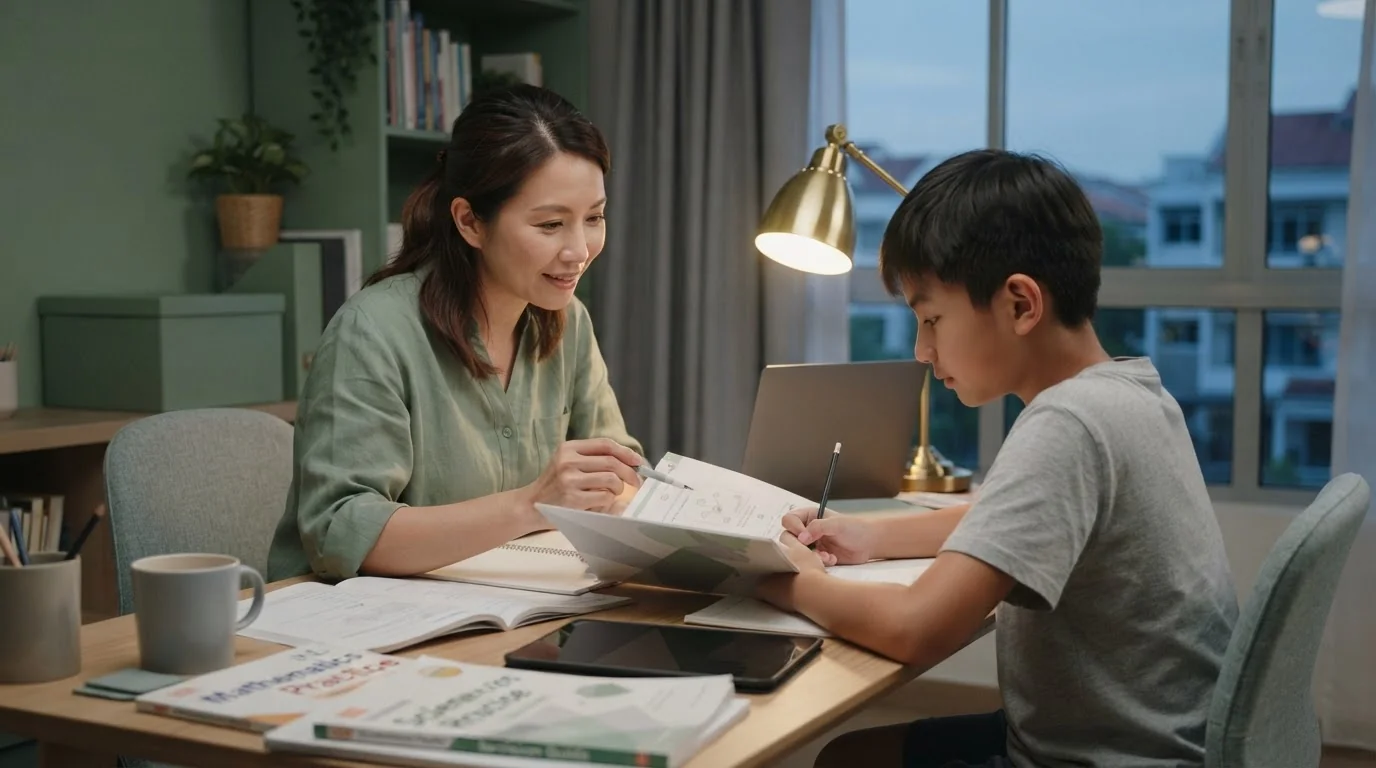
The best way to manage the final week is for parents to model calmness and shift the focus from intensive cramming to consolidating knowledge and prioritising well-being. Your own anxiety can transfer directly to your child, so creating a supportive, low-pressure home environment is the most critical task. Families who want structured support can also see how Geniebook's online lessons work.
The week before the papers is not for learning new, difficult concepts. It is a time for review, rest and building the quiet confidence your child needs to walk into the exam hall ready to perform. A little bit of 'exam nerves' is normal, as noted by education experts at the National Institute of Education (NIE) but our goal is to manage PSLE stress so it does not become overwhelming.
Why Does My Calmness as a Parent Matter So Much?
After decades in the Singapore education landscape, I have seen one truth hold firm: a parent’s anxiety is contagious. The atmosphere at home in these final days will significantly impact your child’s state of mind. Research and reports from The Straits Times consistently show that when parents are stressed, children absorb that pressure, which can lead to burnout and hinder their performance.
It is tempting to push for one last revision sprint. But over-pressuring your child now is counterproductive. Instead, your role is to be a steady anchor. Your child needs to know that your love and support are not tied to their PSLE score. This is not about your parenting report card. It is about their well-being and confidence.
What Should Revision Look Like in This Final Week?
The academic focus must pivot. Forget about introducing new material or attempting exceptionally challenging questions. Doing so can backfire, shaking a child's confidence right when they need it most. The final seven to ten days should be dedicated to systematic and targeted consolidation.
- Focus on past mistakes: The highest-value activity now is reviewing errors from past practice papers and assignments. Help your child understand why they made a mistake and what the correct concept is. This reinforces learning effectively.
- Limit practice papers: Resist the urge to drill with endless papers. Completing one or two more under timed conditions can help calm exam nerves and maintain rhythm but any more than that risks fatigue.
- Target weak topics (gently): If your child is struggling, hone in on one or two weak topics where they are close to a breakthrough. Aim for small, confident wins rather than trying to cover everything. Seeing steady progress, even on a small scale, is a powerful antidote to anxiety.
How Can I Tailor Support for My Child's Personality?
There is no one-size-fits-all approach to managing pre-exam anxiety. Observing your child's personality and tendencies allows you to provide the right kind of support.
- For the perfectionist: This child is prone to over-analysing and burning out. Enforce scheduled breaks. Encourage them to step away from their books and reassure them that they have prepared enough.
- For the last-minute learner: Panic can set in. Structure short, highly-focused revision sessions on key topics. Your calm presence can help them concentrate on what's most important.
- For the quietly anxious: This child may not voice their worries but shows stress through withdrawal or irritability. Create opportunities for open communication. A simple bedtime chat can make a world of difference. A parent, Grace Lio, featured in The Straits Times, found these conversations invaluable for her daughter.
Beyond Academics, What Routines Reduce PSLE Stress?
Building a calm and predictable routine is more beneficial than a perfect revision timetable. Your child’s brain needs rest to consolidate information and perform under pressure. This is a non-negotiable part of PSLE preparation.
- Protect sleep: Ensure your child gets quality sleep every night. This is crucial for memory, focus and emotional regulation. Avoid late-night cramming.
- Maintain normalcy: Life should not stop for the PSLE. Continue with family meals and light activities. A short walk in the park or a favourite family board game reminds your child that the exam is just one part of life, not the entirety of it.
- Practice positive affirmation: Focus on your child's effort and progress, not just potential outcomes. Remind them of how far they've come. Ms Lee, another parent preparing her child, emphasises being available for clarifications and providing constant positive reinforcement.
A 7-Day Countdown Checklist for Parents and Students
Here is a simple, actionable plan for the final week leading up to the first written paper for the upcoming PSLE cohort.
| Day | Student's focus | Parent's role |
|---|---|---|
| 7 to 5 days before | Review one subject per day. Focus on mistake logs. Clarify lingering doubts. | Be available for questions. Ensure a quiet study space. Keep the mood light. |
| 4 to 3 days before | Light revision of key formulas and concepts. Read through notes. No new practice papers. | Plan a relaxing family activity. Start conversations about non-academic topics. |
| 2 days before | Pack your exam bag: entry proof, stationery, watch. Lightly browse through notes if needed. | Confirm exam venue and transport. Double-check the SEAB-approved items. |
| The day before | No studying. Relax, do something you enjoy. Get to bed early. | Provide a nutritious dinner. Offer reassurance. Manage your own nerves and project calm. |
Ultimately, the final week is a test of emotional endurance as much as academic knowledge. By providing a calm, supportive foundation, you give your child the best possible chance to walk into the exam hall and show what they know.
Frequently Asked Questions
Should My Child Study New Topics One Week Before the PSLE?
You should absolutely avoid introducing new material or difficult concepts in the final seven to ten days before the PSLE. The best PSLE preparation at this late stage focuses entirely on consolidating what your child already knows, reviewing past mistakes and building confidence through targeted, light revision rather than aggressive learning.
How Can Parents Help Manage Their Child's Exam Anxiety?
Parental support for PSLE success relies heavily on your own ability to remain calm and project a sense of stability. Children often mirror the stress levels of their parents, so keeping your own anxiety in check and providing positive affirmation about your child's effort will help them perform better under pressure.
What Should a Revision Schedule Look Like in the Final Week?
An effective revision schedule for the final week involves shifting from heavy drilling to a more systematic approach that includes reviewing error logs and focusing on one or two weak topics for small wins. Avoid endless practice papers, as these can cause unnecessary fatigue, and instead focus on protecting your child's sleep and maintaining normal family routines to manage exam anxiety effectively.
How Do I Support a Child Who Is a Perfectionist Before the Exam?
Supporting a perfectionist requires you to proactively enforce scheduled breaks and reassure them that they have prepared sufficiently for the upcoming PSLE. This personality type is prone to over-analysing and burnout, so your role is to encourage them to step away from their books and validate their hard work rather than focusing solely on potential outcomes.
What Should Be in the Student's Exam Bag for the PSLE?
Your child should pack their exam bag with essential items including their entry proof, required stationery and a watch at least two days before the exam. It is vital to cross-reference your list with the official SEAB-approved items to ensure everything complies with the regulations of the Singapore education system.