Picture Prompts Unpacked: Debunking 7 Myths About Continuous Writing for Singapore's Primary Students
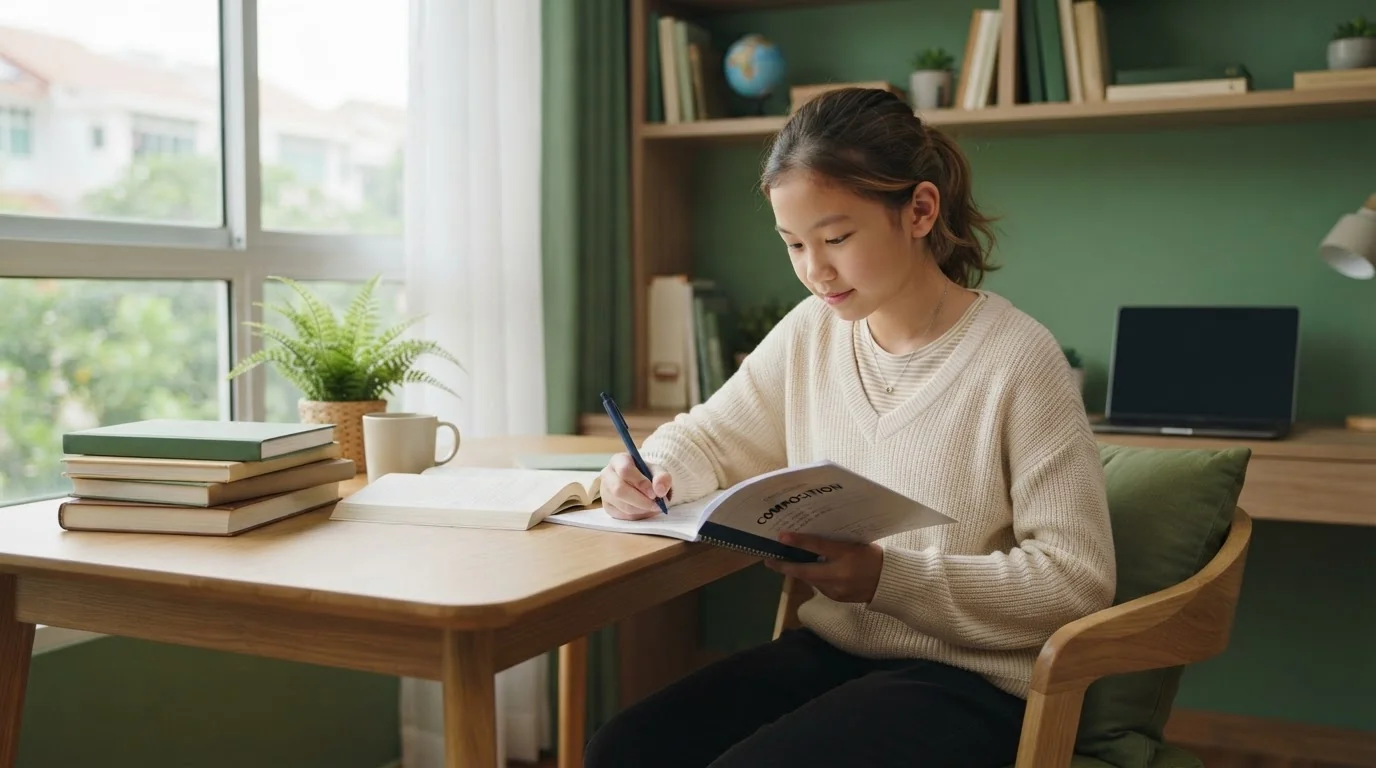
The Truth About PSLE Picture Prompts
Many common beliefs about the PSLE English continuous writing paper are holding students back. The truth is that success with picture prompts isn't about memorising model essays or using the fanciest words. It's about building flexible, foundational writing skills that can adapt to any topic. Effective preparation, whether through a dedicated programme of Primary English tuition or self-guided practice, should focus on debunking these myths. Parents seeking the best support often explore online tuition to find structured, expert-led guidance that targets these core abilities.
Myth 1: The Pictures Dictate the Entire Story
The truth: The pictures are a starting point, not a complete roadmap. According to the latest SEAB guidelines for the PSLE English paper (Standard English Language 0001), a student must write a story of at least 150 words that is relevant to a given topic and uses at least one of the three pictures. The real skill is creating a coherent narrative that meaningfully integrates a chosen picture, rather than just describing it. The exam tests a student's ability to invent the links between the topic and the picture, answering questions like 'Why is this character here?' and 'What happens next?'. Merely mentioning a picture in passing is not enough.
Myth 2: My Child Can Just Memorise a Few Good Essays
The truth: Blindly copying a sample composition is one of the least effective strategies. Examiners are trained to spot memorised scripts, which often fail to align perfectly with the specific topic and picture prompts on the day. True skill development comes from independent practice with unfamiliar prompts. After studying a model essay, a student should try to plan and write their own story based on a new, different prompt. This process tests their ability to transfer skills, not just their memory. A good primary English tutor will focus on this adaptive skill.
Myth 3: A Longer Composition Is Always a Better One
The truth: Quality trumps quantity. While the minimum requirement is 150 words, there are no extra marks for simply writing a very long story. The Continuous Writing section is worth 36 marks, with a significant portion allocated to content and structure. A well-planned, coherent 200-word story with a clear beginning, a compelling conflict and a satisfying resolution will score much higher than a rambling 400-word story that loses focus. The key is to tell a complete and relevant story within the time limit.
Myth 4: Planning Is a Waste of Precious Exam Time
The truth: A lack of planning is a primary reason students struggle, not a lack of ideas. Many P5 and P6 students find it hard to organise their thoughts into a logical narrative arc under pressure. Taking just 5 to 7 minutes to create a simple plan (e.g., a story mountain or a sequence of events) prevents the story from going off-topic and ensures a clear structure. This systematic approach is a cornerstone of effective teaching in primary-level English tuition, starting from as early as Primary 3.
Myth 5: My Child Must Use All Three Pictures
The truth: This is a persistent but incorrect myth. The SEAB syllabus specification is clear: candidates must use at least one of the three provided pictures. Forcing all three images into a single narrative often creates a convoluted and unnatural plot. It's far better to select one picture that sparks a strong idea and build a focused, relevant story around it. This is a crucial strategy for students in P5 English tuition as they prepare for the exam format.
Myth 6: We Should Focus on Memorising 'Wow' Words
The truth: Precise vocabulary is far more valuable than decorative or 'flowery' language. Students often misuse impressive-sounding words, which can confuse the reader and detract from the story. The focus, especially in the foundational years of P3 and P4, should be on using words accurately to show character and advance the plot. Developing a story is more important than simply listing events with fancy adjectives. For example, instead of 'The resplendent sun was incandescent', simply writing 'The sun was blinding' might be more effective in context.
Myth 7: Timed Practice Isn't Really Necessary
The truth: Managing the 50-minute time allocation for continuous writing is a skill in itself. Many students can write a good story with unlimited time but falter under exam conditions. A course that discusses creativity but never has students complete a timed story is doing them a disservice. Short, frequent practice is most effective. Writing for 20 minutes twice a week is more beneficial than a single 2-hour session. This builds stamina and reinforces the habit of planning, writing and checking within a time limit, a skill vital for any Primary 6 English tuition programme.
Why These Writing Myths Persist in Singapore
Parental stress around the PSLE is understandable. A 2023 survey by the Institute of Policy Studies (IPS) and The Straits Times revealed that a staggering 84.9% of parents believe tuition gives their children an edge in major exams. This pressure can lead parents and students to seek shortcuts, which fuels the spread of these myths. However, true confidence and competence are built on a solid foundation of skills, not quick fixes. This is where high-quality primary English tuition can make a real difference, guiding students away from ineffective habits.
A Practical Framework for Building Real Writing Skills
Building a strong writer takes time and a consistent, structured approach. Here is how skills should be scaffolded through the upper primary years:
-
Primary 3-4: The foundation. The focus should be on moving from guided sentences to planning and writing a complete narrative with a clear beginning, middle and end. Showing character through actions and dialogue is introduced here.
-
Primary 5-6: The PSLE approach. At this stage, students must develop a systematic method. This involves mastering story planning, generating relevant plotlines from prompts, using precise vocabulary and managing the 50-minute time limit effectively. Platforms offering online tuition can provide the targeted, regular practice needed to hone these skills.
Frequently Asked Questions
Do I really have to use all three picture prompts in my PSLE English writing?
No, you do not need to use all three pictures for your composition. According to the current syllabus, students are only required to use at least one of the three provided pictures to create their story. It is often more effective to select one relevant image and build a strong, coherent narrative around it rather than forcing all three into the plot, which can make the story feel unnatural and confusing.
How many words should a student write for the continuous writing paper?
A student should aim to write a high-quality story of at least 150 words that remains relevant to the topic and the chosen picture prompt. There is no additional credit given for exceeding the word count significantly, so it is better to focus on a well-structured narrative with a clear beginning, conflict and resolution rather than a longer piece that loses focus or direction.
Is memorising model essays an effective way to prepare for the PSLE 2027 English paper?
Memorising model essays is generally ineffective because examiners are trained to identify pre-scripted stories that often do not align perfectly with the specific requirements of the exam day. Instead of relying on memory, students should focus on developing adaptive skills by practising with unfamiliar prompts, learning to plan their own narratives and applying precise vocabulary to different scenarios.
Why is planning so important for composition writing?
Planning is essential because it helps students organise their thoughts into a logical narrative arc and prevents them from going off-topic during the exam. Taking just 5 to 7 minutes to sketch out a simple story mountain or sequence of events ensures the composition has a clear structure, which is a common challenge for students in Singapore primary schools facing the time pressure of the continuous writing paper.
Are 'wow' words necessary to get a high score in PSLE English writing?
Precise and accurate vocabulary is far more valuable for your score than simply memorising flowery or decorative words. Using complex adjectives incorrectly can confuse the reader and disrupt the flow of the story, whereas choosing the right word to show character and advance the plot creates a much stronger composition writing experience for the examiner.
How can students manage the 50-minute time limit for continuous writing?
Students can manage the 50-minute time limit by practising timed writing sessions regularly, such as writing for 20 minutes twice a week rather than attempting long, infrequent sessions. This builds the necessary stamina to plan, write and check their work within the required time, which is a vital skill for success in the PSLE English writing section.