PSLE Chinese Oral: A Parent's Q&A Guide to Reading Aloud and Conversation
How Much Does the PSLE Chinese Oral Actually Matter?
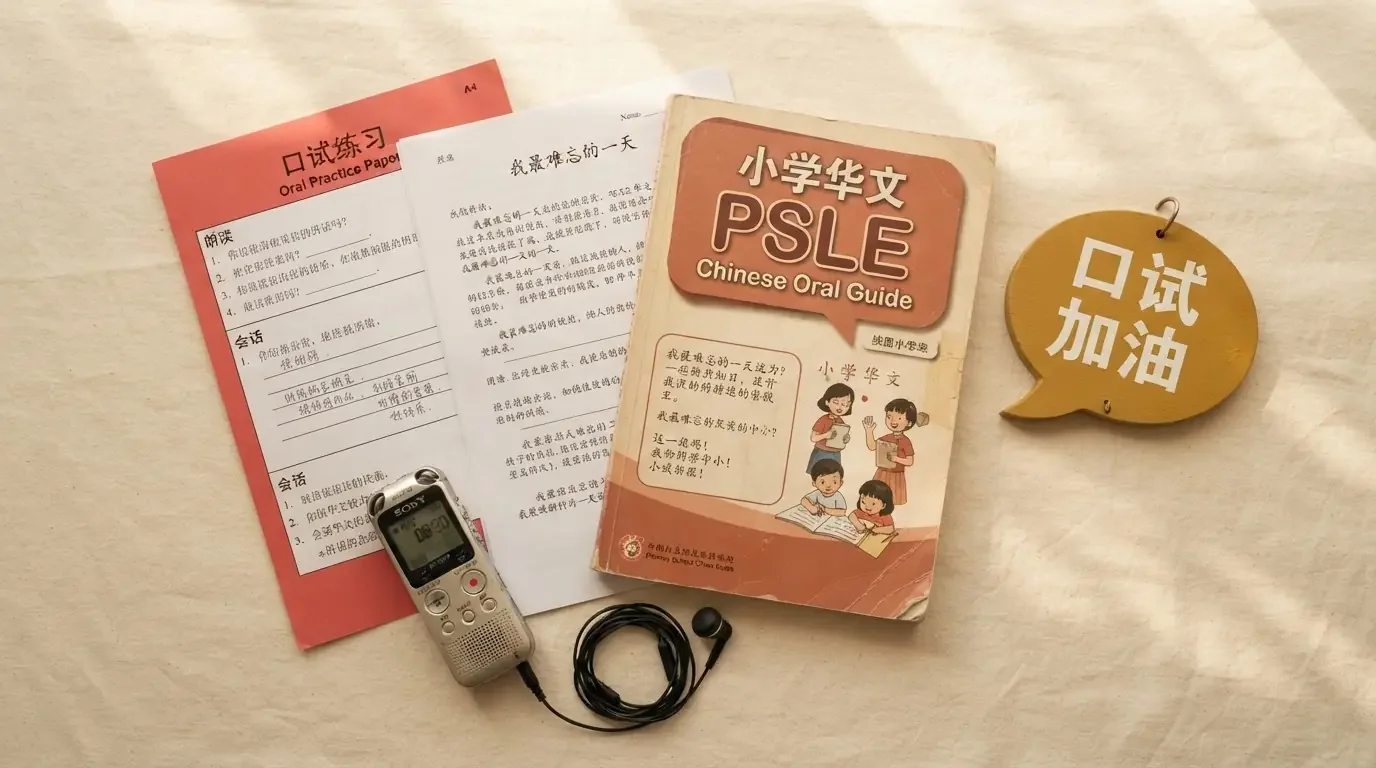
The PSLE Chinese oral exam tests your child on reading aloud (朗读) and video-based conversation (会话), making up a significant portion, often 25-30% of the total PSLE Chinese grade. Success hinges on consistent practice that builds both accurate pronunciation and natural conversational fluency. Many parents find this component challenging to support at home and often seek help from a good primary Chinese tuition programme. While options like online tuition provide structured practice, many effective strategies can be implemented in short, daily bursts at home.
What Are Examiners Looking For?
Understanding the MOE assessment criteria helps focus your home practice. It’s not just about speaking without stopping. It’s about the quality of the language and expression.
For reading aloud (朗读), examiners assess:
-
Pronunciation and Accuracy (字音准确): Are characters and tones read correctly?
-
Fluency and Pace (流利): Does the child read smoothly, without awkward pauses and at a natural speed?
-
Intonation and Expression (语调、感情): Does the reading convey the passage's mood and meaning? This is what separates a good score from a great one.
For conversation (会话), the focus is on:
-
Content andElaboration (内容、发挥): Can the child provide detailed, personal responses to the video stimulus?
-
Fluency and Coherence (流利、连贯): Are ideas expressed logically and smoothly?
-
Pronunciation and Grammar (语音、语法): Is the language used accurate?
-
Interaction (交流): Does the child engage with the examiner in a meaningful dialogue?
How Can I Help My Child Read With Emotion?
Many children read accurately but sound monotonous. To help them add expression (语调、感情), try the “Listen and Imitate” technique. Find audio clips from approved MOE resources or even news segments from Channel 8. Have your child listen to a few sentences and then try to mimic the speaker's pace, pauses and intonation. Just 5-10 minutes a day makes a difference. Another powerful tool is the voice recorder on your phone. Ask your child to record themselves reading a passage and listen back. They often spot their own mistakes in tone and pace more effectively than when a parent points it out.
My Child Freezes During Conversation. How Do I Build Spontaneity?
Spontaneity comes from practice, not a script. The key is to make speaking Chinese a low-stakes, daily habit rather than a high-pressure exam drill.
-
Weave Chinese into daily chats. Instead of asking, “How was school?” ask, “今天在学校发生了什么有趣的事?” (What interesting thing happened in school today?). The goal is to get them comfortable retrieving Chinese vocabulary for everyday topics.
-
Use the “Why?” drill. When your child gives a simple answer like “我喜欢这个视频” (I like this video), immediately follow up with “为什么呢?” (Why?). Prompt them to explain their reasoning, give examples and elaborate on their feelings. This directly trains the skill of elaboration (发挥) needed for the exam.
We Don't Speak Chinese at Home. Is It Hopeless?
Absolutely not. Even if you aren't fluent, you can be an effective coach. Your role is to facilitate practice and build confidence. Focus on what you can assess: Did they hesitate? Did they elaborate on their points? Did they sound confident? You can also use recording tools to capture their practice sessions. This is also where targeted online tuition or a small-group primary Chinese tuition class can fill a crucial gap, providing expert feedback on pronunciation and grammar that parents might miss.
Quick Fixes for Common Stumbles
During practice, you'll notice recurring issues. Here’s how to address them quickly:
-
The Problem: Awkward pauses and hesitation.
The Fix: Teach them it's okay to take a short, silent pause to gather their thoughts. It sounds much better than filling the silence with “uh” or “um”. A deep breath can work wonders. -
The Problem: Lack of elaboration.
The Fix: Give them a simple structure for answers: Point > Explain > Example. For instance, “I think we should recycle (Point) because it protects our environment (Explain). For example, we can save trees by recycling paper (Example).” -
The Problem: Repetitive vocabulary.
The Fix: Keep a notebook of “upgraded” words. If they always say “高兴” (happy), introduce them to “兴奋” (excited) or “愉快” (joyful). Discussing topics from sources like Lianhe Zaobao Junior can naturally expand their vocabulary on social issues.
Preparing for the PSLE 2027 Chinese oral is a marathon, not a sprint. By integrating these small, consistent habits, you build a strong foundation of confidence and skill. This groundwork is invaluable, whether you are supporting them alone or in partnership with a structured online tuition platform.
Frequently Asked Questions
How much does the PSLE Chinese oral component count towards the final grade?
The PSLE Chinese oral exam is a critical component that typically makes up 25-30% of your child's total PSLE Chinese grade. Because it contributes such a significant portion of the marks, consistent practice in both reading aloud and conversation is essential for achieving a strong overall result.
What are the key criteria for scoring well in the PSLE Chinese reading aloud component?
Examiners assess the PSLE Chinese reading aloud component based on three main criteria: pronunciation and accuracy, fluency, pace and intonation with expression. While reading without stopping is important, students must also demonstrate natural speed and convey the appropriate mood or emotion of the passage to achieve higher marks.
How can I improve my child's Chinese conversation skills at home if we do not speak the language?
You can improve your child's Chinese conversation skills at home by integrating Chinese into daily chats and using the 'Why?' drill to encourage deeper elaboration. Even if you are not fluent, you can act as a facilitator by asking open-ended questions about their day in Chinese or using voice recorders to help them listen back to their own speech for self-correction.
What is an effective way to help my child add more emotion to their reading aloud?
The 'Listen and Imitate' technique is highly effective for helping children add emotion to their Chinese reading aloud practice. You can use approved MOE resources or news segments from Channel 8, having your child listen to a few sentences and then mimicking the speaker's specific pace, pauses and intonation.
How can my child avoid freezing up during the video-based conversation segment of the oral exam?
Your child can avoid freezing during the video-based conversation by treating Chinese speaking as a low-stakes, daily habit rather than a high-pressure exam drill. Using a simple structure for answers, such as Point-Explain-Example, also provides a mental roadmap that helps them organise their thoughts quickly and reduces hesitation.
What should my child do if they struggle with repetitive vocabulary in PSLE oral conversations?
To overcome repetitive vocabulary in PSLE oral conversations, encourage your child to keep a personal notebook of 'upgraded' words that express more specific emotions or concepts. Regularly discussing current topics from sources like Lianhe Zaobao Junior can also help them expand their vocabulary bank on relevant social issues, which improves their overall fluency and coherence.