


Spaced Practice for PSLE Maths: A Practical 8-Week Home Plan to Boost Primary 5–6 Fluency and Confidence

Key Change: Speed Problems Are Out
In a surprising move, the classic P6 topic of Speed (distance, rate and time) has been removed from the PSLE syllabus. This frees up valuable revision time that must be reallocated, primarily to mastering algebra and reinforcing foundational heuristics for Paper 2 problem sums.
How Spaced Practice Helps Children Retain Tricky Heuristics
We understand that mastering the twelve Ministry of Education heuristics can feel like an overwhelming task for upper primary students in Singapore. Specifically, we observe that children often struggle to remember advanced heuristics such as the assumption method, working backwards or finding the constant under exam pressure. We believe that by spacing out their practice, your child is fully capable of retrieving these complex strategies effortlessly, transforming exam anxiety into calm confidence.
The success of spaced practice lies in how it counters the forgetting curve. When a student learns a new heuristic, their recall of that method is highest immediately after the lesson but declines rapidly over the following days. By reviewing the concept at increasing intervals, the brain is forced to actively retrieve the information from memory, which is a highly successful way to strengthen long-term retention and build deep conceptual understanding.
Combining Spaced Practice With Active Recall Strategies at Home
To make your child's home-study plan even more effective, we recommend combining spaced practice with active recall. Active recall is the process of retrieving information from memory without looking at notes, which builds much stronger neural pathways than simply rereading textbooks or solutions. Here are two practical ways to implement this at home:
- Teach the concept: Encourage your child to explain a tricky Maths problem to you. This active explanation forces them to organise their thoughts, clarify their reasoning and identify any remaining learning gaps.
- Maintain an error log: When your child makes a mistake, have them record the question in a dedicated notebook. Do not just show them the correct working. Instead, ask them to write down why they made the error. Returning to this error log after a few days is an excellent spaced practice habit that prevents careless mistakes.
Ultimately, a consistent routine that blends spaced practice and active recall builds the mathematical resilience needed for Paper 2. By committing to just a few targeted questions daily, your child can take charge of their revision, master complex heuristics and perform at their best on exam day.
A Parent's Role: Supporting the Spaced Practice Routine at Home
We understand that keeping a primary 6 student on track with an 8-week revision plan can be a stressful experience for busy parents in Singapore. Specifically, we observe that children often lose motivation when revision feels like endless, repetitive drilling before the national examinations. We believe that by establishing clear and consistent study blocks, your child is fully capable of maintaining their momentum, mastering complex heuristics and building lasting mathematical confidence.
To support this spaced practice routine at home, we recommend managing the study schedule without micro-managing your child's daily work. Using a visible whiteboard or planner to map out the weekly goals is an effective way to keep study sessions predictable. Allowing your child to check off their own completed tasks helps them take ownership of their learning, turning daily practice into a positive and independent habit.
When to Supplement Spaced Practice With Primary Maths Tuition
We understand that navigating the primary school curriculum can be challenging, especially when your child encounters persistent conceptual gaps in Paper 2. We observe that some non-routine heuristic questions, such as those involving the assumption method or constant difference, benefit from the structured guidance of an experienced educator. When spaced practice at home reveals stubborn learning gaps, seeking targeted academic support is an effective way to help your child move forward.
The Singapore tuition landscape offers a wide variety of options, from traditional physical enrichment centres to flexible online tuition platforms. If you decide to seek external help, finding a trusted partner that teaches clear and repeatable problem-solving systems is essential. An effective programme should not focus on rote memorisation. It must empower your child to think logically, deconstruct word problems systematically and apply mathematical concepts confidently under exam conditions.
Final Exam Preparation: Building Pacing Awareness and Mental Resilience
We understand that the final weeks leading to the PSLE Maths paper can be a highly stressful period for primary 6 students and their parents in Singapore. Specifically, we observe that even academically prepared children can freeze or lose precious marks due to poor time management or exam anxiety. We believe that with a solid pacing plan and a calm mindset, your child is fully capable of navigating both Paper 1 and Paper 2 with confidence.
Pacing is just as critical as mastering mathematical concepts. Having a repeatable plan to manage the clock is a highly successful way to keep exam anxiety under control, ensuring your child spends their limited exam time where it delivers the highest return.
-
The 98-Second Rule for Paper 2 Success
Managing the clock is a vital skill for Paper 2. We recommend training your child to use the 98-second rule, which allocates roughly 98 seconds of problem-solving time for every single mark. For instance, a complex five-mark heuristic question warrants about eight minutes of focused effort. This structured pacing ensures your child has a realistic buffer to read the question carefully, select the correct heuristic, write down clear workings and perform a final check.
-
Implementing the Skip and Return Strategy
Stubbornly pushing through a difficult question is a common trap that leads to panic and unfinished papers. We advise teaching your child to execute the skip and return strategy. If they are unable to identify a clear path to a solution after one minute of reading, they should circle the question number and move on to secure easier marks. Returning to these challenging questions with a fresh perspective later is a highly successful way to prevent cognitive overload.
Nurturing Intrinsic Motivation: Turning Daily Maths Practice Into a Rewarding Habit
We understand that maintaining high motivation over an eight-week study plan can be a significant challenge for primary school students in Singapore. Specifically, we observe that children often experience exam fatigue when their daily effort goes unrecognised. We believe that by combining a structured revision plan with a positive rewards system, your child is fully capable of taking charge of their own learning journey and building consistent study habits.
Creating a positive feedback loop at home is an effective way to keep study sessions engaging. Rather than focusing solely on the final exam score, celebrating small milestones, such as completing a daily set of five Maths questions or mastering a new heuristic, builds lasting confidence and encourages independent learning.
Designing a Simple Milestone System at Home
To keep your child motivated throughout their spaced practice routine, we recommend setting up a visual progress tracker. Here are two practical ways to encourage independent learning:
- Goal setting: Work with your child to define clear and achievable goals for each week, such as completing three worksheets or logging five tricky questions in their error log.
- Progress-based rewards: Offer small and non-academic rewards when they achieve their weekly goals, such as extra playtime, a favourite meal or a family outing. This simple approach teaches children to associate consistent effort with positive outcomes.
By shifting the focus from exam stress to progressive achievement, your child can develop the resilience needed to face challenging Mathematics topics with a positive mindset.
Achieve Academic Goals With Geniebook's Tech-Enabled Suite
At Geniebook, our suite of online learning products is designed to complement your child's primary school preparation, helping primary and secondary school students learn smarter, stay on track and do better. We believe that when technology supports experienced educators, your child is fully empowered to close their learning gaps and achieve their academic potential.
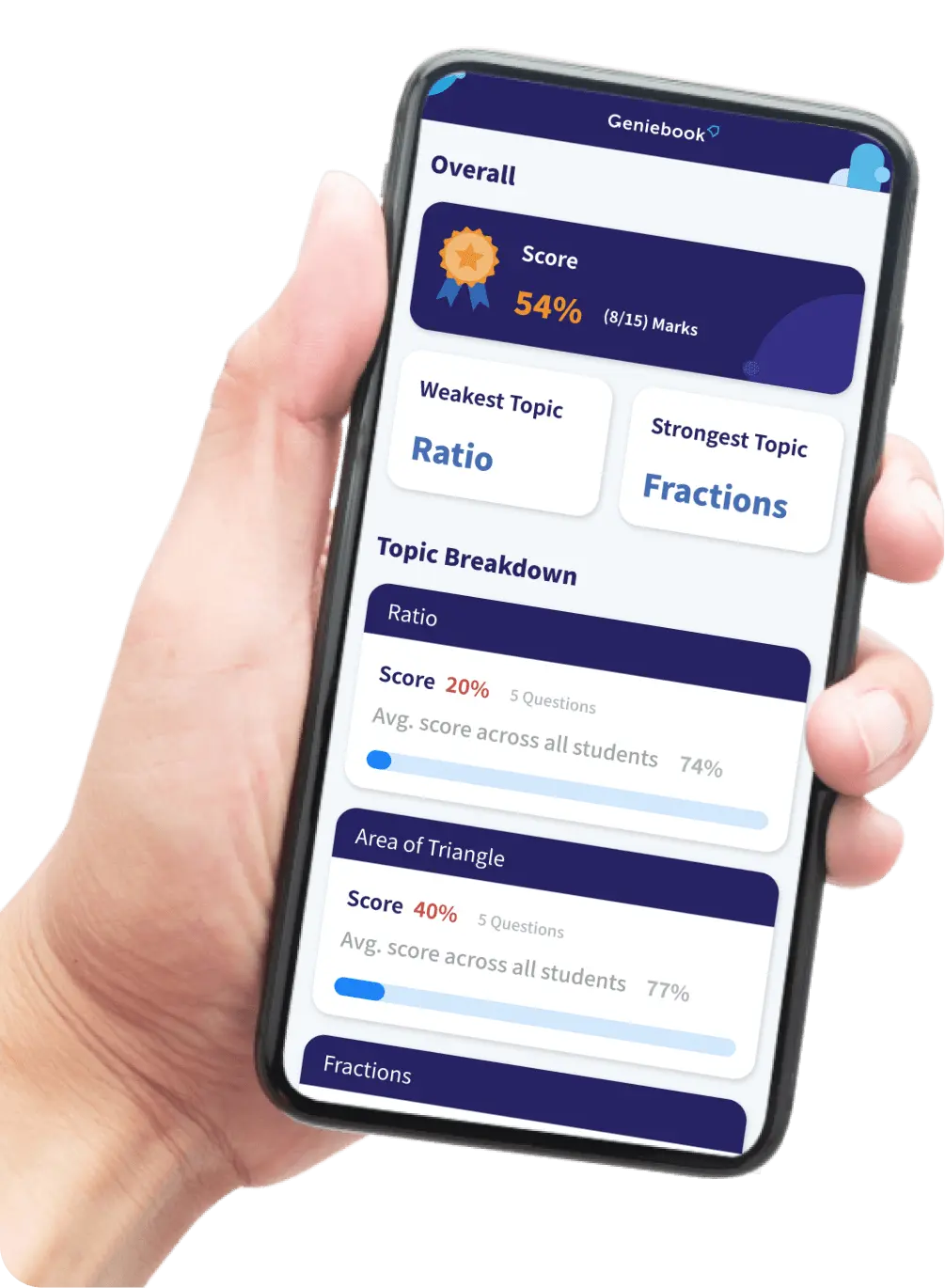
Through GenieSmart, our AI-personalised worksheets recommend targeted practice questions strictly aligned with the MOE syllabus, with difficulty levels that constantly adjust to your child's mastery of each topic. With over 300,000 questions in our database, our proprietary AI algorithm leverages over 1,000,000 data points to identify strengths and learning gaps. On GenieClass, experienced educators lead weekly live online classes, explaining complex mathematical concepts, heuristics and problem-solving skills using storytelling, live polls and interactive visual aids.
If your child has doubts or needs help with homework, they can clarify concepts instantly through our real-time teacher chat on GenieAsk, which offers continuous support seven days a week. Additionally, our unique rewards system motivates students to learn independently. As your child completes worksheets and participates in classes, they earn Bubbles that can be redeemed for over 5,000 exciting, kid-safe items from our Bubble Store, turning daily practice into a rewarding habit. With half of our students successfully achieving AL 1 to AL 3 in PSLE and jumping two grades on average, we believe our personalised pedagogy is highly effective in building academic confidence. Have you planned how to help your child stay focused and on track for their upcoming examinations?
Frequently Asked Questions
-
How Does Spaced Practice Help With PSLE Maths Revision?
Spaced practice helps children retain tricky PSLE Maths concepts and heuristics by reviewing them at increasing intervals, which strengthens long-term memory and counters the forgetting curve. This process forces the brain to actively retrieve information, building deeper conceptual understanding. For even better results, it can be combined with active recall strategies like having your child explain a concept to you or maintain an error log.
-
What Is the Best Way to Help My Child Remember Difficult Psle Maths Heuristics?
The best way to help your child remember difficult Singapore Maths heuristics for the PSLE is by using spaced practice to review them at increasing intervals. This method strengthens long-term recall of advanced strategies like the assumption method or working backwards. Combining this with active recall, such as having your child teach the heuristic to you, builds the resilience needed to apply these skills confidently under exam pressure.
-
What Is a Good Time Management Strategy for the PSLE Maths Paper 2?
A good time management strategy for the PSLE Maths Paper 2 is to use the 98-second rule, which allocates roughly 98 seconds of problem-solving time for every mark. This structured pacing, alongside the 'skip and return' strategy for difficult questions, helps prevent panic and ensures your child attempts all questions they are able to answer. For example, a five-mark question should be allocated about eight minutes of focused effort.
-
When Should I Consider Getting Maths Tuition for My Child’s PSLE Preparation?
You should consider getting Maths tuition for your child's PSLE preparation when spaced practice at home consistently reveals stubborn learning gaps, particularly with non-routine heuristic questions. When a child struggles to move forward despite regular revision, the structured guidance of an experienced educator can be highly effective. A good Maths tuition programme should teach systematic problem-solving skills rather than encourage rote memorisation.
-
Are Speed Questions Still Tested in the PSLE Maths Exam?
No, the topic of Speed, which involves distance, rate and time, has been removed from the PSLE Maths syllabus. This change allows students to reallocate valuable revision time to other key areas, such as algebra and reinforcing foundational heuristics for Paper 2 problem sums.