

From Hypothesis to Conclusion: A Parent's Guide to Building PSLE Science Reasoning with Simple At-Home Experiments (P3–P6)
The MOE Science Staircase: How Skills Evolve From P3 to P6
We understand that helping your child navigate the primary school science syllabus and cope with the high-pressure PSLE Science preparation can feel like an incredibly stressful and demanding experience for busy families in Singapore. Specifically, we observe that primary school students often struggle to apply classroom theories to practical scenarios, leaving them with unaddressed learning gaps and exam anxiety. We believe that by systematically aligning home experiments with the Ministry of Education (MOE) curriculum and choosing the right academic support, your child is fully empowered to close their learning gaps, stay on track and achieve their academic potential.
The Singapore Primary Science syllabus is structured as a staircase, gradually increasing in complexity as students progress from Primary 3 to Primary 6. Understanding this progression allows parents to customise home revision and prepare children for what lies ahead.
| Level | Focus Topics | Key Skills Developed |
|---|---|---|
| Primary 3 to Primary 4 | Materials, magnets, life cycles and introductory heat and light | Building the language: Making simple comparisons, classifying objects and describing observations. Questions in school papers are direct, such as identifying physical differences between two items. At-home experiments should focus on keen observation and recording. This is a foundational stage where enrolling in a Primary 4 Science tuition programme can help build strong vocabulary. |
| Primary 5 | Water, changes of state, electricity, living things and body systems | The critical transition: Students must begin explaining the scientific reasoning behind experiments. They learn about fair tests, variables, interpreting results and using evidence from diagrams to support their answers. Primary 5 is the crucial year for building exam-ready habits, making science tuition for primary 5 an effective way to bridge any conceptual gaps. |
| Primary 6 | Forces, energy conversion and interactions in the environment | Application and analysis: Students face complex, multi-step questions in their final national papers. They must master identifying independent and dependent variables, using controls and predicting experimental outcomes in completely unfamiliar contexts, often integrating multiple topics. Consistent practice is where effort pays off, supported by specialised P6 Science tuition or primary 6 science tuition. |
Your Practical Home-Project Toolkit: At-Home Experiments
Here are simple, MOE-aligned projects using low-cost household materials that busy families can set up this weekend. The real value of these activities lies in the scientific process and the questions you guide your child to ask along the way. These hands-on activities turn abstract concepts from textbooks into tangible real-world experiences, building deep conceptual understanding.
Achieve Academic Goals With Geniebook's Tech-Enabled Suite
At Geniebook, our suite of online learning products is designed to complement your child's primary school preparation, helping primary and secondary school students learn smarter, stay on track and do better. We believe that when technology supports experienced educators, your child is fully empowered to close their learning gaps and achieve their academic potential.
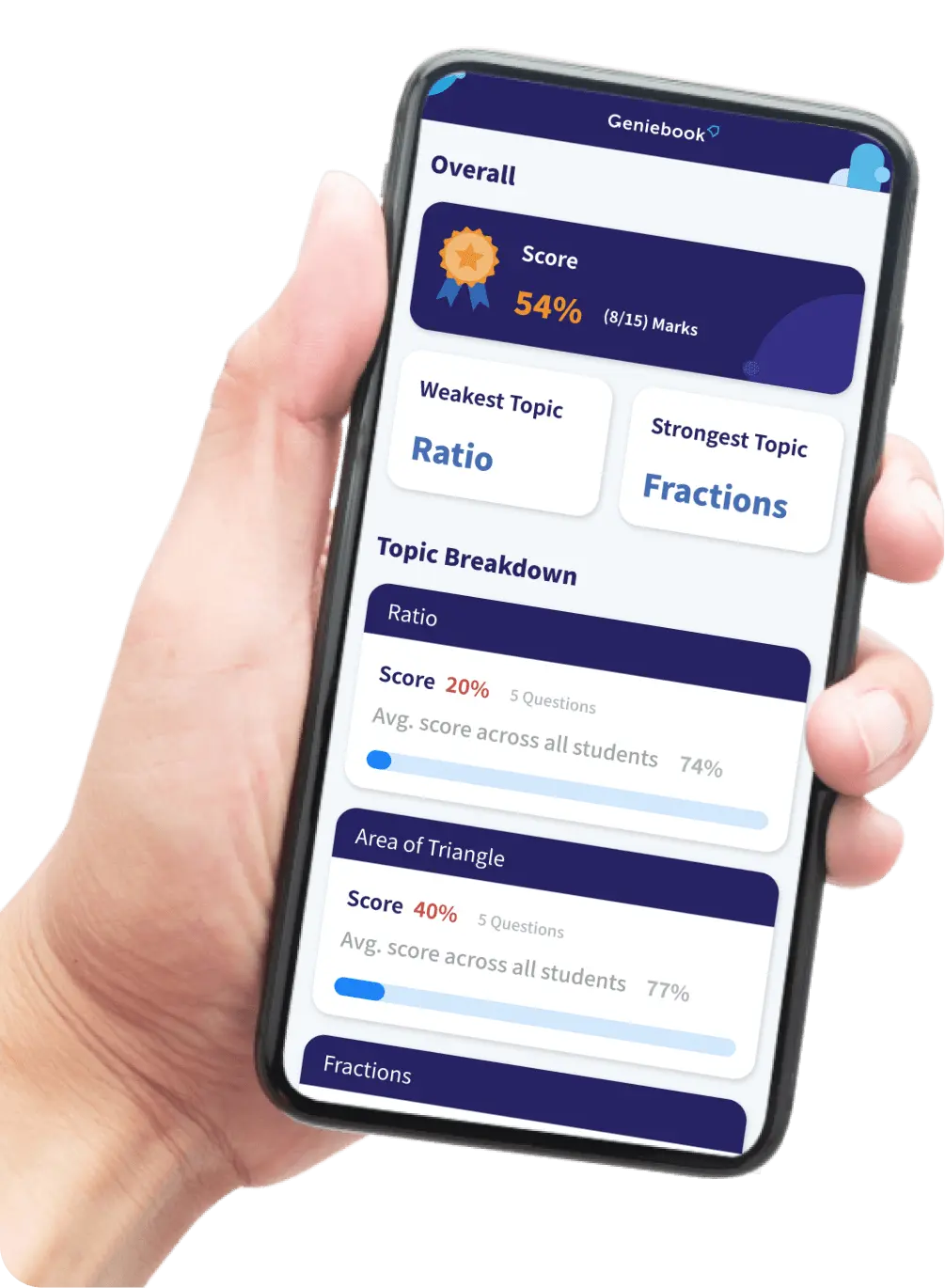
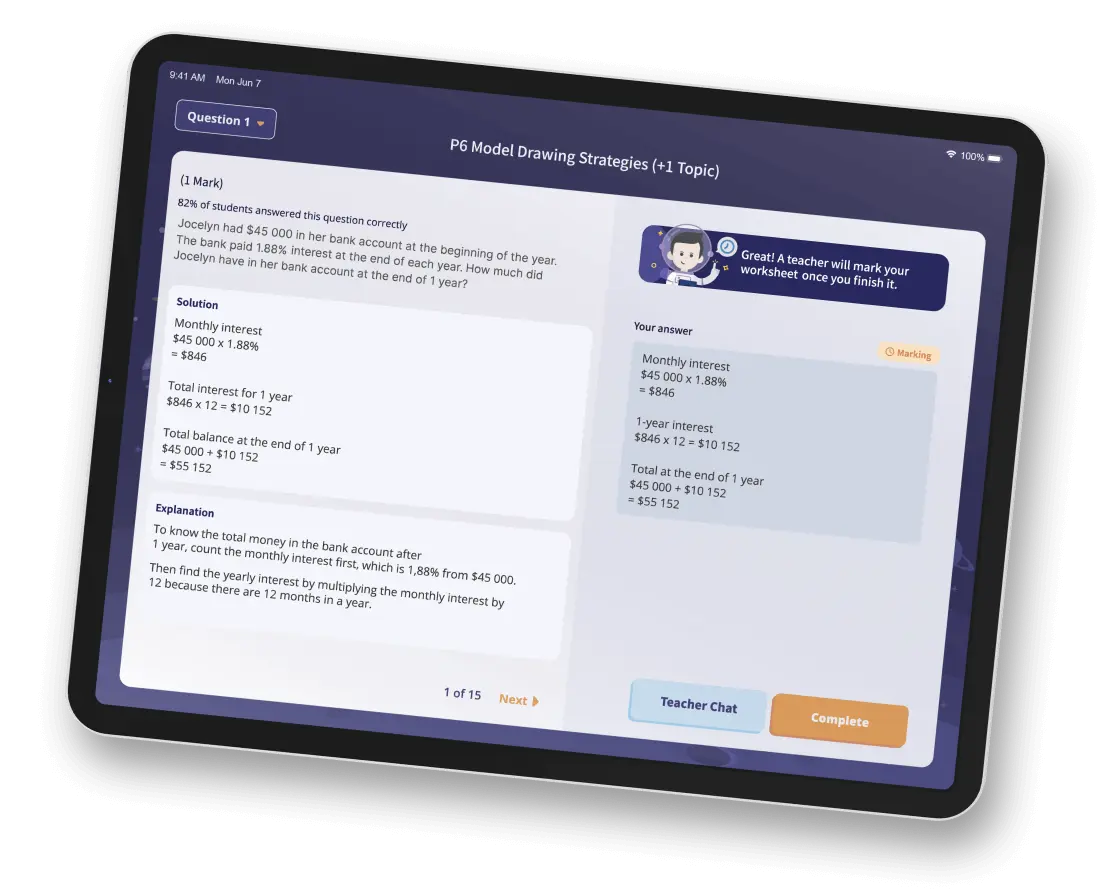
Through GenieSmart, our AI-personalised worksheets recommend targeted practice questions strictly aligned with the MOE syllabus, with difficulty levels that constantly adjust to your child's mastery of each topic. With over 300,000 questions in our database, our proprietary AI algorithm leverages over 1,000,000 data points to identify strengths and learning gaps. On GenieClass, experienced educators lead weekly live online classes, explaining complex scientific concepts, experimental processes and answering strategies using storytelling, live polls and interactive visual aids.
If your child has doubts or needs help with homework, they can clarify concepts instantly through our real-time teacher chat on GenieAsk, which offers continuous support seven days a week. Additionally, our unique rewards system motivates students to learn independently. As your child completes worksheets and participates in classes, they earn Bubbles that can be redeemed for over 5,000 exciting, kid-safe items from our Bubble Store, turning daily practice into a rewarding habit. With half of our students successfully achieving AL 1 to AL 3 in PSLE and jumping two grades on average, we believe our personalised pedagogy is highly effective in building academic confidence. Partner with Geniebook to help your child stay focused and on track for their upcoming examinations.
Hands-on Learning: Simple At-Home Experiments
To help your child bridge the gap between abstract textbook facts and the real world, here are two highly effective, low-cost science projects you can easily set up at home. These hands-on experiments are directly aligned with the Singapore primary school science curriculum, helping your child master key inquiry skills like identifying variables, making accurate comparisons and describing observations.
Experiment 1: The Speedy Evaporation Race (Primary 4 and Primary 5)
This experiment targets the theme of Cycles, specifically focusing on the factors affecting the rate of evaporation. This is a high-weightage topic that frequently appears in both the multiple-choice and open-ended sections of school assessments and national examinations.
- Aim: To find out if a larger surface area exposed to the surrounding air makes water evaporate faster.
- Materials: A flat plate, a tall cup, a measuring cylinder or cup and some tap water.
- Method: Measure and pour an equal amount of water (such as 50 ml) into both the flat plate and the tall cup. Place them side by side in the same sunny spot, such as your HDB corridor or window ledge. Check the containers every hour to observe and record the water levels.
- PSLE Skill Practice: Help your child identify the experimental variables to build their exam-answering confidence. Ask them: What is the one variable we are changing? (The surface area of the water exposed to the air). What are we measuring or observing? (The amount of water remaining in each container over time). What must we keep the same for a fair test? (The initial volume of water, the location, the surrounding temperature and the presence of wind). This hands-on practice directly prepares them for identifying variables in Section B questions.
Experiment 2: The DIY String Telephone (Primary 5 and Primary 6)
This experiment focuses on the properties of sound and how energy is transmitted through different states of matter. It helps students understand that sound travels as vibrations and requires a medium to pass through.
- Aim: To demonstrate that sound travels more effectively through a solid medium than through the air.
- Materials: Two paper cups, a long piece of sewing thread or string (approximately 3 to 5 metres) and a sharp pin.
- Method: Poke a small hole in the centre of the bottom of each paper cup. Thread one end of the string through the hole of each cup, tying a large knot on the inside to secure it in place. Have your child hold one cup and walk away until the string is completely taut. Take the other cup, pull the string tight, speak into your cup and have your child listen through theirs.
- PSLE Skill Practice: Have your child compare the sound clarity when the string is pulled taut versus when it is left loose or slack. Ask them to explain why the taut string transmits sound so much better, using essential scientific keywords. The vibrations from the speaker’s voice travel through the solid string, which acts as a more efficient medium than air. This builds their ability to construct clear, logical explanations using evidence from a scientific setup, which is precisely how examiners award marks in the written paper.
Hands-on Learning: The Density Experiment
To help your child bridge the gap between abstract textbook facts and the real world, here is another highly effective, low-cost science project you can easily set up at home. This hands-on experiment targets early inquiry skills, helping younger primary school students learn how to make detailed observations, construct clear comparisons and understand the physical properties of materials.
Experiment 3: The Floating Egg Mystery (Primary 3 and Primary 4)
This experiment targets the theme of Systems and Materials, specifically focusing on how the properties of a liquid affect whether an object sinks or floats. This is a fundamental concept that builds early scientific inquiry skills and prepares students for more complex density questions in the upper primary years.
- Aim: To observe how salt affects whether an egg sinks or floats in water.
- Materials: A tall glass, some tap water, a fresh egg and table salt.
- Method: Fill the glass with plain water and gently place the egg inside. It will sink to the bottom. Remove the egg, dissolve a generous amount of salt (approximately six tablespoons) in the water and stir thoroughly until it is completely dissolved. Place the egg back into the saltwater and observe what happens.
- PSLE Skill Practice: This is a classic experiment for honing observation and comparison skills. Ask your child to 'state' what they see initially and 'describe' the difference after adding salt. In written exams, students often lose marks because they confuse command words. For example, 'state' requires a simple, direct observation, while 'describe' or 'explain' demands more detail about the physical change or the scientific reasoning behind it. Differentiating between these command words is a key exam technique heavily emphasised in Primary 4 Science tuition.
How to Turn Play Into PSLE Points: The Documentation Method
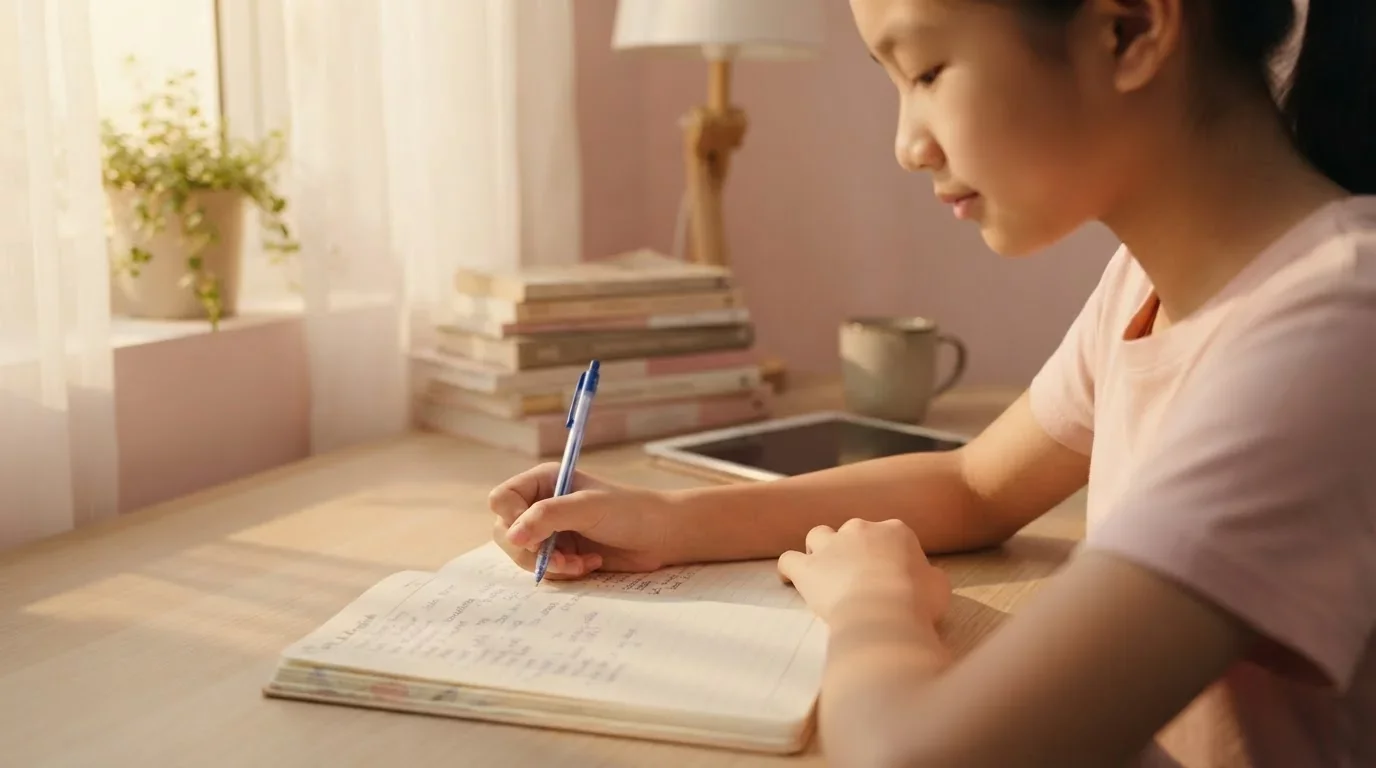
Doing the experiment is only half the battle. The real learning happens when your child documents their findings like a scientist. This structured approach directly mirrors how they should break down open-ended questions in the PSLE Science paper, turning practical exploration into actual exam marks.
Encourage them to keep a dedicated science notebook and follow this simple framework for every home experiment:
- Aim: What are we trying to find out?
- Hypothesis: What do we think will happen and why?
- Variables (for Primary 5 and Primary 6): What is the one thing we changed (independent variable)? What are we measuring or observing (dependent variable)? What must we keep the same for a fair test (constant variables)?
- Observations: What did we actually see? Use a simple table or chart to record the results clearly.
- Conclusion and explanation: Was our prediction correct? Explain the scientific principle behind what happened using essential keywords.
By building this habit of systematic recording at home, your child develops the precise analytical thinking required to tackle Section B of the exam with confidence. It transforms hands-on play into concrete academic results, laying a strong foundation that any quality primary science tuition programme should complement.
Does This Replace the Need for PSLE Science Tuition?
Let us be practical. Home experiments are a powerful supplement, not a complete replacement for structured learning. They are fantastic for building curiosity and the foundational inquiry skills that make formal learning stick. However, a comprehensive PSLE Science tuition programme provides benefits that are difficult to replicate at home.
An experienced PSLE Science tutor or a proven online tuition platform like Geniebook excels at teaching precise scientific keywords, providing targeted practice on specific question types and drilling exam strategies under timed conditions. The combination is what leads to mastery. Use home experiments to build the 'why' and 'how' and then rely on expert guidance to refine the answers for maximum marks.
Transforming Curiosity Into Academic Confidence
Ultimately, transforming your child into a confident science student begins with curiosity. By connecting textbook concepts to the world around them, you are not just preparing them for an exam. You are equipping them with a way of thinking that will serve them for life.
Frequently Asked Questions
What Are the Benefits of Doing At-Home Science Experiments for PSLE Science Preparation?
At-home science experiments help prepare your child for the PSLE Science exam by turning abstract textbook concepts into tangible, real-world experiences. These hands-on activities are excellent for building deep conceptual understanding and mastering key inquiry skills like making observations, identifying variables and drawing conclusions, which are essential for tackling exam questions.
My Primary 5 Child Is Starting to Struggle With Science. How Can Home Experiments Help With This Transition?
Home experiments can significantly help a Primary 5 student by making abstract concepts like fair testing and variables easier to understand. The Primary 5 year marks a critical transition where students must start explaining the scientific reasoning behind their answers, and hands-on activities directly practise identifying what was changed, what is being measured and what must be kept the same for a fair test.
What Is the Most Important Scientific Reasoning Skill My Child Needs for the PSLE?
Understanding variables and fair testing is one of the most critical scientific reasoning skills your child needs for the PSLE Science exam. The ability to identify the independent variable (what is changed), the dependent variable (what is measured) and the constant variables (what is kept the same) is crucial for answering complex, multi-step questions in the open-ended section of the paper.
Do I Need to Buy Expensive Kits for These At-Home Science Experiments?
No, you do not need to buy expensive kits as the at-home science experiments suggested are designed to use low-cost, common household materials. Simple items like paper cups, string, eggs, salt and water are all you need to conduct effective experiments that teach core concepts from the MOE science syllabus.
Can These Home Experiments Replace the Need for Primary Science Tuition for the PSLE?
These home experiments are a powerful supplement but should not be seen as a complete replacement for structured primary science tuition. While hands-on activities build curiosity and foundational skills, a comprehensive tuition programme is essential for teaching precise scientific keywords, providing targeted practice on specific exam question types and drilling exam strategies under timed conditions for maximum marks in the PSLE.
How Can I Make Sure the Learning From These Experiments Translates Into Better Exam Scores?
To ensure learning from home experiments translates into better exam scores, you should guide your child to document their findings systematically in a notebook. This documentation method involves recording the aim, hypothesis, variables, observations and conclusion for each experiment, which directly mirrors the analytical thinking process required to break down and answer open-ended questions in Section B of the PSLE Science paper.