School-Based or Private After-School Care: Which Fosters More Independence?
School-Based or Private After-School Care: Which Fosters More Independence?
The choice between a school-based student care centre and a private after-school programme is a critical one for many working parents. The core difference lies in their approach to building independence: school-based care typically offers a structured environment focused on peer responsibility, while private centres can provide greater autonomy and a wider range of life skills. For families navigating the options for student care in Singapore, understanding this distinction is the first step. At providers like GenieHouse, the goal is to blend academic support with the development of self-directed learning habits, offering a middle ground that appeals to many.
How Does Each Model of Care Nurture Independence?
Both paths can lead to a more independent child, but they take different routes. Your child's personality and needs will likely determine which path is a better fit.
The Structured Path in School-Based Centres
School-based student care centres (SCCs) are, by nature, an extension of the school day. Independence here is often framed within the context of school life. Children learn to manage their homework schedules, pack their own bags and follow routines alongside their peers. This environment excels at teaching responsibility within a group setting. As Prime Minister Lawrence Wong noted regarding student care services, these centres are evolving beyond simple homework supervision towards “holistic development.” This shift, including planned initiatives like PlayQuest in 2025, signals a growing focus on broader skills but the foundation remains rooted in the structure of the school system.
The Autonomous Route in Private Centres
Private after-school centres often have the flexibility to offer a wider scope for independence. They might allow children to choose from a menu of enrichment activities, from STEM and coding to visual arts. This power to choose is a fundamental building block of autonomy. Some private centres focus on life skills beyond academics, mirroring the approach of occupational therapy which empowers children in all areas of life, like managing their belongings and meals. With potentially smaller group sizes, there is more opportunity for personalised attention to nurture individual decision-making skills.
What Are the Key Differences in Cost and Programme Focus?
For most families, the decision also comes down to practicalities like budget and the type of activities offered. The two options present a clear trade-off.
| Feature | School-based SCC | Private after-school centre |
|---|---|---|
| Typical cost | More affordable, due to subsidies and use of school facilities. | Higher investment, estimated at S\$300 to S\$600 per month, plus costs for specialised programmes. |
| Programme focus | Historically homework supervision, now moving towards holistic development with structured play and social-emotional learning. | Often includes diverse enrichment (e.g. arts, STEM, coding), academic tuition and play-based methodologies. |
| Style of independence | Develops responsibility within a group, focused on academic routines and time management. | Fosters autonomy through individual choice, decision-making and a broader range of life skills. |
Is One Option More Reliable Than the Other?
This is a concern I hear often from parents. A recent incident involving the closure of a private operator, which ran centres in eight primary schools, was unsettling. However, what happened next was quite telling. The Ministry of Education (MOE) stepped in swiftly, appointing new operators and even covering two months of fees to ensure continuity of care. This event, while disruptive, highlights a powerful safety net. MOE's direct oversight of school-based centres provides a layer of operational stability and accountability that may not be as structured for entirely private centres. This governmental backstop is a significant factor for parents who prioritise reliability when searching for a student care centre in Singapore.
Which Student Care Centres Provide Homework Supervision and Academic Support?
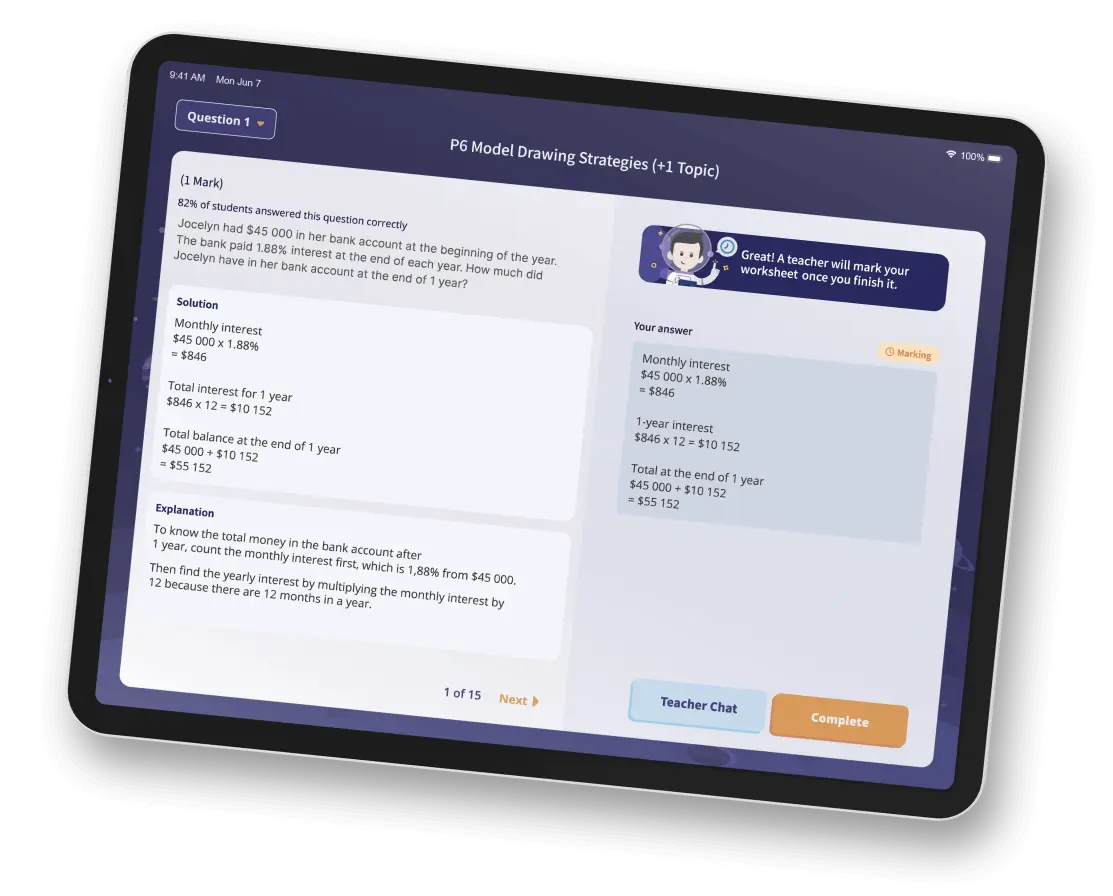
Centres like GenieHouse and other private operators all provide homework supervision and academic support, but they do so in different ways. Some offer structured supervision alongside their own in-house curriculum and enrichment, making them a good fit for parents seeking an all-in-one, structured solution. GenieHouse integrates its after-school care with its established AI-powered learning tools. This means homework is not just supervised but checked, and children get targeted academic support from the same ecosystem they use for their core tuition, creating a seamless learning journey. The best fit depends on whether your child needs a structured programme or a more integrated academic support system.
How Do I Choose the Right Fit for My Child?
As you prepare for P1 Registration 2027 or consider a switch, the 'best' option is the one that fits your child and your family. After decades in the Singapore education landscape, I suggest parents consider these three points:
- Your child's personality: Does your child thrive with clear routines and peer-based activities? A school-based SCC might be ideal. Or do they flourish with more freedom, choice and personalised guidance? A private centre could be a better match.
- Your family's budget and logistics: The cost difference is significant. A school-based centre is more affordable and convenient. You must weigh whether the potential benefits of a private centre, like specialised enrichment, justify the higher fees and extra travel.
- Your primary goal: Are you focused on ensuring homework is done in a supervised setting so evenings are free? Or is your goal to develop broader life skills and autonomy beyond the academic sphere? Your priority will point you toward the right model of student care in Singapore for your family. Some options, like GenieHouse, aim to bridge this gap by fostering academic independence through self-directed learning tools.
Ultimately, there is no single right answer. One child might build confidence within the familiar walls of their school's SCC while another discovers their passion and voice in a smaller, specialised private centre. The key is to match the environment to the child.
Related articles and locations:
- Student Care Fees Singapore 2026 SCFA Guide
- GenieHouse Bishan
- GenieHouse Ang Mo Kio
- GenieHouse Bukit Timah
- GenieHouse Sembawang
- GenieHouse Marine Parade
- GenieHouse Novena
- GenieHouse Tampines
Looking for an entirely different student care experience? Our latest launch, GenieHouse, is a student care service focused on AI-personalised learning for academic success. Contact us to book a site visit.
Frequently Asked Questions
Which Is Better for Building Child Independence: School-Based or Private After-School Care?
Both models support child independence but do so in different ways. School-based care centres typically foster responsibility by integrating children into group routines and academic schedules within the school environment. Private after-school programmes often nurture autonomy through individual choices in activities and flexible enrichment programmes. Choosing between them depends on whether your child flourishes with structured peer-led tasks or needs personal decision-making opportunities to develop self-reliance.
What Are the Primary Differences When Choosing Student Care in Terms of Cost?
School-based SCCs are generally more affordable because they are subsidised and operate within existing school facilities. Private after-school centres typically require a higher financial investment, usually ranging from S\$300 to S\$600 per month, often with additional fees for specific enrichment or specialised programmes. Parents should consider this trade-off when selecting the right fit for their budget.
Are Private After-School Programmes as Reliable as School-Based Options?
School-based centres often offer greater operational stability because they are under the direct oversight of the Ministry of Education. While private operators are diverse, they lack this specific governmental backstop. However, in cases where private operators face closure, the Ministry of Education has historically intervened to provide a safety net by appointing new operators and ensuring continuity for affected families.
What Should I Look for When Choosing Student Care for a Child Who Needs Homework Help?
When choosing student care, look for providers that explicitly outline their approach to homework supervision versus academic support. Some centres provide basic supervision to ensure tasks are completed, while others like private providers or those with integrated learning systems offer targeted support and check work quality. Consider whether your child requires a structured, time-managed environment or an integrated system that assists them with their specific academic challenges.
How Do I Decide Between School SCC vs Private Centres for Primary School After-School Care?
To decide between school SCC vs private centres, evaluate your child's personality, your budget and your primary goals for after-school care. If your child benefits from consistent routines and peer-based activities, a school-based centre is often the ideal choice. If you prioritise specialised enrichment, smaller group sizes and individual autonomy, a private centre may be a better fit. Always assess whether you need simple after-school care in Singapore or a programme that offers extra development beyond the classroom curriculum.