


Graphic Literacy for PSLE English: A 6-Week Home Plan Using Local Graphic Novels to Boost Comprehension and Writing
Why Do Graphic Novels Work When Traditional Methods Feel Like a Struggle?
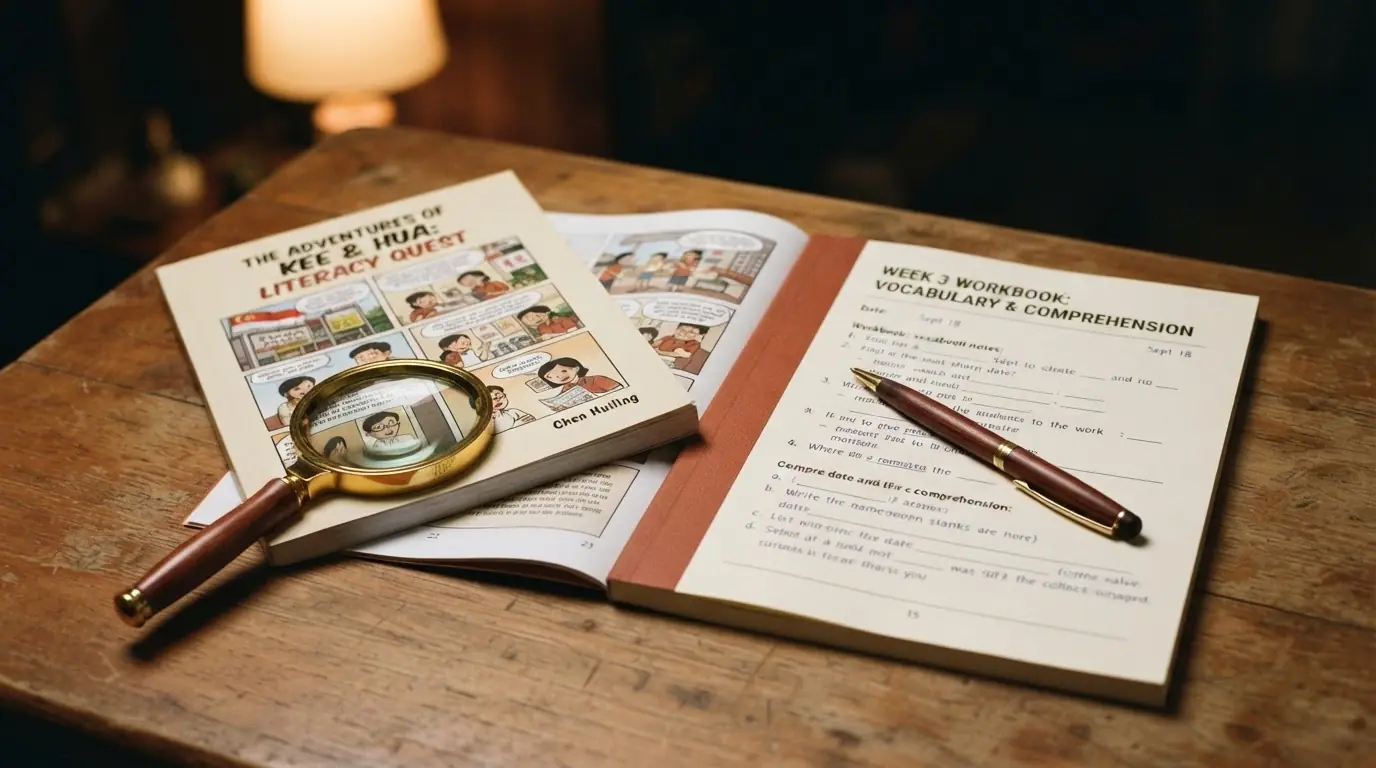
Many parents tell me the same thing. Their child is bright but resists reading dense storybooks. They can see their child’s potential but the spark for English seems to be missing. This is where graphic novels come in. They are not a shortcut or 'lesser' form of reading. They are a different, powerful medium for building literacy.
For visual learners and reluctant readers, graphic novels are a breakthrough. The combination of text and images makes complex plots and vocabulary more approachable. As noted by educators on platforms like Cult of Pedagogy, this visual support helps students experience the success of finishing a book, building confidence that spills over into their schoolwork. This isn't just about fun. It's about teaching 'visual literacy', the ability to analyse how images, colour and layout create meaning. This skill is directly tested in PSLE English Paper 2's visual text comprehension section and is crucial for navigating our media-rich world.
The 'Education Arms Race': Can a Comic Book Compete With Intensive Tuition?
I understand the pressure. A 2023 Institute of Policy Studies (IPS) survey found that a staggering 84.9% of Singaporean parents believe tuition gives their child a PSLE advantage. With average monthly tuition spending rising to $500, the 'education arms race' is a reality for many families. It feels like if you aren't providing intensive extra lessons, your child will be left behind. But more hours of drill-and-practice isn't always the answer, especially if a child's core engagement with the language is low.
This is where a smart home strategy can make a huge difference. A graphic novel plan doesn't replace targeted support. Instead, it builds the foundational love for stories and the deep comprehension skills that make formal PSLE English tuition far more effective. It fosters intrinsic motivation, something that rote learning alone can't achieve. It’s a way to reclaim a bit of joy in the learning process, reducing stress for both you and your child.
Your 6-Week PSLE English Home Plan With Local Graphic Novels
This plan is designed for Primary 4 to Primary 6 students. The key is consistency, not long hours. Just 30-45 minutes, two to three times a week, is enough. Pick up a great Singaporean graphic novel, like Sonny Liew’s The Art of Charlie Chan Hock Chye (for older readers) or Otto Fong's Sir Fong series, and begin.
Weeks 1-2: Deconstructing the Story (Comprehension & Inference)
- Focus: Character, Setting and Plot. This is the bedrock of Paper 2 comprehension.
- Activity: After reading a chapter, ask questions that mirror PSLE inference questions. “Why do you think the character said that, even though his face looked angry?” “What does the cluttered and dark room tell us about the character’s state of mind?” Guide your child to find evidence in both the text and the art. This trains them to look beyond the literal.
Weeks 3-4: Building a PSLE Vocabulary Bank (Contextual Clues)
- Focus: Acquiring new words naturally, a key skill for comprehension cloze.
- Activity: Have your child highlight five to seven unfamiliar words in a chapter. Before reaching for a dictionary, ask them to guess the meaning using the images and the sentences around the word as clues. Then, verify the definition. Keep a 'Graphic Novel Word Journal' to record these new words, their meanings and a small sketch.
Weeks 5-6: From Panels to Paragraphs (Narrative Writing)
- Focus: Using visual storytelling to improve descriptive and narrative writing for Paper 1.
- Activity: Find a page with a strong action sequence or an emotional moment. Ask your child to “translate” the panels into a paragraph. How would they describe the character’s expression? The fast-paced action? This is a practical exercise in the 'Show, Don't Tell' technique. It teaches them how to build a scene, pace a story and convey emotion, all critical for scoring well in composition. For a Primary 5 English tuition student, this can be a powerful way to make abstract writing concepts concrete.
How Does This Connect to My Child's English Tuition?
This home plan is designed to amplify the work done in a formal learning environment. Whether your child is attending a physical Primary English tuition centre or using an online tuition platform, these activities build the underlying skills and passion that make lessons stick.
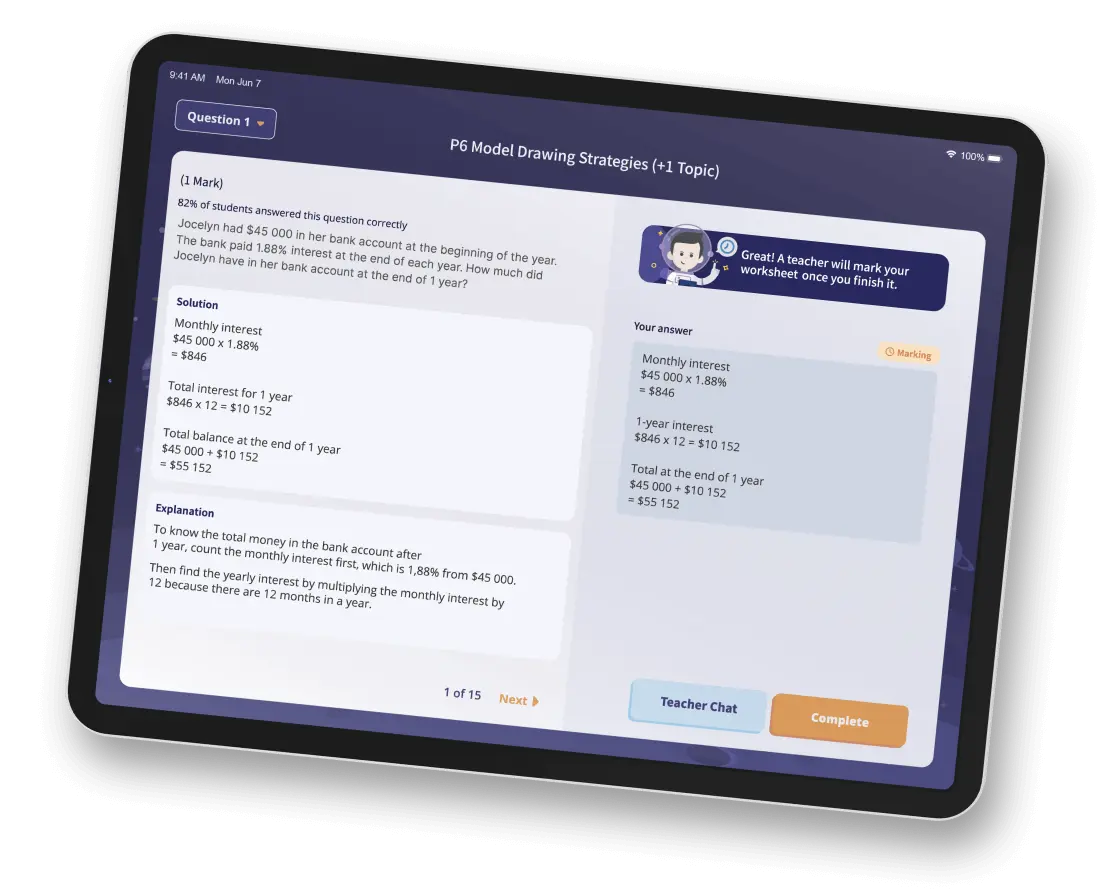
For a child in Primary 6 English tuition, this plan serves as a refreshing, low-pressure way to reinforce complex skills like inference and narrative structure. For a younger student in Primary 3 English tuition, it is the perfect way to build a love for language and a solid foundation before the exam years. At Geniebook, our AI-powered learning tools also focus on making learning engaging and personalised. Our live classes, practice worksheets and chat support with teachers work together, much like how this plan combines reading for pleasure with targeted skill-building. The goal is the same: to create confident learners who understand concepts deeply, rather than just memorising answers.
Frequently Asked Questions
Can My Child Just Read Graphic Novels Instead of Going For PSLE English Tuition?
No, this graphic novel plan is designed to complement and enhance formal PSLE English tuition, not replace it. The plan builds foundational skills like deep comprehension and a love for stories, which makes targeted support from a tutor or an online tuition platform more effective by fostering intrinsic motivation.
What Specific PSLE English Skills Do Graphic Novels For Kids Help With?
Graphic novels for kids help children develop crucial skills for PSLE English Paper 2's visual text comprehension and Paper 1's narrative writing. They teach 'visual literacy', the ability to analyse how images create meaning, which is directly tested in the exam. The plan also includes activities to translate visual panels into descriptive paragraphs, improving composition techniques like 'Show, Don't Tell'.
How Much Time Does My Child Need to Spend on This Graphic Novel Plan?
A consistent commitment of just 30 to 45 minutes, two to three times a week, is enough for this home plan. The focus is on regular, enjoyable engagement with the language rather than long, intensive sessions, which helps build skills and confidence without adding to your child's stress.
My Child Is Already in Primary 6 English Tuition, Is It Too Late to Start This?
It is not too late for a child in Primary 6 English tuition to benefit from this plan. For a P6 student, this plan acts as a refreshing, low-pressure way to reinforce complex skills like inference and narrative structure. It complements the work done in their existing primary level English tuition by making an exam revision more engaging.
What Age Group Is This Six-Week English Plan Suitable For?
This six-week home plan using graphic novels is designed for students in Primary 4 to Primary 6. The activities can be adapted for different abilities, making it useful for a student in P5 English tuition to grasp abstract concepts or for a younger child to build a solid foundation before the main exam years in the Singapore education system.