Heat and Temperature: 7 Myths Debunked for Young Scientists
Heat and Temperature: 7 Myths Debunked for Young Scientists
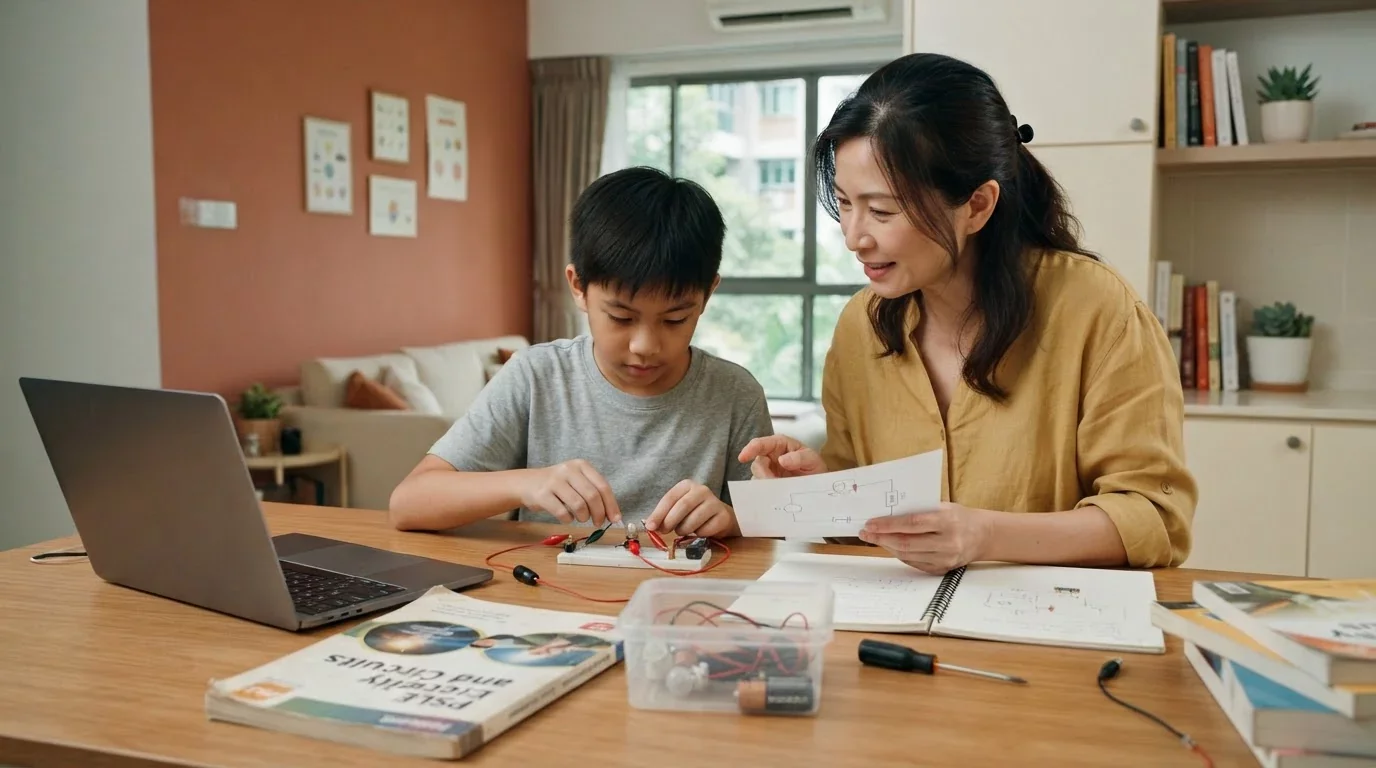
Many Primary 5 and 6 students confuse heat and temperature, a common stumbling block in PSLE Science that can cost precious marks. Correcting these misunderstandings is crucial because the Ministry of Education (MOE) syllabus requires a deep conceptual understanding and the precise use of keywords, not just memorisation. This guide debunks 7 key myths, helping you and your child build a solid foundation. While quality Primary Science tuition can bridge these gaps, understanding the core concepts at home is the first step, whether you're considering physical classes or online tuition.
Myth 1: Aren't Heat and Temperature Just the Same Thing?
This is the most fundamental misconception. Heat is a form of energy. Temperature, however, is a measure of how hot or cold a substance is, measured in degrees Celsius (°C). Think of it this way: a large swimming pool at 30°C has a much lower temperature than a small cup of boiling water at 100°C. But because the pool has vastly more water, its total heat energy is far greater. A clear grasp of this difference is a frequent focus in PSLE Science revision.
Myth 2: Does 'Cold' Get in When I Open the Fridge?
It feels like 'cold' rushes out but in science, there is no such thing as 'cold' moving. Cold is simply the absence of heat. A strict MOE rule to remember is that heat energy always travels from a hotter region to a colder region. When you open the refrigerator door, heat from your warmer kitchen travels into the colder fridge. The air inside feels cold because your body is losing heat to the cooler surroundings.
Myth 3: My Teacher Said Hot Air Rises, So Heat Must Always Rise, Right?
This is a partial truth that leads to a big misunderstanding. It is true that hot air and hot water rise. However, heat itself does not only travel upwards. Heat travels in all directions from a hotter region to a colder region. For example, heat transfer occurs through direct contact. This is why the entire handle of a metal spoon gains heat when you leave its tip in a bowl of hot soup. Heat also travels from the Sun to the Earth, reaching us from millions of miles away in all directions.
Myth 4: A Thick Blanket Must Be Making Its Own Heat to Keep Me Warm.
Blankets and sweaters don't generate heat, as they are insulators. An insulator is a material that is a poor conductor of heat. Instead of creating warmth, a blanket traps your body heat. It slows down heat loss from your warmer body to the cooler surrounding air. This is a core concept covered in Primary 5 Science, where students learn to differentiate between good and poor conductors of heat.
Myth 5: Metal is Metal, They All Get Hot at the Same Speed.
Not all metals are created equal when it comes to conducting heat. Different materials conduct heat at different rates. For example, copper is an excellent conductor of heat, which is why it's often used for the base of high-quality cooking pots so it can gain heat quickly. Stainless steel, on the other hand, is a poorer conductor of heat compared to copper, making it suitable for pot handles so they don't get too hot to touch.
Myth 6: If I Turn Up the Fire, My Boiling Water Will Get Hotter Than 100°C.
For a pot of water boiling in the kitchen, the temperature will not go above its boiling point of 100°C. Once it reaches boiling, the temperature remains constant. The water continues to gain heat to change its state from a liquid to a gas (steam). Making the fire bigger will make the water boil faster but it won't make it hotter. This is a classic open-ended question trap in many P6 Science exams.
Myth 7: Dark-Coloured Shirts Attract Heat.
This is a subtle but important error in scientific keywords. Dark and dull surfaces don't 'attract' heat. They are simply better absorbers of heat compared to light and shiny surfaces. That’s why you feel hotter in a black shirt on a sunny day, as it is absorbing more heat from the Sun. These surfaces are also better emitters of heat. Precision in using terms like "better absorber of heat" is key to scoring full marks in Section B of the PSLE paper.
Quick Home Experiments to Make These Concepts Stick
Making science tangible is the best way to correct misconceptions. Here are a few simple experiments you can do at home, reinforcing what's taught in Primary 4 Science and beyond.
-
The three bowls test (temperature vs sensation): Prepare three bowls of water: one cold, one hot (but safe to touch) and one lukewarm. Place one hand in the cold water and the other in the hot water for 30 seconds. Then, place both hands into the lukewarm bowl. The hand from the cold water will feel warm, while the hand from the hot water will feel cool, proving that our senses can be unreliable and why we need thermometers.
-
The spoon race (good vs poor conductors): Place a metal spoon, a plastic spoon and a wooden spoon in a mug of hot water. After a minute, feel the top of each spoon handle. The metal spoon will feel much hotter, demonstrating it is a better conductor of heat than plastic or wood.
-
The ice cube challenge (insulators): Place two ice cubes on separate plates. Wrap one in a small towel or cloth and leave the other exposed. The wrapped ice cube will melt slower because the cloth acts as a poor conductor of heat, reducing heat gain from the warmer surrounding air to the cooler ice.
Mastering the topic of Heat and Temperature is less about memorising facts and more about understanding the core principles and applying the correct keywords. By addressing these common myths head-on, you can strengthen your child's scientific reasoning and confidence for the PSLE.
Frequently Asked Questions
What is the main difference between heat and temperature for PSLE Science?
Heat is a form of energy, whereas temperature is a measure of how hot or cold a substance is, measured in degrees Celsius. Understanding this distinction is vital for the MOE science syllabus, as confusing the two is one of the most common science misconceptions among students.
Why does boiling water not get hotter than 100 degrees Celsius even with more heat?
Water cannot exceed its boiling point of 100 degrees Celsius because the water gains heat to change its state from a liquid to a gas, rather than increasing its temperature. This specific concept is a frequent focus of P6 science because students often mistakenly believe that a larger flame creates hotter water.
How can I help my child with Primary 5 science experiments involving heat?
You can help your child by conducting simple home experiments like the spoon race to demonstrate good and poor conductors of heat or the ice cube challenge to show how insulators work. These practical activities make the MOE science syllabus concepts tangible, which is highly effective for Primary 5 science revision.
Are there effective ways to improve PSLE science tuition outcomes at home?
Yes, you can improve learning outcomes at home by identifying and addressing common science misconceptions, such as the mistaken belief that dark colours 'attract' heat rather than being better absorbers of heat. Supplementing school work with targeted Primary 6 science revision can help solidify the understanding of complex topics.
Does cold actually move into a room when I open a door or fridge?
Cold does not exist as a physical thing, so it cannot move. Instead, heat energy always travels from a hotter region to a colder region. When you open a fridge door, heat from the warmer kitchen travels into the colder refrigerator, which is a fundamental concept often tested in PSLE science heat questions.