

The Ultimate Integrated Programme: What Singapore Parents Can Learn from Worldschooling
What Is the Ultimate Integrated Programme?
The ultimate Integrated Programme isn't found in a school. It's found in the world itself. Worldschooling, a philosophy where families combine travel and homeschooling, is a real-life integrated programme where subjects like history, geography and economics are learned not from textbooks but through direct experience.
One Singaporean family, the Ongs, exemplifies this approach. They stepped away from the conventional path, unplugging their four daughters from the familiar corporate and social rat race to live in communities like Bali and Hoi An. As reported by The Straits Times, they turned the world into a “borderless, wall-less classroom,” pioneering their own form of an integrated learning programme grounded in authentic, real-world discovery.
How Does Worldschooling Mirror an MOE Integrated Programme?
The philosophy behind the MOE Integrated Programme is to provide a seamless secondary and pre-university education that bypasses the "O" Levels, allowing for a broader, more holistic curriculum. It aims to break down the rigid walls between subjects and encourage deeper inquiry. Worldschooling takes this concept to its logical conclusion. Instead of just integrating Physics and Mathematics, it integrates learning with life itself.
The Ong family’s model shows this in action. By spending months immersed in local cultures, their daughters learned practical skills through activities like farming and crafts. This is the essence of an integrated programme: learning isn't confined to a classroom schedule. A lesson on biology happens in a rice paddy, an economics class takes place at the local market and history is learned by walking through ancient streets. It cultivates curiosity and adaptability, core goals of any forward-thinking educational model.
A Singaporean Family's Journey: The Ongs' Real-World Classroom
The Ong family’s journey is not just a long holiday. It is a deliberate educational choice designed for “authentic, affordable real-world learning.” Their time in Bali and Hoi An wasn't about seeing tourist sights. It was about living within the community. This deep immersion is central to their method.
The outcomes they aim for are not grades or exam scores, but life skills. Their children develop resilience by navigating unfamiliar environments, cultural appreciation by living alongside people from different backgrounds and practical skills that a traditional classroom cannot offer. It’s a curriculum built on experience, a hands-on approach that resembles a real-world integrated masters programme in global citizenship.
Global Examples of Integrated Learning in Action
The Ongs are part of a small but growing movement. Author Andi Almond, in “The Everywhere Classroom,” documented her family’s 13-month journey across seven continents. This was a meticulously planned educational expedition.
Her children didn't just see the world. They engaged with it academically. They earned PADI scuba diving certifications in Zanzibar, learning about atmospheric pressure and scientific laws firsthand. They took Portuguese classes in Brazil where local markets and pharmacies became their classrooms. This is a powerful illustration of how travel can become a structured yet flexible integrated programme.
Is This Path Feasible? The Realities of a Self-Directed Integrated Programme
While inspiring, worldschooling comes with significant challenges. It is not a path for everyone. As Andi Almond noted to CNN, the cost and scheduling commitments of travelling at a “bit of a clip” can be prohibitive for many families.
The realities can be harsh. The Guardian shared the story of Josy and Joe, a family who had to abandon their worldschooling dreams after a family tragedy forced a return to England. For others, the nomadic life eventually ends. Some families, like Sharon Ward's, settle down, with children transitioning into international schools in places like Bali. This raises a critical question for Singaporean parents: how does such an education align with formal qualifications like the "A" Levels or IB diploma, which are the endpoints for most students in Integrated Programme schools?
Lessons for Singapore Parents: Applying Worldschooling Principles at Home
Most families cannot pack up and travel the world for years. However, the core philosophy of this ultimate integrated programme is accessible to everyone. You can adopt the mindset without leaving Singapore.
Key Strategies for a Home-Based Integrated Programme:
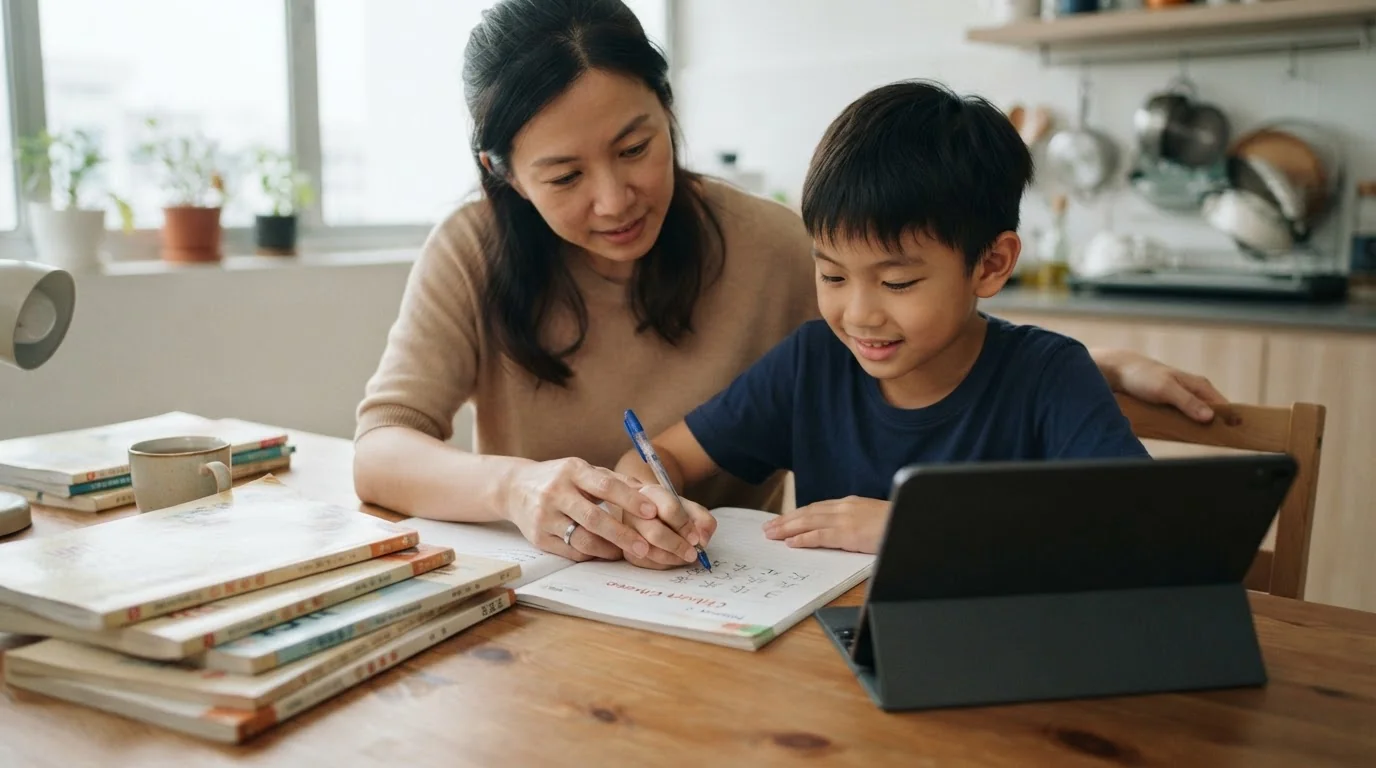
- Create 'Learning Expeditions': Treat a weekend trip to Sungei Buloh Wetland Reserve as a combined lesson in biology, ecology and geography. A visit to a local wet market can be an immersive experience in economics, language and culture. Connect what your child learns in Social Studies to the real-world locations on our island.
- Integrate Skills into Daily Life: If your child is learning about fractions or ratios in Mathematics, involve them in baking a cake. The measurements provide a tangible application of abstract concepts. If they are studying a historical period, visit a local museum or heritage site related to it.
- Bridge the Gap: Acknowledge that while this provides incredible exposure, it doesn't replace the need for structured learning. Use these experiences to ignite curiosity and make formal education more relevant. This approach can complement any path, whether your child is on the "O" Level track or in an Integrated Programme (IP) stream.
Ultimately, worldschooling shows us that learning can and should be deeply integrated with life. While the Ong family’s path is an extraordinary one, its principles, curiosity, adaptability and a love for authentic learning, are something every parent can cultivate right here in Singapore.