PSLE Plant Reproduction: A 10-Minute Kitchen Routine
Why Does Plant Reproduction Confuse So Many Students?
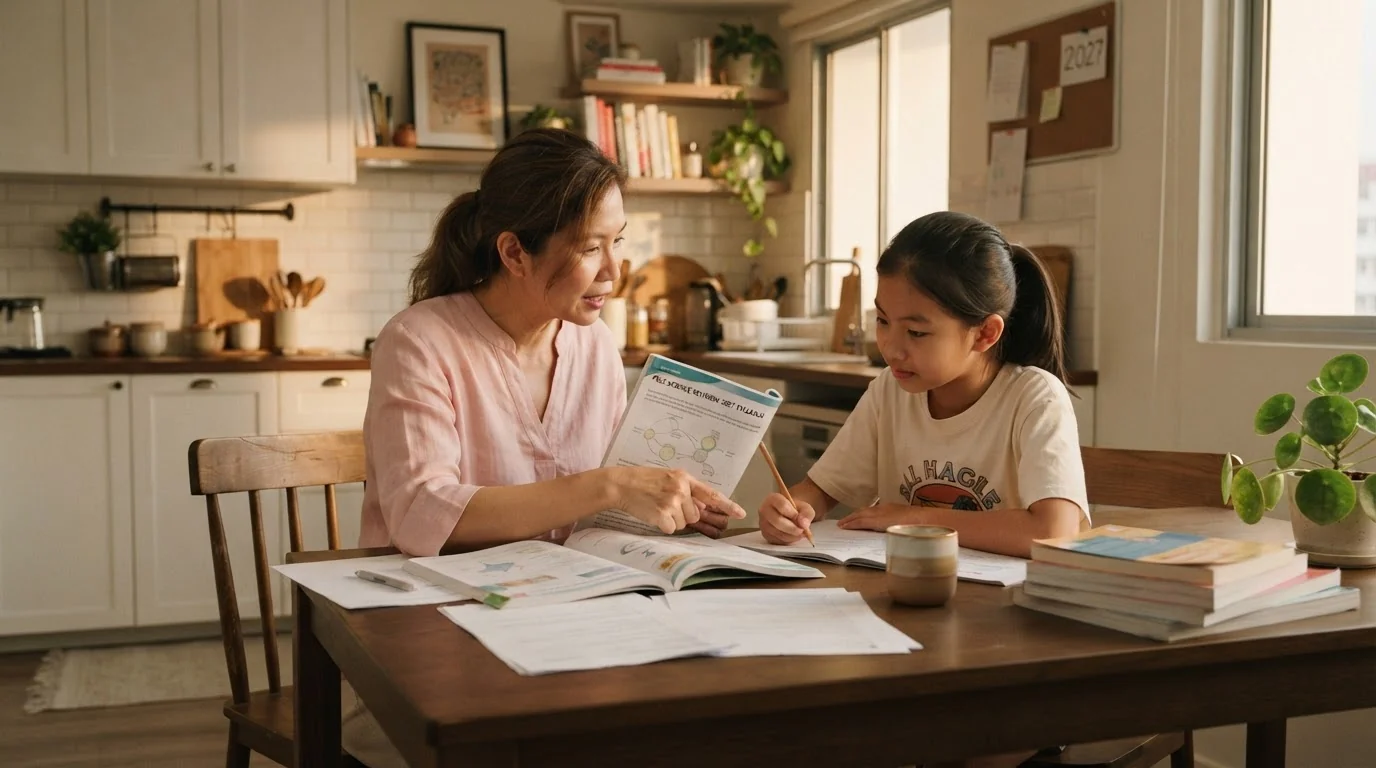
Mastering PSLE plant reproduction isn’t about memorising diagrams. It’s about understanding a process, and a single misconception can cost precious marks. This simple 10-minute kitchen routine can make abstract concepts tangible, powerfully supplementing what your child learns in school or through Primary Science tuition. It provides a practical learning experience that many forms of online tuition can build upon.
For the PSLE 2027 Science paper, examiners will again probe for deep understanding, not just recall. A common stumbling block is germination. Many pupils incorrectly write that sunlight is needed for a seed to germinate. This is a classic trap. Another is the confusion between pollination (the transfer of pollen) and fertilisation (the fusion of reproductive cells). These aren't just vocabulary issues. They are fundamental concepts that signal to markers whether a student truly gets it.
Your 5-Day Kitchen Experiment to Master Germination
This routine requires almost no preparation and uses items you already have. It’s designed to directly confront the most common PSLE misconception about germination head-on.
Materials You’ll Need:
- A small handful of green beans (mung beans work best)
- Two small, shallow dishes or saucers
- Cotton wool
- Water
The Daily 10-Minute Routine:
Day 1: The Setup (10 Minutes)
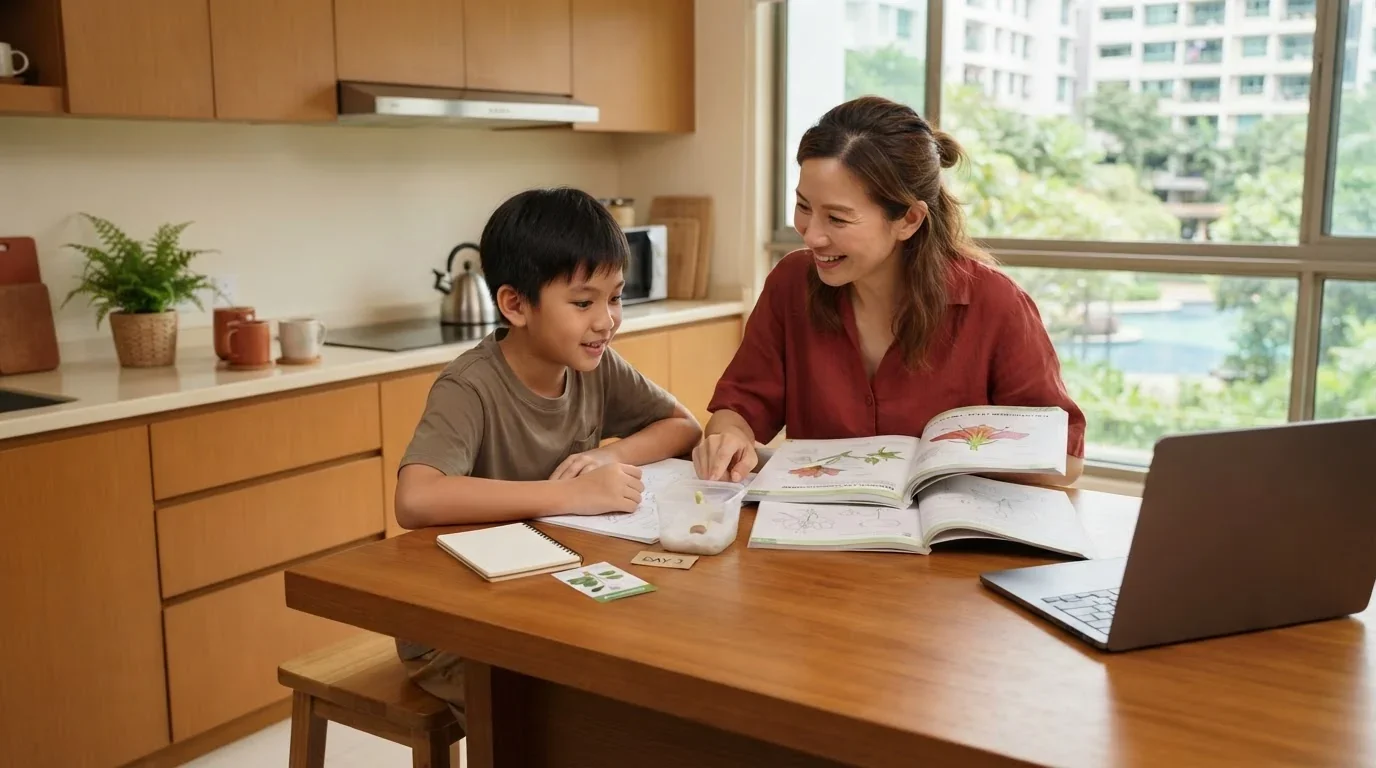
Line both dishes with a layer of cotton wool. Place about five green beans on the cotton in each dish. Moisten the cotton wool with water until it's damp but not flooded. Now, place one dish in a dark place, like a kitchen cabinet. Place the other dish on a windowsill that gets some light. Ask your child: “Which one do you think will grow?” Most will point to the one in the light.
Day 2–4: Observe and Discuss (5–10 Minutes)
Each day, check both dishes with your child. Add a few drops of water if the cotton looks dry. You will likely see a small root emerging from the beans in both dishes around day 2 or 3. This is the perfect moment to introduce the correct scientific language. The seed is germinating. Reinforce the three essential conditions required under the MOE syllabus: air (specifically oxygen), water (from the damp cotton) and warmth (from the room’s temperature).
Day 5: The Big Reveal (10 Minutes)
By now, the beans in both dishes should have germinated and possibly even sprouted small shoots. The beans in the dark cabinet may even look taller and more yellow. This is the critical lesson. Ask your child: “Did the seeds in the dark grow?” The answer is a clear yes. You have just created physical proof that sunlight is not needed for germination. Now you can explain that the seed relies on stored food in its seed leaves for initial growth. It only needs sunlight for photosynthesis after it has developed its first true leaves.
How Does This Simple Experiment Secure PSLE Marks?
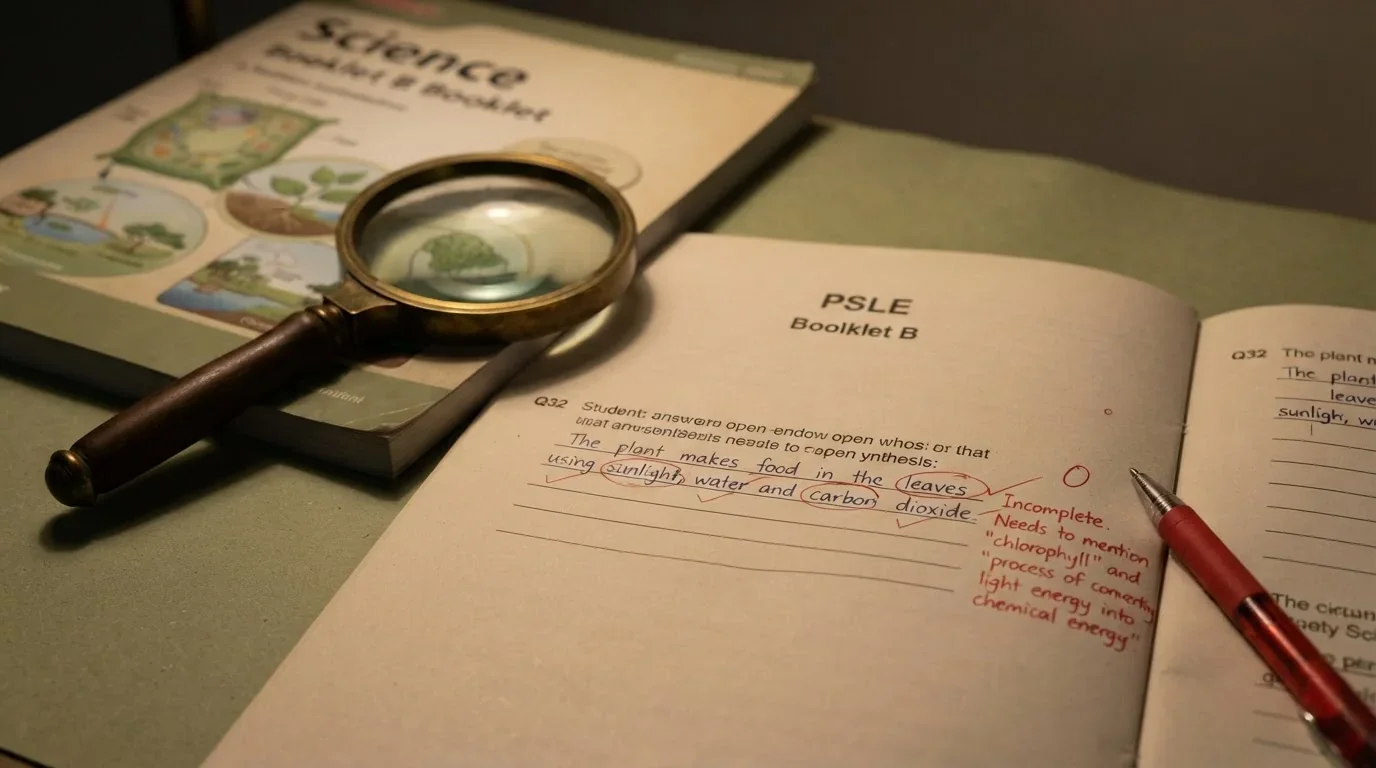
This hands-on experience transforms a textbook fact into a lived memory. It builds the confidence needed to tackle tricky exam questions, especially in Booklet B where precise phrasing is everything.
Connecting Observations to Booklet B Answers
When your child faces a question on the conditions for germination, they won't be guessing. They can visualise the bean in the dark cabinet and state with certainty:
-
Correct Answer Structure: “For the seed to germinate, it needs air, water and warmth. It does not need sunlight, which is only required later for the seedling to make food through photosynthesis once its leaves develop.”
-
Avoiding Common Errors: They will avoid losing marks by incorrectly including “sunlight” or “food” in the list of conditions for germination.
This aligns perfectly with the MOE Primary Science syllabus, which, for the PSLE 2027 cycle, expects pupils to understand the life cycle and reproduction of flowering plants grown from seeds.
A Practical Tool in the Education “Arms Race”
It's no secret that the pressure on parents is immense. A September 2026 Institute of Policy Studies (IPS) report noted that 84.9% of parents believe tuition gives their child a PSLE advantage, with median monthly tuition spending hitting S$500. This experiment is not about replacing formal help but about supplementing it in a meaningful, stress-free way.
Instead of just another worksheet, this 10-minute daily check-in is a moment of connection and real-world science. It empowers you to reinforce key concepts without adding to the financial or mental load of the PSLE journey. While comprehensive primary science tuition offers structured revision and expert guidance, this simple home activity solidifies the foundational knowledge that makes that tuition even more effective. It’s a low-effort, high-impact way to prove that learning doesn’t only happen at a desk, even for families who rely on online tuition for their main academic support.
Frequently Asked Questions
Is sunlight required for a seed to germinate for the PSLE Science exam?
Sunlight is not required for a seed to germinate, as the seed uses stored food in its seed leaves to support initial growth. This is a common trap in PSLE Science exams where students mistakenly believe seeds need light to sprout roots and shoots.
What is the difference between pollination and fertilisation in the MOE Primary Science syllabus?
In the MOE Primary Science syllabus, pollination refers to the transfer of pollen grains from the anther to the stigma, while fertilisation is the subsequent fusion of the male reproductive cell with the female reproductive cell (egg cell) in the ovule. Understanding this distinction is vital for answering open-ended questions correctly.
How can I conduct a simple germination experiment at home?
You can conduct a simple germination experiment by placing green beans on damp cotton wool in two different dishes, keeping one in a dark cupboard and the other on a sunny windowsill for five days. This hands-on activity effectively demonstrates that seeds do not need sunlight to germinate.
Why do students struggle with plant reproduction questions in Singapore’s PSLE?
Students often find PSLE plant reproduction topics challenging because they rely on rote memorisation of diagrams rather than conceptual understanding of biological processes. Misconceptions, such as the necessity of sunlight for germination, can lead to lost marks if students do not grasp the foundational conditions of plant life cycles.
What are some effective primary school science tips for the PSLE 2027 Science paper? Effective primary school science tips include using practical home experiments to visualise theoretical concepts, which helps students avoid common errors in the PSLE 2027 Science paper. Focusing on applying knowledge to real-world scenarios ensures that students can explain scientific processes with precise keywords in Booklet B.