PSLE English Oral: A 10-Minute Dinner Routine That Works

Why Does My Child Freeze During the Oral Exam?
Many parents tell me the same story. Their child is chatty at home but freezes in the exam room, giving one-word answers. It is not a lack of knowledge. It is anxiety. The PSLE English Oral, worth 20% of the total grade, is a high-pressure performance. Despite MOE’s changes to reduce stress, like removing T-scores, the pressure feels higher than ever. A 2023 Institute of Policy Studies (IPS) survey found that nearly 85% of parents believe tuition gives their child an edge, feeding an ongoing “education arms race”. This constant pressure is precisely what we need to counteract at home. A good programme of Primary English tuition can help but building confidence starts with safe, daily practice.
How a 10-Minute Dinner Routine Builds Lasting Confidence
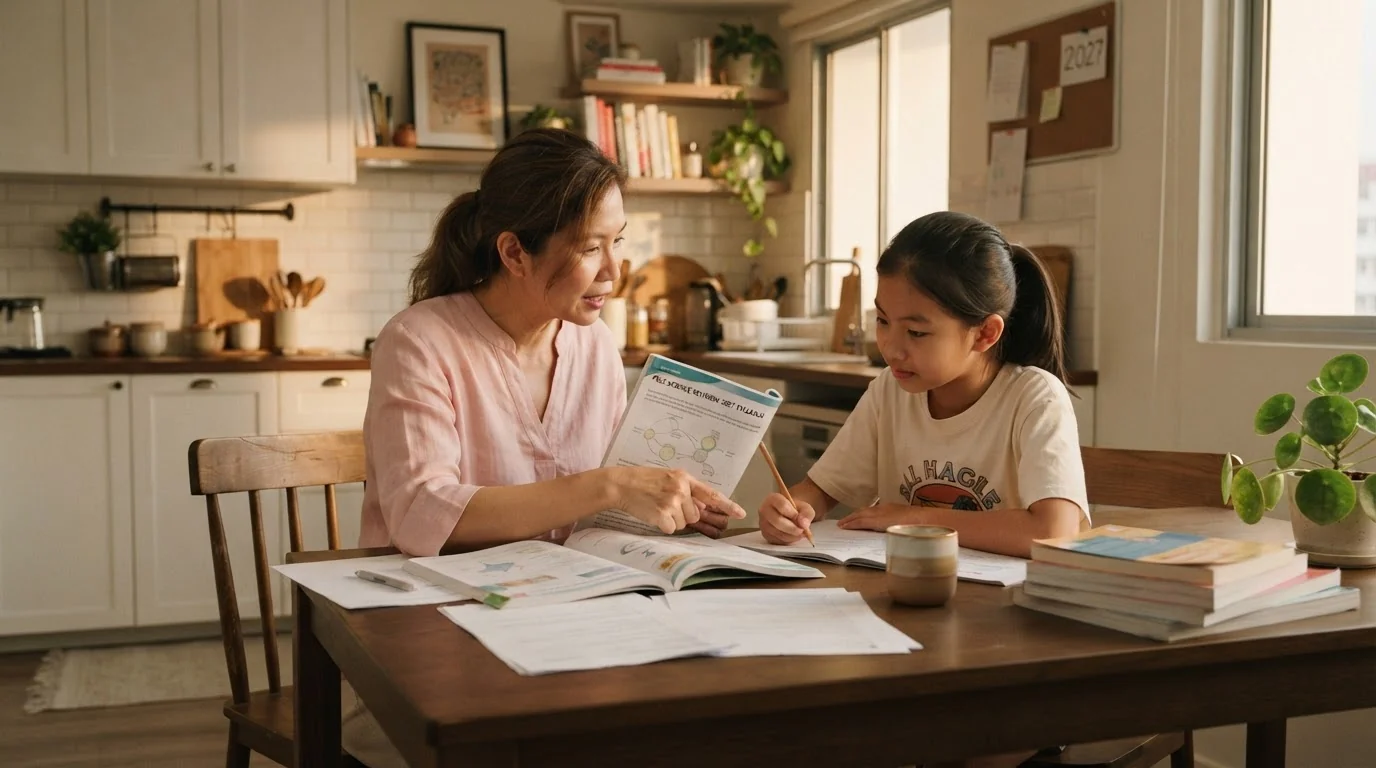
The goal is to make speaking and structuring thoughts a natural habit, not a rehearsed script. Short, regular practice of 10-15 minutes, a few times a week, is far more effective than a long, tense session on a Sunday afternoon. This routine transforms dead time at the dinner table into a productive, low-stakes training ground. It builds conversational muscle memory. This is especially helpful for students starting their preparation journey in Primary 5. Finding the right Primary 5 English tuition that focuses on conversational skills can complement this routine perfectly. By the time they are in Primary 6, the format feels familiar, not frightening.
The 2-Part Dinner Routine: A Step-by-Step Guide for PSLE 2027
This routine is split into two five-minute parts. It is simple, requires no special materials and can be adapted to any family’s schedule.
Part 1: The 5-Minute 'Read and Recite'
Before dinner, have your child read a short passage of about 150-200 words. This can be from their textbook or any assessment book. The first read-through is for familiarity. The second is to be read aloud to you. Listen for clarity, rhythm and expression. Since the 2025 cohort, examiners assess tone based on a given context using the PACT mnemonic (Purpose, Audience, Context, Tone). For instance, if the context is “You are excitedly telling your friend about a new discovery”, the tone must reflect that excitement. Reading the same passage a few times helps a child hear their own improvement.
Part 2: The 5-Minute 'Chat and Challenge'
This is where the stimulus-based conversation practice happens. Use a real-world prompt. It could be a photo on your phone of a crowded MRT, a headline from The Straits Times or something you both observed at a hawker centre. Your role is not to be an examiner but a curious listener. Ask open-ended questions to encourage elaboration. Use simple prompts like “Why do you think that happened?” or “Tell me more about that.” Focus on correcting only one or two errors per session to avoid making your child self-conscious.
What Does a Good Oral Response Actually Sound Like?
The examiners are looking for a personal, well-reasoned opinion, not a perfect model answer. The key is to move from simple statements to developed ideas with examples. Here is a quick comparison:
| Usual Response | Better Response |
|---|---|
| “I think we should recycle.” | “I strongly believe we should recycle because it helps protect our environment. For example, if we recycle plastic bottles, fewer new ones need to be made, which saves energy and reduces pollution. At my school, we have different coloured bins to make it easy for everyone.” |
| “The man is wrong.” | “In my opinion, the man’s behaviour is quite inconsiderate. He is speaking loudly on his phone on the bus, which disturbs other passengers who may be trying to rest. A more thoughtful approach would be to send a text message or wait until he gets off the bus.” |
Beyond the Routine: Managing Exam Day Nerves
Consistency is your best tool against anxiety. However, some children need more direct strategies. Introduce the '4-4-4' breathing technique before practice: inhale for four seconds, hold for four and exhale for four. This simple exercise can calm a racing heart. If you find that practice sessions at home are becoming a source of conflict, it might be time to seek external support. A dedicated primary English tutor or a small group at a primary English tuition centre can provide a structured, neutral environment for your child to practise. These options for primary English tuition can offer targeted feedback that is sometimes difficult to deliver as a parent.
Ultimately, building oral confidence is a marathon, not a sprint. This 10-minute routine, started early and practised consistently, can make a significant difference. It turns a dreaded examination into a simple conversation, and that is a skill that lasts a lifetime. For families with packed schedules, online tuition offers a flexible way to get expert guidance without the travel time, complementing your efforts at home perfectly.
Frequently Asked Questions
Why does my child freeze during the PSLE oral exam?
Your child likely freezes during the PSLE oral exam because of high-pressure anxiety rather than a lack of knowledge or language ability. Even children who are chatty at home can feel overwhelmed by the performance aspect of the exam, which counts for 20% of their total grade. Consistent, low-stakes practice at home helps reduce this anxiety by building conversational muscle memory before the actual test day.
How can I help my child improve their oral response at home?
You can improve your child's responses by implementing a short 10-minute dinner routine that includes a 'read and recite' session and a 'chat and challenge' session. During the 'read and recite' portion, have them read a passage aloud to practise rhythm and expression. In the 'chat and challenge' portion, use a simple photo or news headline as a prompt to encourage your child to elaborate on their personal opinions, which is a key component of effective PSLE oral preparation.
What is the best way to practise for stimulus-based conversation?
The best way to practise for stimulus-based conversation is to use real-world prompts like photos of public transport, news headlines or scenes from everyday life to spark discussion. Instead of acting as an examiner, play the role of a curious listener and ask open-ended questions like 'Why do you think that happened?' to encourage your child to move beyond one-word answers. These stimulus-based conversation tips help students learn how to provide developed ideas with relevant examples rather than simple statements.
Are there any specific PSLE English tips for reading aloud effectively?
To read aloud effectively for the PSLE, focus on clarity, rhythm and adopting the appropriate tone based on the context provided in the text. Using the PACT mnemonic (Purpose, Audience, Context, Tone) is an excellent way to ensure your child adjusts their delivery to match the scenario, such as sounding excited for a discovery or serious for an urgent announcement. Regular PSLE English tips also suggest having the child read the same passage multiple times to hear their own improvement in expression.
How can my child manage anxiety during the oral examination?
Your child can manage examination anxiety by practising the '4-4-4' breathing technique, which involves inhaling for four seconds, holding for four seconds and exhaling for four seconds to calm a racing heart. Consistency in your practice routine is your best tool against nervousness but if home practice leads to conflict, seeking external support can provide a neutral, structured environment for effective PSLE oral practice. This can help alleviate stress and ensure the child feels prepared for the actual exam conditions.
What should I focus on when preparing for PSLE 2027?
When preparing for PSLE 2027, you should focus on building a sustainable, long-term routine that turns speaking and structuring thoughts into a natural habit rather than a rehearsed script. Start the habit early in Primary 5 so that the format feels familiar by the time your child reaches the Primary 6 exam year. By integrating these small, consistent habits early on, you ensure your child develops the confidence and conversational skills needed for success in their future assessments.